PiCK
Bitcoin Pauses Near $64,000 Despite Trump Optimism on War’s End; $66,700-$68,000 Break Key
Summary
- Analysts said investors need to manage risk by watching $63,000 support until Bitcoin breaks above $66,700-$68,000 resistance.
- On-chain and options indicators suggest downside pressure is easing and bottoming conditions are forming despite ETF outflows and extreme fear sentiment, but it is too early to call a recovery before ETF net inflows resume or volatility expands.
- Coinbase Research said the odds of a retest of $72,000 if Bitcoin establishes itself above $68,000 could increase, but a break below $63,000 and the $58,000-$60,000 support zone could lead to a much sharper decline.
Forecast Trend Report by Period



Bitcoin was trading without a clear direction near $64,000 even after U.S. President Donald Trump expressed optimism that the war would end soon, as caution persisted ahead of talks over the Strait of Hormuz and the U.S. jobs report.
Analysts say risk management remains essential until Bitcoin can break sustainably above resistance at $66,700 to $68,000. Until then, the focus is on whether support at $63,000 holds.
As of 3:05 p.m. on August 7, Bitcoin was trading at $64,275 on Binance's USDT market, down about 0.95% from a day earlier. On Upbit, it was trading at about 90.7 million won. The kimchi premium, which tracks the price gap between overseas and South Korean exchanges, stood at minus 0.87%.
Trump Says War Could End Soon as Markets Eye Hormuz Talks, Jobs Report
U.S. stocks and digital-asset markets were taking a breather ahead of developments related to negotiations over the Strait of Hormuz and the release of the U.S. employment report later on August 7. Risk appetite was restrained as crude prices rose again on Middle East uncertainty and U.S. Treasury yields moved higher.
At a White House executive-order signing ceremony on August 6, Trump said of the Iran war, "I think it will end soon. I don't think it can go on for long." He later repeated his optimism, saying he believes the war will end "fairly soon." The Trump administration has previously said a deal could likely be reached this week.
Uncertainty over the reopening of the Strait of Hormuz remains. Trump said a day earlier that the U.S. was having "very good discussions" with Iran and that the strait would reopen soon. Iran, by contrast, has denied claims that it is in direct talks with Washington and has said it is discussing merchant shipping through the strait with mediator Oman.
Markets are watching whether any Hormuz agreement will lead to an actual reopening. Sticking points in the negotiations reportedly include Iran's control over the route, fees resembling transit charges and whether U.S. military operations would be halted. Brent crude jumped more than 4% on Middle East risks, while the yield on the 10-year U.S. Treasury rose to about 4.68%.
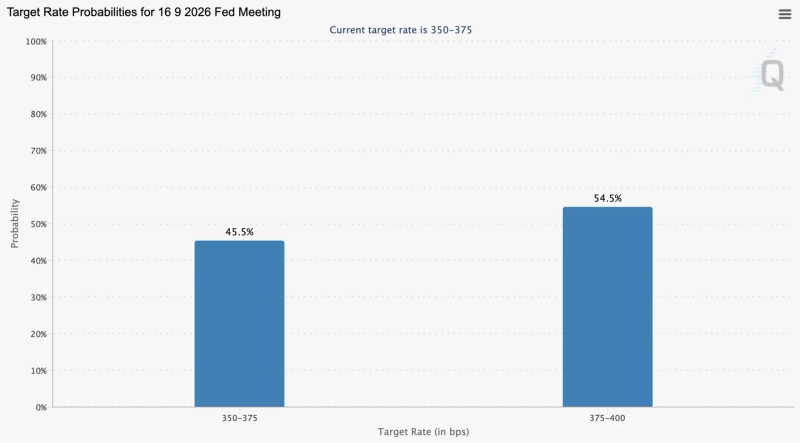
The U.S. jobs report due at 9:30 p.m. on August 7 is another key variable. Initial jobless claims in the U.S. have stayed below 200,000 for three straight weeks, pointing to a labor market with low hiring and low layoffs. CME FedWatch showed interest-rate futures pricing in a 54.5% chance of a rate increase in September. The probability of a hike by October has also risen to about 70%.
Bitcoin Holds Range Despite ETF Outflows as Downside Pressure Eases
Against that backdrop, spot Bitcoin exchange-traded funds recorded net outflows of $61.5 million last week. A hacking issue involving Coldcard and fading expectations for progress on the CLARITY Act, a U.S. bill on crypto market structure, appear to have added to short-term selling pressure.
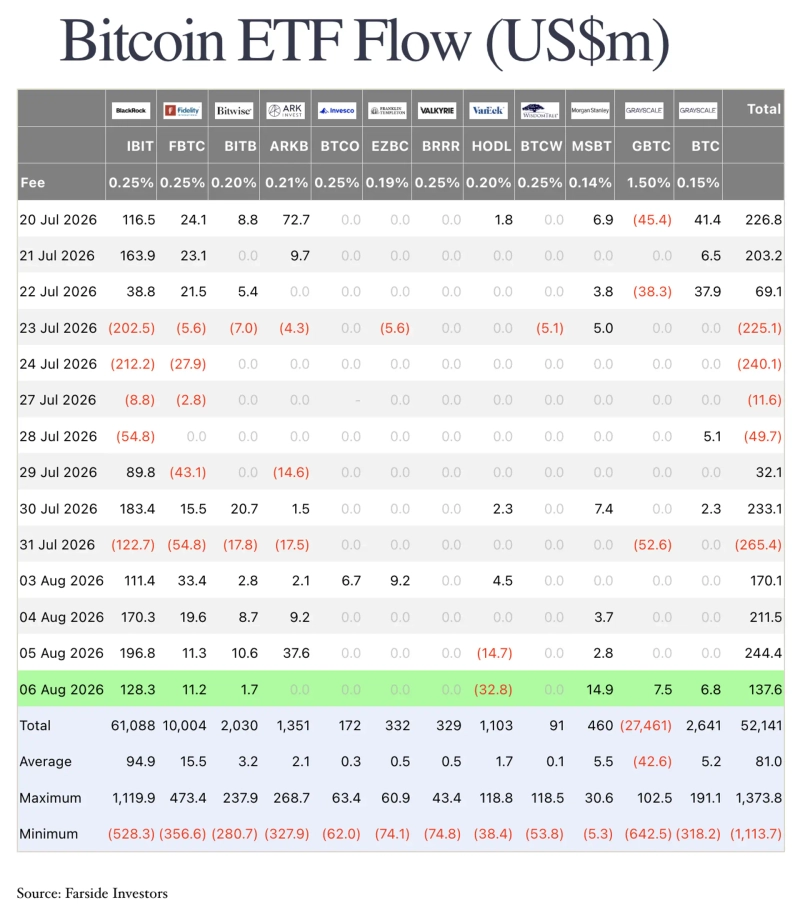
Bitcoin has held its $62,000 to $65,000 range despite ETF outflows. Bitfinex said Bitcoin has fallen below $63,000 seven times since last month, but each time recovered quickly. With no strong catalyst and subdued spot volume, the existing range has remained intact. Recent price action has also been driven more by crypto-specific factors such as ETF flows, options hedging and futures positioning than by stocks or interest rates.
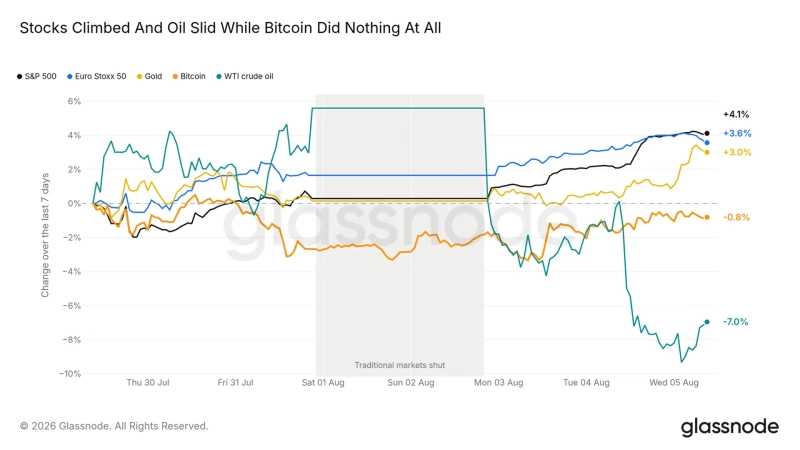
On-chain indicators are beginning to flash bottoming signals, though it remains too early to call a recovery. Glassnode said Bitcoin spent the past three weeks in a risk-off zone before the deterioration stopped and the market moved into a more defensive phase. Volatility is compressed and participation remains light. Bottoming conditions are forming, but they are not yet complete. A durable recovery signal would require either a sustained return of ETF net inflows or an upside expansion in volatility.
In the options market, downside pressure is gradually easing, 10x Research said. Put options still trade at a premium to calls, but the degree of bearishness has eased noticeably since late June. Bitcoin has not yet entered a full bullish reversal, but it is in a recovery phase. If demand for downside hedges continues to fade, selling pressure in derivatives markets could ease as well and support a price rebound.
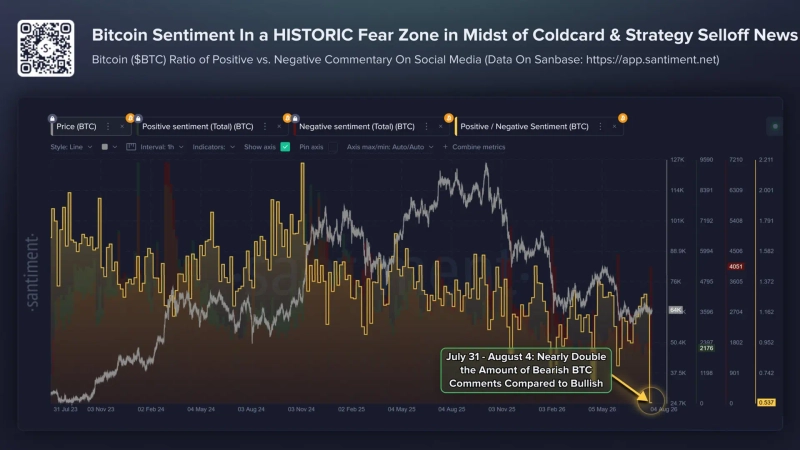
Market sentiment, however, remains in fear territory. Santiment said the ratio of positive to negative mentions of Bitcoin has fallen to 0.54 since July 31. Across major crypto channels including X, Reddit and Telegram, bearish views have risen to nearly twice the level of bullish ones. It added that bearish sentiment may have become excessive following the Coldcard security incident and news that Strategy sold 1,638 BTC. If panic selling subsides, room for a short-term rebound could widen.
Bitcoin Nears $65,000 but Lacks Momentum; $67,000 Break Is Key
Analysts say investors should focus on whether support at $63,000 holds rather than aggressively adding exposure until Bitcoin can break sustainably above the $66,700 to $68,000 resistance zone.
Bitcoin has approached $65,000, but its rebound has lagged the rally in equities. Alex Kuptsikevich, an analyst at FxPro, said Bitcoin had climbed near $65,000 to its highest level in five days, but the move was difficult to call meaningful compared with gains in U.S. stocks. Appetite for risk assets has partly recovered, yet money is not flowing strongly into crypto. For now, reducing downside risk remains a more effective approach than buying dips.
Julian Pineda, a market analyst at StoneX, said Bitcoin has risen more than 2% over the past three trading days and is showing signs of a short-term rebound, but it has yet to fully break out of a downward trendline that has persisted for months. A stable break above the key resistance level at $66,700 could extend the rebound over the coming weeks. If it remains stuck near $63,500, however, a wait-and-see pattern may continue in the short term. He added that a drop below $57,700 could deepen the multi-month downtrend again.
Coinbase Research said a firmer recovery will hinge on whether Bitcoin can establish itself above $68,000. If it does, the chances of a retest of $72,000 would rise. If it falls below $63,000, a pullback toward $60,000 could follow. A break beneath the $58,000 to $60,000 support zone could then trigger a much steeper decline.
Kang Min-seung, Bloomingbit reporter minriver@bloomingbit.io

Minseung Kang
minriver@bloomingbit.ioBlockchain journalist | Writer of Trade Now & Altcoin Now, must-read content for investors.