US Sets 15% Tariff on Polysilicon Derivatives, $21-a-Kilogram Import Floor
Summary
- The US government said it will apply a 15% tariff and a $21-per-kilogram minimum import price to polysilicon derivatives to curb Chinese products.
- It said companies that meet certain conditions under an onshoring program for polysilicon, ingots, wafers, cells and modules in the US will be exempt from tariffs.
- The move is expected to support higher selling prices and improved profitability for South Korean solar companies including Hanwha Qcells and OCI Holdings.
Forecast Trend Report by Period


$21-a-kilogram minimum import price to apply
US pivots to rebuilding solar supply chain
OCI Holdings, Hanwha Qcells may benefit
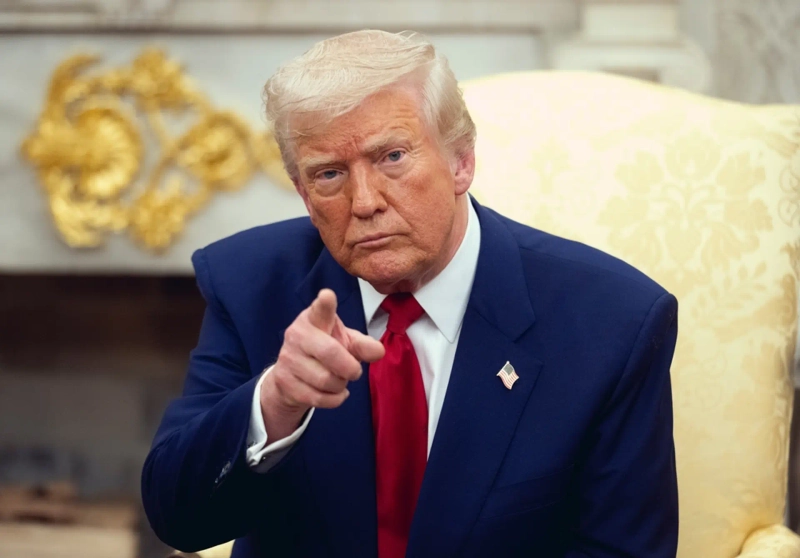
The US government said it will impose a 15% tariff on polysilicon derivatives, a key material used in semiconductors and solar panels. The move is intended to block inflows of Chinese products while boosting US production. South Korean solar companies including OCI Holdings and Hanwha Qcells said lower volumes of cheap Chinese supply in the US market could improve profitability.
President Donald Trump on August 6 signed an executive order invoking Section 232 measures on polysilicon and derivative products. The order's centerpiece is a 15% tariff on polysilicon derivatives including ingots, wafers, cells and modules. The measure effectively targets China, which dominates the polysilicon supply chain. It will take effect on December 4.
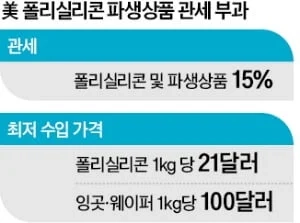
A minimum import price, or MIP, for polysilicon imports is a central feature of the measure. The floor price for imported polysilicon was set at $21 per kilogram, while the floor for polysilicon ingots and wafers was set at $100 per kilogram. Solar cells must be priced above $0.22 per watt and modules above $0.38 per watt.
South Korean solar companies including Hanwha Qcells stand to benefit from the US action. Hanwha Qcells produces ingots, wafers, solar cells and modules through its US manufacturing base, leaving it relatively less exposed to tariffs on imported derivative products. OCI Holdings, a polysilicon producer, also expects profitability to improve. Chinese polysilicon prices have fallen to $4 to $5 per kilogram, far below the floor set by US authorities. "As low-priced Chinese supply finds it harder to enter the market, conditions will become more favorable for higher selling prices and improved profitability," an OCI Holdings official said.
The Trump administration is also pursuing an onshoring program to encourage production of polysilicon, ingots, wafers and cells in the US. Companies that begin construction before the end of Trump's second term will be eligible for tariff exemptions equivalent to their planned production volumes.
Lee Sang-eun, Washington correspondent / Ahn Si-wook, reporter selee@hankyung.com

Korea Economic Daily
hankyung@bloomingbit.ioThe Korea Economic Daily Global is a digital media where latest news on Korean companies, industries, and financial markets.