Samsung, SK Hynix Bonus Formula Faces Legislative Fight Over Operating-Profit Link
Summary
- The government and shareholder groups said they are pursuing legislation to strengthen board and shareholder meeting oversight, arguing that operating-profit N%-linked bonuses run counter to the interests of shareholders and investors.
- Labor groups said the operating-profit N% rule is a legitimate subject for labor-management bargaining over compensation and strongly oppose government efforts to narrow the scope of labor disputes through administrative guidelines and enforcement rules.
- The dispute centers on who should control decisions on allocating bonus funding — labor and management, the board, or shareholders — and whether future revisions to the Trade Union Act, Commercial Act and Capital Markets Act could directly affect the investment environment.
Forecast Trend Report by Period


Battle Over Operating-Profit-Linked Bonuses Moves to Legislature
Industry, labor and politicians clash on multiple fronts
"I oppose an incentive structure that pays bonuses based on operating profit. At a minimum, it should require approval from the board or shareholders."
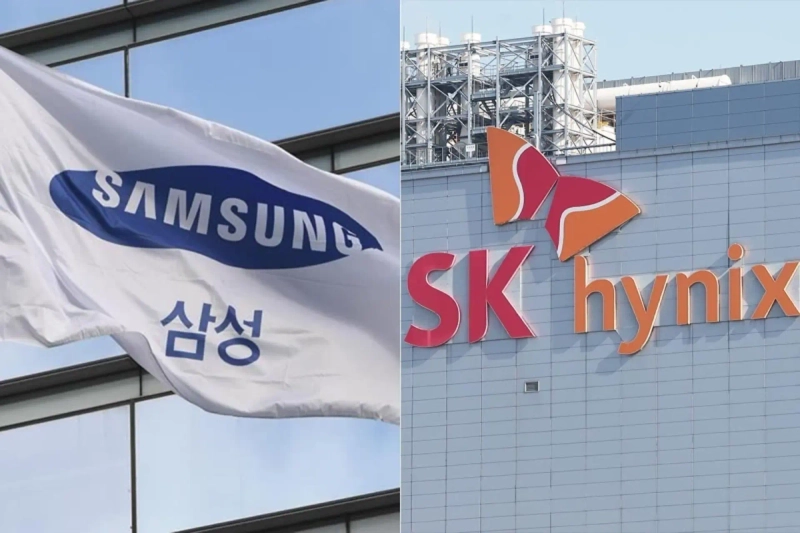
Kim Jung-kwan, South Korea's industry minister, made the remarks at a Kwanhun Club forum in Seoul on August 6. He said bonus distributions that run counter to the interests of shareholders and investors amount to overreach. The government is also discussing with relevant ministries whether to revise the Commercial Act and the Capital Markets Act so large bonus payments would require a shareholder vote. That marks an escalation of the so-called operating-profit N% rule, which began at the bargaining table between SK Hynix and its union, into the legislative arena.
Operating-Profit N% Rule Expands Into Legislative Debate
A dispute over whether setting aside a fixed share of operating profit for bonuses should be treated as a matter for collective bargaining and labor action, or placed under the control of boards and shareholder meetings, is widening into a legislative battle, according to industry officials on August 8.
The Korea Shareholder Activism Headquarters and the preparatory committee for the People and Shareholders Party on August 5 released a preliminary opinion on a proposed administrative measure that would set standards for determining the scope of labor disputes. The groups supported the government's move to establish standards, but said the measure should take the form of a legally binding regulation rather than a simple administrative guideline. They also called on the government to disclose first whether it would proceed through a presidential decree, ministerial ordinance, public notice or administrative guideline, and to go through a formal notice and public comment process.
The shareholder group said bonuses funded by a fixed percentage of accounting profit metrics such as operating profit, net income or economic value added, or EVA, differ from ordinary performance bonuses tied to production targets or individual evaluations. Citing a Supreme Court ruling in January that denied wage status to excess profit incentive payments, or OPI, based on division-level EVA, it argued that an operating-profit N% formula falls under profit appropriation rather than working conditions. It also urged the National Assembly to amend the Trade Union Act to exclude decisions on the appropriation and allocation ratios of corporate profits from the scope of labor disputes.
The government has also started to draw lines. President Lee Jae-myung said at a Cabinet meeting on July 21 that Samsung Electronics' union had raised performance bonuses and a semiconductor mega-project in the Honam region as agenda items for labor-management talks. "I studied labor law myself, but the scope of dispute subjects seems to be expanding too broadly," he said.
Lee instructed the labor relations commission to make rulings if needed and said the scope should be clarified through a presidential decree or enforcement rules. At the same meeting, Labor Minister Kim Young-hoon said Samsung Electronics' business decision itself to build a large semiconductor plant in Honam did not appear to qualify as a subject of labor dispute. The Ministry of Employment and Labor plans to issue guidelines this month spelling out the scope of bargaining and labor action over matters such as corporate investment decisions and bonuses.
The country's two largest labor federations pushed back. The Federation of Korean Trade Unions said the government should guarantee basic labor rights under the revised Trade Union Act rather than newly restricting the scope of labor disputes. It said limiting that scope through enforcement rules or administrative guidelines would effectively scale back rights that the National Assembly had expanded. The Korean Confederation of Trade Unions also described the move as an attempt to shrink and neutralize a law won through years of struggle by using government guidance. Its position is that the operating-profit N% rule is a matter for labor and management to negotiate as part of deciding how to distribute legitimate compensation for work.
Legal Boundary Remains Unclear as Fight Centers on Control Over Distribution
There is still no clear legal answer. Heungmiroun Research Institute, a labor-practice study group, said the issue should be examined in sequence: whether a demand for an operating-profit N% formula is a mandatory subject of bargaining that a company must address, a permissive subject that a company may discuss but can reject without committing an unfair labor practice, or an unlawful agenda that conflicts with mandatory law.
Existing Supreme Court precedents addressed only whether bonuses that had already been paid qualify as wages. They did not clearly answer whether pre-payment allocation standards are subject to bargaining. The group also said future legal doctrine could be shaped if unions win broader public support by emphasizing transparency and fairness in bonus calculations, and by calling for performance sharing that includes subcontractors and non-regular workers rather than simply demanding large bonus payouts.
With the legal boundary still murky, clashes in industry and politics have continued. Kim said again on June 22 that he personally did not believe performance bonuses should be subject to labor disputes and called for institutional changes that would reflect investor compensation. By contrast, Lee Chan-hee, chairman of Samsung's Compliance Oversight Committee, said on June 16 that he had found no particular problem with the labor-management agreement at Samsung Electronics. He added that it would be risky to dismiss or blindly follow either side's arguments before the courts reach a final judgment.
Yang Kyung-soo, head of the Korean Confederation of Trade Unions, went further on June 10, saying performance bonuses are also a subject for labor-management negotiations and that labor, management and government should discuss the social return of excess profits. Yang said the distribution of operating profit is a matter to be discussed with workers and opposed a plan to make shareholder approval mandatory.
As the dispute has widened, demands for an operating-profit N% formula have spread across industrial worksites. The labor ministry, however, said those cases did not arise because of the revised Trade Union Act.
Such arrangements appear to be rare overseas. TSMC sets only a floor of at least 1% and leaves the specific amount to a committee of outside directors. US Big Tech companies use a mix of company performance, individual performance and long-term stock compensation. Ultimately, the dispute is focusing less on the size of bonuses than on which body should hold the authority to decide how bonus pools are distributed: labor and management, the board, or shareholders.
Kim Dae-young, Hankyung.com reporter (kdy@hankyung.com)

Korea Economic Daily
hankyung@bloomingbit.ioThe Korea Economic Daily Global is a digital media where latest news on Korean companies, industries, and financial markets.