PiCK
Trump Signals More Economic Pressure on Iran, Says He Is Watching Cash-Strapped Tehran
Forecast Trend Report by Period


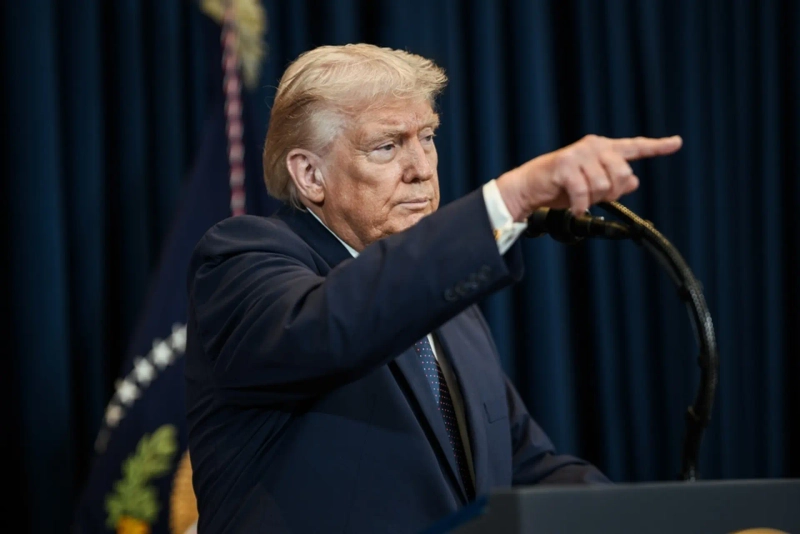
President Donald Trump signaled he intends to keep up economic pressure on Iran rather than launch additional military strikes, despite Tehran’s hard-line demands. He compared negotiations with Iran to a chess game and indicated he would wait and see for now.
Axios reported on August 9 on details from a phone call with Trump. Discussing Iran, Trump said the US was responding in a “low-key” way, suggesting a restrained approach.
“We are only partially negotiating with them,” Trump said. The remark suggests talks with Iran have not completely broken down, but also have not advanced to a full-fledged deal.
Trump also pointed to Iran’s economy. “We’re just watching Iran, which is suffering from massive inflation and has no money,” he said, calling the country’s situation “very difficult.”
He also said Iran lacks the funds to pay its soldiers. Trump argued that the US naval blockade on Iran has worsened the regime’s economic crisis.
Trump also mentioned oil prices. With crude down to a little above $75 a barrel, US consumers were feeling less of the burden from the war, Axios reported.
“It will work out well,” Trump said of negotiations with Iran. “It always works out. It’s like a chess game.”
Axios said Trump made no new military threats against Iran during the call. The report added that he showed no anger or frustration over Iran’s delay in announcing an agreement with Oman to reopen the Strait of Hormuz.
Axios reported that although Iran continues to reject US demands, Trump signaled he is prepared to intensify economic pressure rather than order new military strikes.
Trump previously said he canceled a large-scale attack on Iran on the night of August 1 at the request of Middle Eastern countries. He also urged a swift agreement to reopen the Strait of Hormuz. Speculation had since grown that talks involving Iran and Oman were nearing a deal, but the outlook has become unclear again.
That came after Iran presented new conditions to the US.
Mohammad Bagher Zolghadr, secretary of Iran’s Supreme National Security Council, issued a statement on August 8 laying out six demands for reopening the Strait of Hormuz. They included lifting the US naval blockade on Iran, withdrawing troops from areas around Iran and compensation for war damage. The demands were more hard-line than the ceasefire memorandum of understanding previously agreed by the US and Iran.
Lee Song-ryul, Hankyung.com reporter yisr0203@hankyung.com

Korea Economic Daily
hankyung@bloomingbit.ioThe Korea Economic Daily Global is a digital media where latest news on Korean companies, industries, and financial markets.