Iran Names IRGC Hard-Liner Mohsen Rezaei to Top Security Post
Summary
- Iran said it had appointed Mohsen Rezaei, a Revolutionary Guard hard-liner, to a key post overseeing national security policy.
- Rezaei is on the US sanctions list and is subject to an Interpol red notice, and the report said the appointment was seen as a sign of a tougher hard-line stance toward Washington.
- The report said the appointment was also raising questions about a reshaping of Iran’s power structure and the possibility that President Pezeshkian’s position may be weakening.
Forecast Trend Report by Period


Mohsen Rezaei, the Islamic Revolutionary Guard Corps’ longest-serving commander, is appointed secretary of the Supreme National Security Council
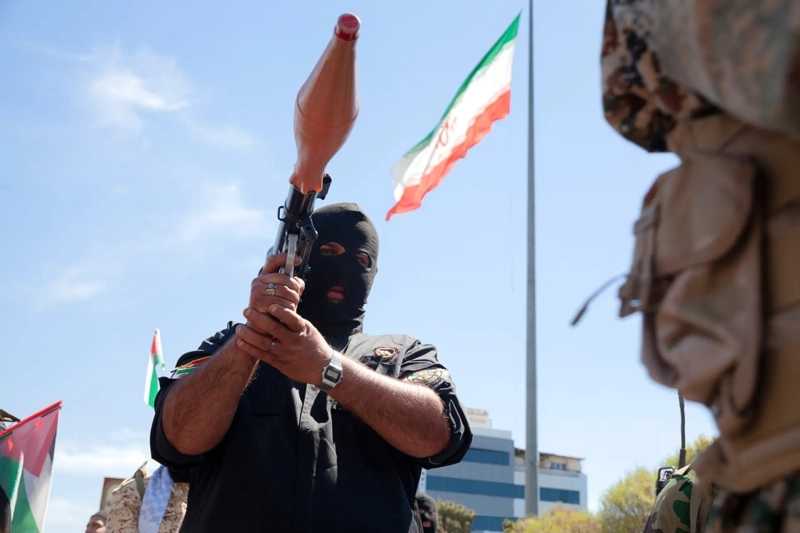
Iran has appointed a hard-line former commander of the Islamic Revolutionary Guard Corps to a key post overseeing national security policy. The move comes as tensions with the US and Israel persist, adding to signs that Tehran’s internal power balance is shifting toward confrontation rather than negotiation.
The New York Times reported on August 9 that a spokesman for Iranian President Masoud Pezeshkian announced on social media that Mohsen Rezaei, a military adviser to Supreme Leader Ayatollah Ali Khamenei, had been named the new secretary of the Supreme National Security Council.
Rezaei is the longest-serving commander in the IRGC’s history. He led the force for 16 years from 1981 to 1997 and is credited with playing a central role in building the military organization that defends Iran’s Islamic theocratic system.
He has also long been a controversial figure. Rezaei has faced accusations of orchestrating the 1978 assassination of US oil company executives in southern Iran. He was also identified as a suspect in the 1994 bombing of a Jewish community center in Argentina that killed 85 people, leading to an Interpol red notice. He is also under US sanctions after the Treasury Department added him to its Specially Designated Nationals list in 2020.
The appointment comes as military clashes and diplomatic contacts have alternated over the reopening of the Strait of Hormuz. That has fueled speculation that Iran may be adopting a tougher line in talks with Washington. Rezaei’s predecessor, Mohammad Bagher Zolghadr, is known to be close to Parliament Speaker Mohammad Bagher Ghalibaf. The change has prompted suggestions that the supreme leader’s camp moved to curb Ghalibaf’s influence.
The move has also raised questions about whether President Pezeshkian, who is considered a relatively moderate advocate of negotiations, is losing room to maneuver. Iran International, an anti-Iran media outlet, reported that cleric Mohammad Bagher Karrazi, a relative of the Khamenei family, said earlier in August that Pezeshkian had recently offered to resign to the supreme leader 28 times and was warned that “if he submits another resignation, it will be accepted.” Iran’s presidential office strongly denied the report.
Lee Song-ryeol, Hankyung.com reporter yisr0203@hankyung.com

Korea Economic Daily
hankyung@bloomingbit.ioThe Korea Economic Daily Global is a digital media where latest news on Korean companies, industries, and financial markets.