US-Japan Intervention Loses Force as Yen Slides Back Toward 160 Per Dollar
Summary
- The dollar-yen rate has climbed back to 159.08 yen, suggesting the impact of joint intervention by US and Japanese authorities is fading and pressure on the yen remains in place.
- The yen is facing pressure as oil returned to the $80-a-barrel range, while Japan’s expanded fiscal spending and concerns over rising long-term yields added to the strain, with safe-haven demand paradoxically emerging as a factor behind yen weakness.
- Brokerages said the won could see wider volatility in line with the yen, while also noting that a gradual strengthening in the yen could lead to further gains in the won and that the won may converge below 1,400 per dollar.
Forecast Trend Report by Period


"Won Volatility May Widen Again"
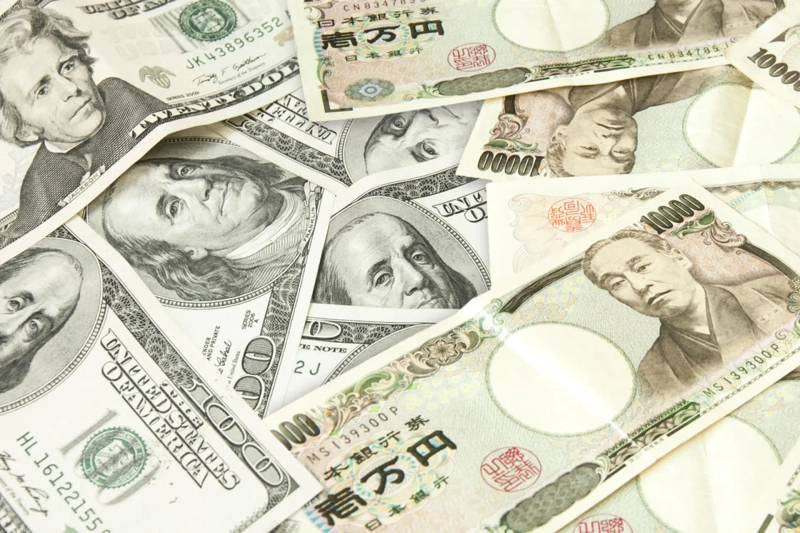
The yen initially rebounded after coordinated action by US and Japanese authorities drove the dollar-yen rate sharply lower. That rebound is now losing momentum as concerns over Japan’s fiscal health and higher oil prices push the pair back up, weakening the yen again. Brokerages say the won could also face wider volatility in tandem with the yen.
As of 10:45 a.m. on Aug. 11, the dollar was trading at 159.08 yen. The pair had approached 164 yen in late July, then fell into the 155-yen range intraday on Aug. 3 after joint intervention by US and Japanese authorities. It has since turned higher again.
Japan’s foreign-exchange authorities are estimated to have bought a total of 13.78 trillion yen over two days on July 30 and July 31. The US also bought yen through the Federal Reserve Bank of New York, marking the first joint intervention with Japan since 1998.
After falling on the back of the coordinated intervention, the dollar-yen rate reversed course as oil prices rebounded.
US West Texas Intermediate crude futures settled up 5.1% from the previous session, returning to the $80-a-barrel range, after the US and Iran each put forward additional demands over the reopening of the Strait of Hormuz.
Global benchmark Brent crude for October delivery also rose 5.0% to settle at $87.72 a barrel.
“Contrary to optimism over the Iran situation, talks between the US and Iran have shown little progress, and oil has rebounded into the low-$80 range,” Park Sang-hyun, an analyst at iM Securities, said. Uncertainty stemming from Iran has also fueled safe-haven demand, which he said added pressure for yen weakness.
Concerns about Japan’s fiscal health are also weighing on any rebound in the currency. With Prime Minister Sanae Takaichi’s cabinet drawing up a record budget, investors are concerned that expanded fiscal spending could lead to more government bond issuance and higher long-term yields, putting pressure on the yen.
“It is difficult to defend against yen weakness because of fiscal risks tied to Prime Minister Takaichi’s continued expansionary fiscal policy,” Park said. “If an additional rate increase comes in September, the market may focus more on the end of the hiking cycle than on the rate hike itself, which could instead become a trigger for further yen weakness.”
Brokerages also say the won could become more volatile in line with movements in the yen.
The won has recently strengthened, helped by demand to convert proceeds from SK Hynix American depositary receipts, dollar selling by exporters and the August corporate tax payment season.
With the US and Japan carrying out joint intervention as dollar-yen moved into the 160 range, markets see less risk that the threshold for weakness in Asian currencies will be pushed lower. That is because excessively weak Asian currencies could discourage investment in the US.
Treasury Secretary Scott Bessent raised concerns publicly about volatility in Asian currencies during a CNBC interview on Aug. 4, as he explained why the US government had recently stepped in directly to support the yen. “If the yen becomes excessively weak, other currencies will follow,” he said.
“A stable yen is very important not only for the US but also for the broader Asian economy,” he added. “The level of yen weakness can trigger competitive currency devaluation, and that is not healthy.”
“If the yen gradually strengthens from here, including through official intervention, that would provide an additional tailwind for the won,” Lee Seung-hoon, an analyst at Meritz Securities, said. Rather than turning weaker again against the dollar, the won is more likely to converge below 1,400 per dollar over the medium term, he said.
Noh Jeong-dong, Hankyung.com reporter, dong2@hankyung.com

Korea Economic Daily
hankyung@bloomingbit.ioThe Korea Economic Daily Global is a digital media where latest news on Korean companies, industries, and financial markets.