Investors Shift From US Stocks to Europe as Stoxx 600 Gains 12%, Euro Rises Above $1.15
Summary
- Europe’s Stoxx 600 index, government bonds and the euro have all strengthened, signaling a shift in capital from US assets into Europe.
- Shares of European AI adopters have risen 14%, beating the 4% gain for US hyperscale technology companies, and some investors now see European stocks and bonds as more attractive investments.
- Still, some investors are skeptical that the rally in European assets can last because of inflation, worsening fiscal conditions and political uncertainty.
Forecast Trend Report by Period


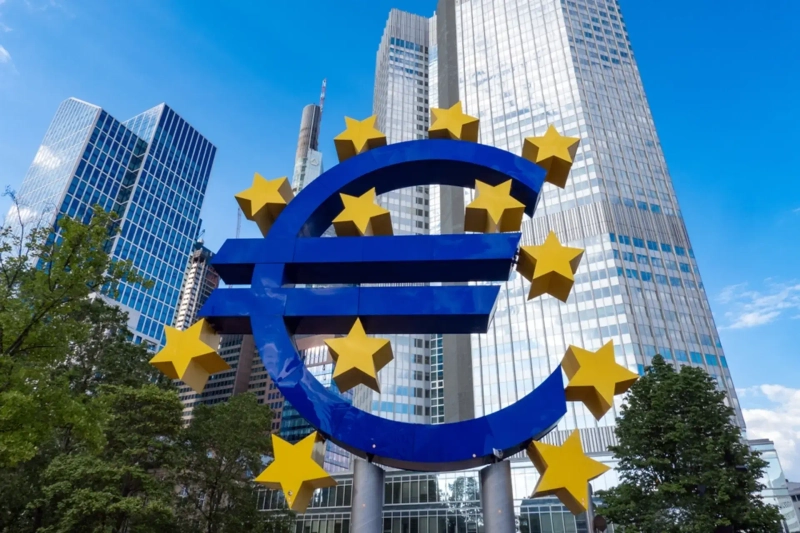
Investors are pouring money into European stocks and bonds as the region’s markets extend their rally.
Bloomberg reported on Aug. 11 that Europe’s broad Stoxx 600 index has climbed 12% this year. Benchmark government bonds in Germany, Italy and France have also surged to record highs. German bunds have outperformed US Treasuries, while the euro is trading near its strongest level against the dollar in two months.
Investors have been encouraged by a mix of steady growth and contained inflation. Europe is seeing its strongest earnings season and economic recovery in four years, but growth has not been strong enough to create pressure for further rate increases. With Federal Reserve policy still clouded by uncertainty, some investors see European bond funds as more attractive than US assets because the policy outlook is easier to gauge.
Sophie Huynh, a portfolio manager at BNP Paribas Asset Management, said inflation is not out of control, so the European Central Bank does not need to raise rates, while growth remains firm enough to support equities.
Bloomberg data showed second-quarter net income for companies in the MSCI Europe index jumped 17%, the biggest increase since the end of 2022. Mining and industrial companies, which are especially sensitive to economic growth, made the largest contribution.
Investors are also paying closer attention to Europe’s broad exposure to the artificial intelligence industry. Helen Jewell, chief investment officer for international equities at BlackRock, said that offers less concentration risk than markets in Asia or the US, where investment has been focused on a smaller number of companies.
At first, investors concentrated on US companies spending hundreds of billions of dollars to build AI infrastructure. Now they are turning to companies that stand to benefit from adopting the technology. Shares of European AI adopters identified by Bank of America have risen 14% this year, outpacing the 4% gain for US hyperscale technology companies.
Bond investors are also rotating into European sovereign debt because the region’s growth outlook still trails that of other major economies. Bloomberg data show euro-area real gross domestic product is forecast to grow 0.8% in 2026 and 1.2% in 2027, below projected US growth of 2.2% and 2.1%.
The ECB has raised interest rates by 0.25 percentage point this year, and investors expect two more increases by mid-2027. Even so, demand for euro-area sovereign debt has held up as fiscal and policy risks in the US and Japan become harder to price.
European sovereign bonds remain attractive to overseas investors, according to Erik Liem, a rates strategist at Commerzbank. He said the ECB has already responded to the Iran situation and its policy path is easier to predict, while uncertainty around the Fed has grown as its communication has shifted.
Yields on 30-year US Treasuries have risen more sharply than those on comparable German bonds. The gap between the two 30-year yields has widened to the most in a year, reflecting investor doubts about the Fed’s credibility and the long-term direction of US fiscal policy.
The shift in sentiment is also showing up in cross-border capital flows. Japan’s latest balance-of-payments data showed Japanese investors bought French government bonds last month while selling US and Australian sovereign debt.
Demand for European assets is also lifting the currency. The euro hit a seven-week high on Aug. 7 and is now trading above $1.15.
MUFG Bank said the move partly reflects dollar weakness, but it also expects the euro to rise to $1.20 by mid-2027 as reserve managers diversify their currency holdings.
Still, some investors remain skeptical that Europe’s rally can last.
Oil prices are nearly 23% above their July low, and any agreement to fully reopen the Strait of Hormuz remains far off. Declining European liquefied natural gas inventories and rising global food prices could add to inflation pressure in the second half of this year.
James Athey, an investment manager at Marlborough Investment Management, said bond markets may already be fully pricing in ECB rate increases, while worsening fiscal conditions and political uncertainty could hurt investor sentiment.
Duncan Tomes, a multi-asset strategist at HSBC Holdings, said the direction of European assets will depend on whether money flows back into AI-related trades. If the AI rally in semiconductors and other sectors resumes, Europe’s outperformance will be difficult to sustain.
Kim Jung-a, contributing reporter, Hankyung.com, kja@hankyung.com

Korea Economic Daily
hankyung@bloomingbit.ioThe Korea Economic Daily Global is a digital media where latest news on Korean companies, industries, and financial markets.