Samsung, SK Hynix Shareholder Payouts May Reach $217 Billion a Year as Chip Boom Fuels Cash
Forecast Trend Report by Period


KB Securities Says Samsung Could Return Up to $506 Billion Over Three Years
Mirae Asset Sees SK Hynix Net Cash Rising to $125 Billion
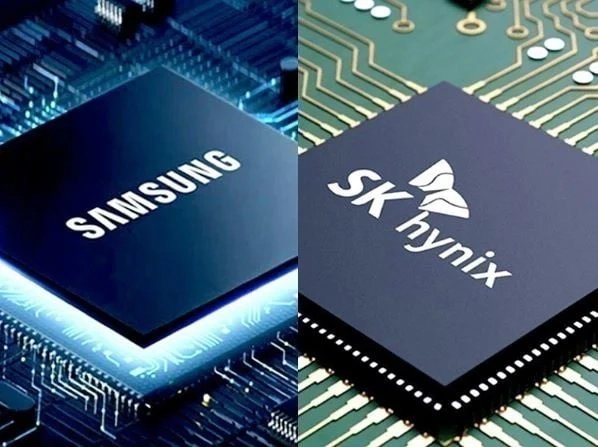
Investor focus is turning to how much cash Samsung Electronics Co. and SK Hynix Inc. will hand back to shareholders after both posted record earnings in a semiconductor boom. Samsung may unveil its next three-year shareholder return policy, including a special dividend, as early as August. SK Hynix plans to announce additional payout measures in the third quarter. Brokerages have floated projections that the two companies’ combined annual shareholder returns could reach as much as 300 trillion won ($216.7 billion).
Samsung Annual Shareholder Returns Seen Reaching $145 Billion
According to the financial investment industry on Aug. 12, Samsung may disclose a detailed shareholder return plan, including a special dividend, along with its next three-year policy as early as August. On the company’s second-quarter earnings conference call on July 30, Chief Financial Officer Park Soon-cheol said the board and management were in deep discussions over specific steps for a shareholder return policy that includes a special dividend, as well as the next policy cycle. He told shareholders the company would share the plan soon.
The market is focused on the size of Samsung’s payout package after its record earnings. Under its 2024-2026 shareholder return policy, Samsung returned 50% of free cash flow and paid annual dividends of 9.8 trillion won ($7.1 billion). Brokerages now project annual shareholder returns of as much as 200 trillion won ($144.5 billion).
KB Securities estimates Samsung’s annual shareholder returns at 100 trillion won to 200 trillion won ($72.3 billion to $144.5 billion), more than 10 times the previous annual dividend amount of 9.8 trillion won. Kim Dong-won, head of research at KB Securities, said the new policy due soon would expand annual shareholder returns to more than 10 times the current framework. Over the next three years, total shareholder returns could reach 600 trillion won to 700 trillion won ($433.4 billion to $506.2 billion), implying a cash dividend yield of 7% to 15%.
Mirae Asset Securities estimated that if Samsung carries out a policy of returning 50% of free cash flow for 2024 through 2026, this year’s shareholder return yield could reach 6.8% to 9.5% for common shares and 9.1% to 12.7% for preferred shares. Analyst Kim Young-geon said this year would be only the start, with next year likely to mark the first full year of large-scale shareholder returns. Over the past nine years, Samsung has maintained fixed annual dividends of about 10 trillion won ($7.2 billion), or roughly 370 won a share in quarterly payouts, based on an assumed 60 trillion won ($43.3 billion) of free cash flow every three years. But cumulative free cash flow for the three years beginning in 2027 is conservatively estimated at more than 600 trillion won ($433.4 billion). If the payout ratio stays the same, the theoretical return pool would be 10 times larger.
DS Investment & Securities expects Samsung could provide an additional 132 trillion won ($95.4 billion) in returns this year. Analyst Lee Su-rim estimated Samsung’s operating profit this year at 391.9 trillion won ($283.3 billion) and operating cash flow at 325.5 trillion won ($235.4 billion). Assuming capital expenditures of 62.3 trillion won ($45.1 billion) this year, free cash flow based on operating cash flow minus capex would come to 263.2 trillion won ($190.4 billion). That would leave 131.8 trillion won ($95.3 billion) available for additional returns after subtracting total regular dividends of 29.4 trillion won ($21.3 billion) from 161.3 trillion won ($116.7 billion), equal to 50% of cumulative free cash flow over the next three years.
Could SK Hynix Return as Much as $72 Billion This Year?
SK Hynix’s current three-year shareholder return policy runs through next year, but calls have grown for a bigger plan that goes beyond that framework after an extraordinary memory-chip upcycle. Some investors also say SK Hynix underperformed Samsung after the company, citing restrictions tied to the offering process for its American depositary receipts, did not spell out a detailed return plan when it reported earnings on July 29.
On Aug. 7, SK Hynix declared a quarterly dividend of 375 won a common share and said it would announce additional shareholder return measures in the third quarter.
Brokerages are basing their estimates on SK Hynix’s plan to use 50% of free cash flow from 2025 through 2027 for shareholder returns. Mirae Asset Securities estimates SK Hynix’s free cash flow this year at 180 trillion won ($130.1 billion), with net cash accumulating to 173 trillion won ($125.1 billion). Kim Young-geon said that even if the company retains 100 trillion won ($72.3 billion) in cash as a safety buffer, it would still have 70 trillion won to 80 trillion won ($50.6 billion to $57.8 billion) available. Returning half of that would be feasible. Based on the current share price, he estimated the dividend yield could reach as high as 3.9%.
Samsung Securities said shareholder returns could reach 57 trillion won ($41.2 billion) this year and 120 trillion won ($86.7 billion) next year, based on 50% of its free cash flow estimates. It also included 63.3 trillion won ($45.8 billion) in proceeds from the sale of the company’s stake in Japan’s Kioxia Holdings Corp. as a potential source of shareholder returns. At the current stock price, it projected dividend yields of 3.6% this year and 7.9% next year.
Daishin Securities said SK Hynix could allocate as much as 100 trillion won ($72.3 billion) to shareholder returns. Analyst Ryu Hyung-geun said SK Hynix had presented a net cash target of 100 trillion won at its shareholder meeting earlier this year and had already surpassed that goal. The supercycle, gains from strategic investments including a large inflow from the Kioxia stake sale, and the ADR issuance have created conditions for the company to spend as much as 100 trillion won on share buybacks and cancellations as well as special dividends.
From the earnings release until before the company disclosed its return plan, SK Hynix shares fell 8.26%, while Samsung rose 5.00%. SK Hynix had dropped 4.88% in regular trading before the announcement, then trimmed the loss to the 1% range in after-hours trading after the disclosure.
How Micron Is Returning Capital
Micron Technology Inc., a rival of Samsung and SK Hynix, said in June that it would return 100% of excess cash to shareholders over the long term. Excess cash refers to money left after securing funds needed for operations, capital investment, debt repayment and financial stability. That does not mean the company will return all free cash flow as it is generated.
Micron plans to spend about $27 billion on capital expenditures in fiscal 2026 and raise that amount further in fiscal 2027. The company said it would expand capital returns after December, but did not provide a detailed formula for calculating excess cash or a minimum annual return amount.
In its quarterly report filed with the US Securities and Exchange Commission, the company said the size and timing of share buybacks could vary depending on operating performance, cash flow, restrictions under agreements tied to the US CHIPS Act, capital spending, mergers and acquisitions, and debt repayment. The direction is clear: surplus cash will be returned to shareholders. But management still has room to decide the timing and scale of actual payouts.
An industry official said the key question is whether large shareholder returns are designed as a sustainable policy that takes into account long-term cash flow and capital spending plans, rather than ending as a one-off special dividend. With global rivals also increasing distributions of excess cash, South Korean chipmakers need to make their shareholder return policies more concrete in ways that improve both the scale and predictability of payouts, the person said.
Kang Kyung-ju, Hankyung.com reporter qurasoha@hankyung.com

Korea Economic Daily
hankyung@bloomingbit.ioThe Korea Economic Daily Global is a digital media where latest news on Korean companies, industries, and financial markets.