US Economy at Turning Point as Disinflation Signals Strengthen
Summary
- US July core CPI slowed for a third straight month to 2.5%, matching the level seen before the Middle East war and reinforcing signs of disinflation.
- Markets say July wage growth came in below headline CPI, adding to evidence that price pressures are easing.
- That has raised the odds of a rate hold at the September FOMC and increased the possibility that any further benchmark rate hike will be pushed back beyond this year.
Forecast Trend Report by Period


July Core CPI Matches Pre-Middle East War Level
Odds Rise for a September Rate Hold
Surges in Oil and Chip Prices Remain a Wild Card
The US economy may be approaching a turning point after expectations had built for another benchmark interest-rate increase this year. Recent data have shown clearer signs of disinflation, or slowing price growth. That is bolstering the view that the Federal Reserve may not raise rates again until next year at the earliest.
A key reason is the July core consumer price index data released on August 12. Core CPI, which excludes volatile food and energy prices, rose 2.5% from a year earlier, slowing for a third straight month. The gain followed 2.9% in May and 2.6% in June.
The July reading was especially notable because it matched February's 2.5%, the level seen just before the outbreak of the Middle East war. Christopher Hodge, chief economist at French investment bank Natixis, said the annualized rate based on the latest three months of core CPI data had slowed for a fourth straight month. Inflation pressures are easing broadly.
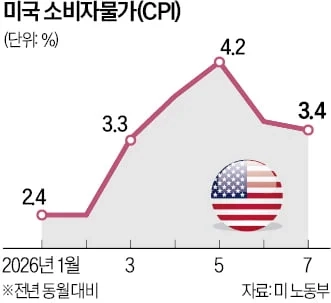
The labor market also points to a stronger disinflation trend. Nonfarm payrolls fell by 23,000 in July. The unemployment rate edged down to 4.1% from 4.2%, though that was attributed to an increase in people giving up their job search.
JPMorgan highlighted that July hourly wage growth, at 3.2% from a year earlier, was below headline CPI growth of 3.4%. David Kelly, chief global strategist at JPMorgan Asset Management, said inflation cannot persist for long if real wages are not rising. In that case, wages and prices cannot keep pushing each other higher.
That gives Federal Reserve Chair Kevin Warsh, who has been cautious on further rate increases, more room to maneuver. He can hold rates steady at the Federal Open Market Committee meeting on September 15-16 and still have time to watch inflation through the FOMC's October and December meetings.
The Wall Street Journal reported on August 12 that underlying inflation appears to be easing. It said the data support the Fed's decision to keep rates unchanged last month.
Hwang Jung-soo, New York correspondent, Korea Economic Daily, hjs@hankyung.com

Korea Economic Daily
hankyung@bloomingbit.ioThe Korea Economic Daily Global is a digital media where latest news on Korean companies, industries, and financial markets.