Samsung Electronics, SK Hynix Extend Rebound to Third Day as Foreign Investors Return
Forecast Trend Report by Period


‘Excessive selloff’ view gains traction as Samsung Electronics and SK Hynix rebound
Samsung Electronics and SK Hynix rise for a third straight session
Samsung Electronics rebounds 16%; SK Hynix gains 12%
Morgan Stanley calls it a re-entry opportunity, but warns of slower price gains in the fourth quarter
Long-term contracts, HBM demand and shareholder returns bolster the case for a longer cycle
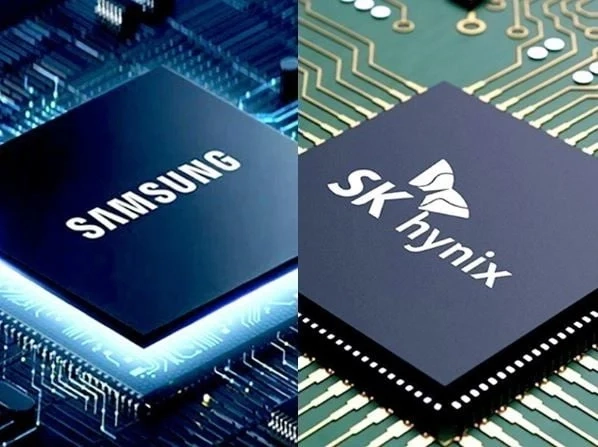
Samsung Electronics and SK Hynix rose for a third straight trading day after a recent steep selloff, fueling hopes the stocks may have bottomed. Brokerages have also turned more constructive on the chip outlook, citing long-term supply contracts, demand for high-bandwidth memory, or HBM, and large shareholder returns.
According to the Korea Exchange, Samsung Electronics closed 4.89% higher at 268,000 won on Aug. 13. SK Hynix finished up 5.92% at 1.593 million won. Both stocks have advanced for three straight sessions since Aug. 11.
Compared with their Aug. 10 closes, Samsung Electronics has rebounded 16.52% and SK Hynix 12.18%. The Kospi has also risen for four straight sessions this week, suggesting investor sentiment is gradually recovering after the sharp market drop.
Foreign investors also swung back to buying. Korea Exchange data show they were net sellers last week, unloading 1.2985 trillion won of Samsung Electronics and 3.5078 trillion won of SK Hynix. This week through Aug. 13, they turned net buyers, purchasing 2.5982 trillion won of Samsung Electronics and 1.1984 trillion won of SK Hynix.
Morgan Stanley said in its Aug. 6 Asia tech report, titled “Memory - Small Bump,” that the steep correction in memory-chip shares appears to have run its course and that current levels offer a tactical re-entry opportunity. The bank had warned last month of a short-term correction, citing slower gains in DRAM prices and crowded investor positioning. After the stocks fell sharply, however, it judged valuations had become attractive.
The bank has not abandoned its caution on the industry. Morgan Stanley said memory-price gains may slow from the fourth quarter, and rising inventories and supply could leave less room for further upward revisions to earnings estimates. On Aug. 13, it also switched its top Asia tech pick to Samsung Electro-Mechanics from Samsung Electronics, reflecting a view that the benefits of artificial-intelligence spending may spread more strongly to component makers such as producers of multilayer ceramic capacitors, or MLCCs, and semiconductor substrates.
Local brokerages said slower memory-price gains do not necessarily mean the cycle has peaked. Following the recent slump, the stocks are trading at levels that look cheap relative to next year's earnings, while broader long-term supply contracts have improved the durability of profits.
KB Securities estimates combined operating profit for Samsung Electronics and SK Hynix next year at 964 trillion won. It forecasts 575 trillion won for Samsung Electronics and 389 trillion won for SK Hynix. Based on their Aug. 12 closing prices, their projected price-to-earnings ratios for next year were just 3.7 times and 3.2 times, respectively.
“The outlook for next year's earnings improvement is not reflected in the share prices at all,” Kim Dong-won, an analyst at KB Securities, said. That suggests there is substantial room for a re-rating, he added.
SK Securities highlighted a rise in five-year long-term supply contracts, saying they have made demand and profits easier to forecast for memory makers. Greater profit durability could also strengthen shareholder returns. Samsung Electronics and SK Hynix are set to unveil additional shareholder-return plans as early as August, and some in the industry expect their combined annual shareholder returns could reach as much as 300 trillion won.
“We should be cautious about the argument that slower memory-price growth means the peak has passed,” Han Dong-hee, an analyst at SK Securities, said. “The industry is now being supported not only by prices, but also by durability and visibility.”
Daishin Securities said Korean chip stocks have fallen more sharply than global peers because of lower profitability tied to bonus provisions, uncertainty over shareholder-return policies and concerns that specifications for HBM in new graphics processing units, or GPUs, may be downgraded. Even so, it said earlier shareholder returns and broader long-term supply contracts should ease those concerns and help drive a recovery in share prices.
“It was an excessive decline that failed to reflect the value of the industry cycle,” Ryu Hyung-geun, an analyst at Daishin Securities, said. With a wide range of positive changes likely to emerge and help normalize valuations, investors should take a more constructive view, he said.
As a gauge of the industry's direction, Ryu pointed to next year's demand. “From the middle to the latter part of August, we should be able to reconfirm evidence that the cycle is expanding,” he said. “Server DRAM demand, in particular, is expected to increase more than 50% from a year earlier next year, and the intensity of supply shortages will likely exceed this year's.”
Kim Yeon-ji, Hankyung.com reporter kongzi@hankyung.com

Korea Economic Daily
hankyung@bloomingbit.ioThe Korea Economic Daily Global is a digital media where latest news on Korean companies, industries, and financial markets.