South Korea Household Loan Growth Through July Reaches 93% of 2025 Total
Summary
- The cumulative increase in household loans in January through July reached 35.3 trillion won ($25.5 billion), or 92.9% of last year’s full-year increase.
- This year’s total household lending growth target of 1.5%, or about 30 trillion won ($21.7 billion), has already been exceeded, prompting some banks to cut mortgage loans limits and restrict applications on a first-come, first-served basis, triggering a so-called loan open run.
- Financial authorities raised the total growth rate target to 3%, but debate continued over forecasting failures, the effectiveness of volume controls, and whether next year’s target would be set on an appropriate basis.
Forecast Trend Report by Period


35.3 trillion won ($25.5 billion) added in January-July, or 93% of last year’s increase
Debate grows over effectiveness of regulators’ lending caps
South Korea’s household loans increased by almost as much in the first seven months of 2026 as they did in all of last year. The gain has already exceeded the annual lending target originally set by financial authorities, sharpening criticism over flawed demand forecasts and the effectiveness of volume controls.
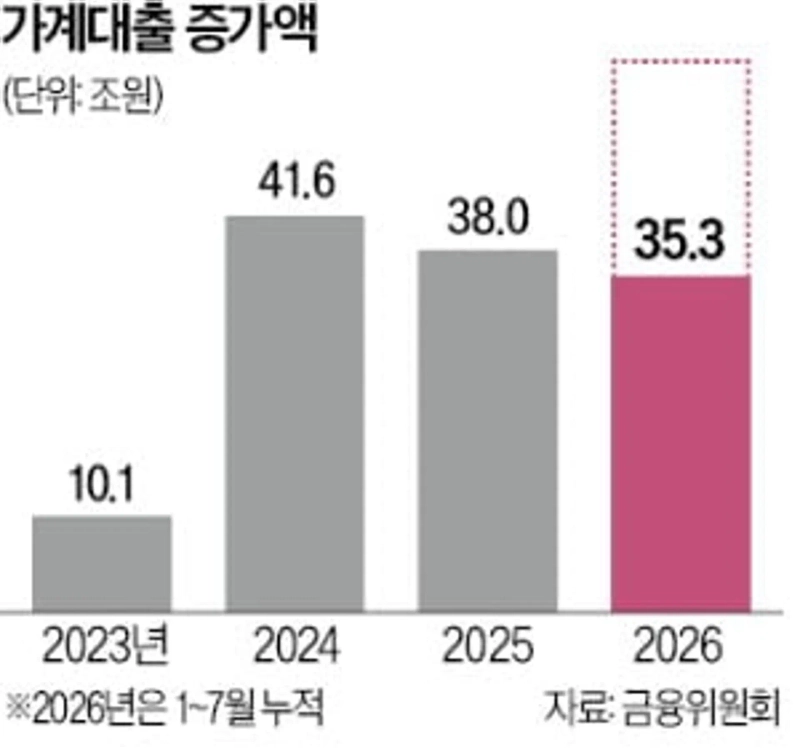
Household loans across all financial institutions rose 6.2 trillion won ($4.5 billion) in July from a month earlier, the Financial Services Commission said on August 14. The cumulative increase in January through July reached 35.3 trillion won ($25.5 billion), or 92.9% of last year’s full-year increase of 38 trillion won ($27.5 billion).
The increase has already surpassed this year’s target set by regulators. In April, the Financial Services Commission said it would hold this year’s household loan growth below last year’s 1.7% pace, targeting 1.5%, or about 30 trillion won ($21.7 billion). That ceiling was breached in July, with some banks cutting mortgage lending limits or restricting applications on a first-come, first-served basis, fueling what is known locally as a “loan open run.”
Financial authorities responded the previous day by doubling the target growth rate to 3%. They said the change was unavoidable because housing market conditions and loan demand had differed from their initial expectations.
Still, criticism is growing that authorities set an annual lending target without properly anticipating market conditions. Questions have also been raised about whether the original target was based on appropriate assumptions, especially as regulators had said household lending would be managed in line with economic conditions such as nominal gross domestic product growth. There are also concerns that this year’s confusion could be repeated next year.
A Financial Services Commission official said volume controls have advantages and disadvantages but still need to be maintained for now. The official added that regulators would supplement next year’s target-setting process based on problems exposed during this year’s operations.
Cho Mi-hyun and Park Si-on, Hankyung.com reporters mwise@hankyung.com

Korea Economic Daily
hankyung@bloomingbit.ioThe Korea Economic Daily Global is a digital media where latest news on Korean companies, industries, and financial markets.