PiCK
Bitcoin Holds in $63,000 Range Despite Softer US Inflation, Oil; Caution Persists on Demand Gap
Summary
- Analysts said Bitcoin is searching for direction between support at $63,000 and resistance at $67,000, meaning a cautious approach is warranted until it reclaims $67,000.
- They said Bitcoin spot trading volume has fallen to its lowest since 2019, and that a gap in spot demand and a buildup in leveraged positions are raising the risk of greater volatility, based on on-chain and ETF trends.
- Still, they said the 200-week moving average, the $63,000 support zone, and an exhausted long-term downtrend with oversold conditions all point to a growing possibility that Bitcoin is forming a long-term bottom.
Forecast Trend Report by Period



Bitcoin remained stuck in the $63,000 range even as softer US inflation and lower oil prices fueled hopes of easing interest-rate pressure. Weak spot trading and a gap in demand have kept the token searching for direction. Analysts say expectations for a long-term bottom are building, but a cautious approach is warranted until Bitcoin reclaims $67,000.
As of 4:48 p.m. on August 14, Bitcoin was trading at $63,050 on Binance's USDT market, down about 1.30% from a day earlier. On Upbit, it was trading at about $64,100. The kimchi premium, which measures the price gap between overseas and South Korean exchanges, stood at negative 0.46%.
US Inflation and Oil Both Ease as Rate Pressure Cools
US inflation data came in softer than expected and international oil prices fell, helping global equities steady. The crypto market, by contrast, remained weak, indicating that hopes for lower rate pressure have yet to translate into clear buying demand.
The US producer price index for July, released on August 13, was unchanged from the previous month, below market expectations for a 0.2% increase. Core PPI, which excludes food and energy, rose 0.2% from a month earlier, also below forecasts for 0.3%. July consumer prices, released earlier, rose 0.1% from the prior month, matching estimates and easing some concern about a renewed pickup in inflation.
Lower oil prices also supported sentiment. Despite the continuing US-Iran war, markets focused more on the prospect of slowing crude demand, pushing Brent down more than 2% intraday to around $87 a barrel. As inflation pressure eased, the yield on the 10-year Treasury fell to 4.64%, while the two-year yield slipped to 4.15%.
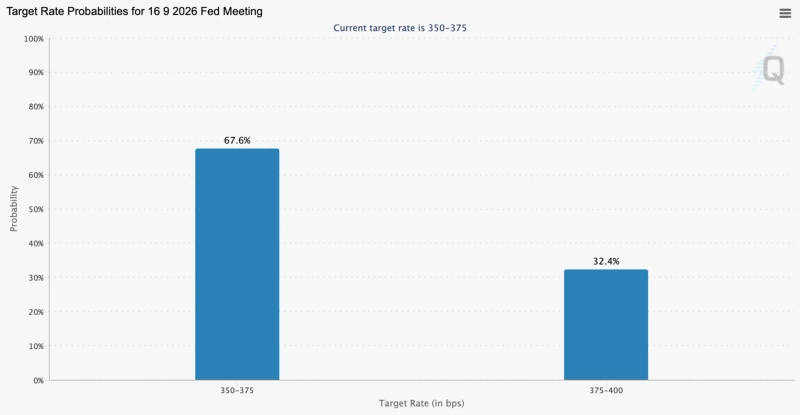
CME FedWatch showed the rates futures market raising the probability of a Federal Reserve hold in September to 67.6% on August 14 from 59.4% a day earlier. Still, markets will continue to test whether softer inflation can materially ease rate pressure, with geopolitical uncertainty tied to the US-Iran war and concerns over the US fiscal deficit keeping long-term yields elevated.
Bitcoin Spot Volume Falls to Lowest Since 2019 as Demand Gap Persists
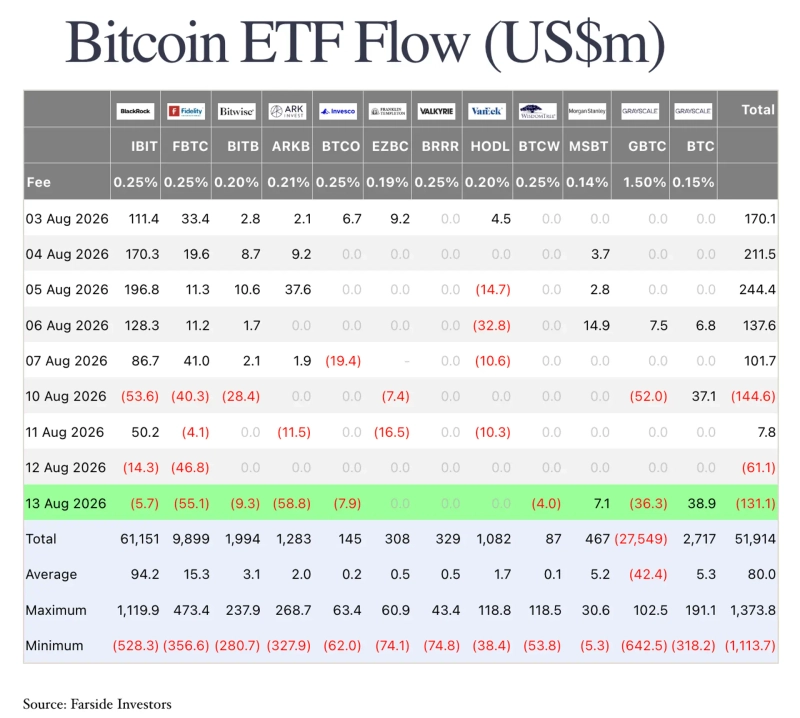
Spot Bitcoin exchange-traded funds posted net inflows of $865.3 million in the week of August 3-7, but flows have swung back to net outflows this week. Supportive policy and supply-demand expectations have nevertheless held up after Strategy said it would resume buying Bitcoin by year-end and news emerged that the White House is focusing on advancing the CLARITY Act, a digital-asset market structure bill, next month.
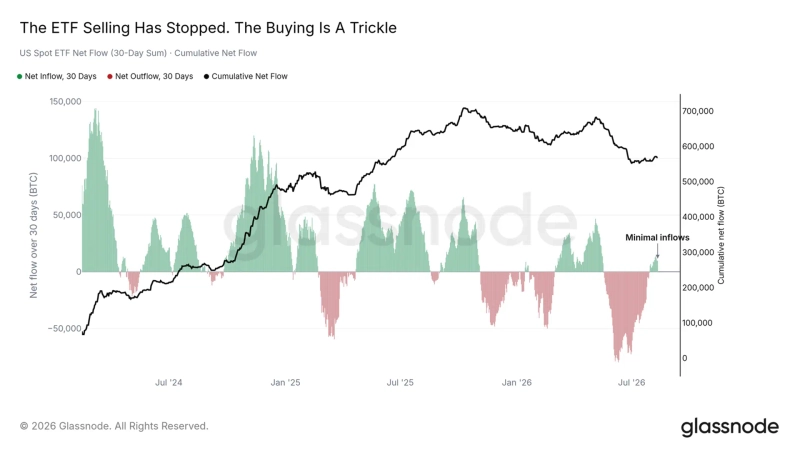
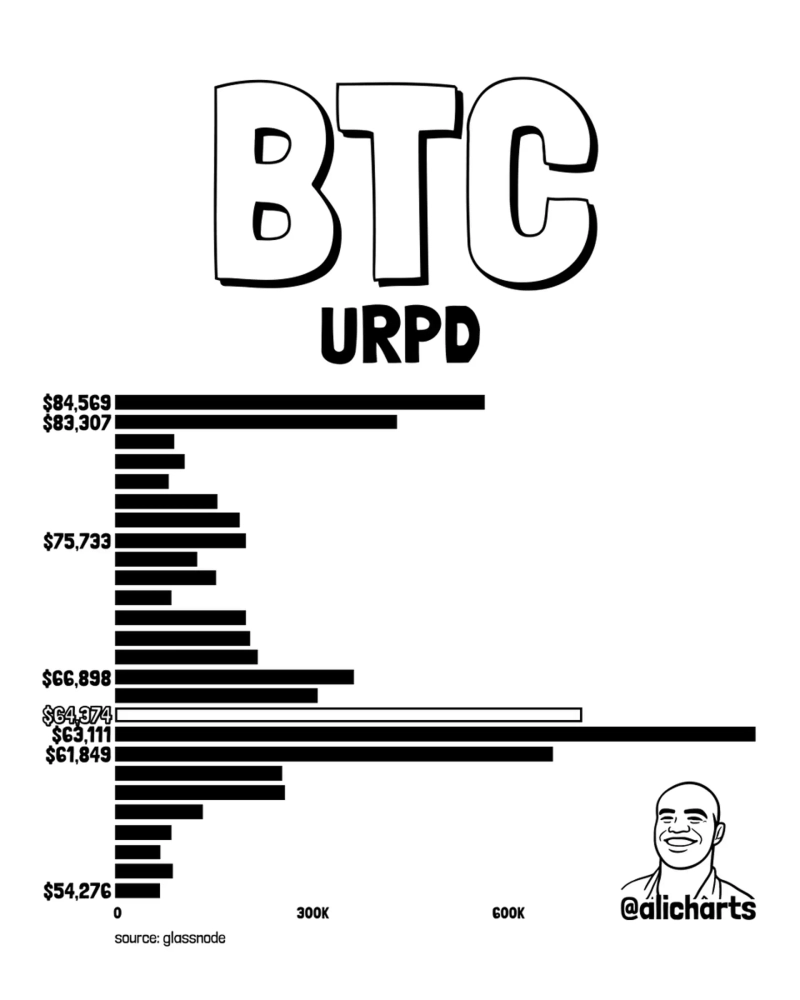
Selling pressure in Bitcoin has eased recently, but new demand has yet to fill the gap. Glassnode said in a weekly report that Bitcoin spot trading volume has fallen to its lowest level since 2019, while the token is finding support around $63,000 and facing resistance near $68,700, the average cost basis of recent buyers.
Measures of seller exhaustion are approaching levels seen near past bear-market bottoms. But with ETF inflows and spot trading still weak, leverage is building first, raising the risk of wider volatility.
On-chain data suggests investors who bought near the highs have been cutting losses, while accumulation by large holders has continued. Bitfinex said long-term Bitcoin holders recorded their first weekly decline in holdings this year, with balances down by about 210,000 Bitcoin from the peak on July 29. It said that move was closer to loss realization by investors who entered near cycle highs between October last year and March this year.
Investors who have held Bitcoin for years are not the main sellers. Wallets holding at least 1,000 Bitcoin rose to 3.06 million Bitcoin, the highest level this year, Bitfinex said.
Retail fatigue is also becoming more evident. Santiment said phrases such as "crypto is over" are appearing more often on X, formerly Twitter, as well as Reddit and Telegram. The longer prices remain stuck, the more investors appear to interpret weakness as market failure.
If that pessimism deepens while Bitcoin holds key price levels and selling pressure fades, conditions could instead become more favorable for bottom-fishing demand, Santiment added.
Bitcoin Tests Direction Near $64,000 as Analysts Eye Long-Term Bottom
Analysts say it is premature to call a rebound before Bitcoin regains $67,000 and that the market first needs to confirm support at $63,000.
Alex Kuptsikevich, senior market analyst at FxPro, said the total cryptocurrency market capitalization has hovered near $2.19 trillion for a third straight day, extending the range-bound pattern in place since early June. The risk of a sharp short-term drop remains, he said, but long-term investors are still accumulating near the 200-week moving average of about $63,980.
Further downside, as in late 2022, could still offer lower entry points. But he added that it is hard to treat that as the baseline scenario and simply wait for it.
Coinbase Research identified $63,000 and $58,000 to $59,000 as major support levels for Bitcoin, with resistance at $67,000, $69,000 and $71,000. Holding above $67,000 would raise the odds of a retest of $71,000, while a break below $63,000 could trigger a pullback toward the $58,000 range.
If support in the $58,000 to $59,000 band also gives way, the decline could deepen further.
Some analysts also see Bitcoin's longer-term downtrend as nearing its final stages. Katie Stockton, founder of Fairlead Strategies, said Bitcoin has entered a phase where its long-term downtrend is becoming exhausted across multiple time frames. On the monthly chart, it has also reached a clearly oversold condition, increasing the chances of a long-term bottom.
Long-term momentum indicators are improving, and price holding near historically important support levels also matters for market psychology, Stockton said. She added that because Bitcoin has been pressured more heavily than gold, technical signals pointing to a long-term bottom are showing up more clearly.
Kang Min-seung, Bloomingbit reporter minriver@bloomingbit.io

Minseung Kang
minriver@bloomingbit.ioBlockchain journalist | Writer of Trade Now & Altcoin Now, must-read content for investors.