KB Securities Defies Chip Bears With Call for Samsung Rally After 49% Slide
Forecast Trend Report by Period


“Samsung Electronics, SK Hynix to Post Combined Operating Profit of 964 Trillion Won Next Year”
Large Shareholder Returns Could Trigger Valuation Rerating
Samsung, Down 49% From Its Peak, at Start of Uptrend: KB
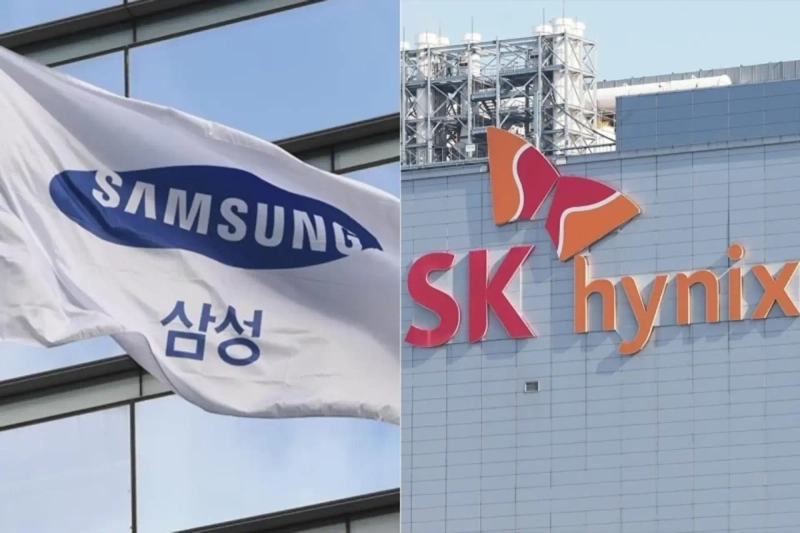
As warnings of a semiconductor peak spread across South Korea’s brokerage industry, KB Securities has issued a string of strongly bullish reports on Samsung Electronics and SK Hynix. The firm argues that the memory market is entering a prolonged supercycle, rather than a typical boom-and-bust phase, as supply constraints tighten. The call stands out as rival brokerages continue to cut their target prices.
“Samsung Electronics and SK Hynix Are Extremely Undervalued”
Kim Dong-won, head of research at KB Securities, wrote in a recent report that the two companies’ combined operating profit will surge from 91 trillion won last year to 641 trillion won this year and 964 trillion won next year, according to the financial investment industry on Aug. 15.
That breaks down to 382 trillion won for Samsung Electronics and 259 trillion won for SK Hynix this year, followed by 575 trillion won and 389 trillion won, respectively, next year. Kim said the combined total would approach 1,000 trillion won.
Samsung Electronics’ third-quarter operating profit will likely jump 817%, or 9.2 times, from a year earlier to 112 trillion won, with an operating margin of 55%, Kim wrote. That would mark a fourth straight quarter of record earnings since the 20 trillion won posted in the fourth quarter of last year.
He estimated SK Hynix’s third-quarter operating profit at 77 trillion won, up 579%, or 6.8 times, from a year earlier, with an operating margin of 78%.
Kim said five-year long-term supply agreements with hyperscalers, or large cloud companies, are starting to take effect in earnest. With more than 60% of total memory output already committed, memory prices are also set to rise, he wrote.
KB Securities said both stocks are extremely undervalued given the scale of the projected earnings growth. Kim said estimated operating profit next year will increase 13.2 times for Samsung Electronics and 8.2 times for SK Hynix from last year.
Yet as of the Aug. 12 close, the two companies were trading at just 3.7 times and 3.2 times 2027 price-to-earnings ratios, respectively. In Kim’s view, the market has not priced in next year’s earnings improvement at all.
He also said new shareholder return policies due soon from Samsung Electronics and SK Hynix could spur both a valuation rerating and gains in their share prices, much as TSMC’s policy did. A stronger medium- to long-term investor base would reinforce that rerating.
Large shareholder returns could also help draw in sovereign wealth funds and other long-term capital, including Temasek and the Abu Dhabi Investment Authority, Kim added. That would further strengthen demand for the stocks over time.
“Samsung Electronics’ Stock Correction Is Over”
Kim made a similar case in an Aug. 12 report focused on Samsung Electronics’ shareholder return policy. He wrote that the stock had fallen 49% from its peak, leaving its 12-month forward price-to-earnings ratio at 4.0 times, and that the correction was nearing an end as the shares prepared to enter an uptrend.
One reason, he said, is that OpenAI, which is preparing for a listing, could raise substantial funds through an initial public offering as early as this year. That could ease concerns that had weighed on markets over AI-related financial rotation and the durability of investment.
Kim also said much of the excessive margin-backed positioning that drove Samsung Electronics’ sharp selloff in June and July has already been cleared out. In his view, the short-term correction tied to market positioning has largely run its course.
He added that a large shareholder return policy expected soon could serve as a powerful catalyst for further gains.
KB Securities said the memory shortage will persist for at least three years through 2028. Kim wrote that big tech customers were meeting only about 60% of their memory demand as of August, meaning the supply shortfall is worsening.
Demand that goes unmet this year because it exceeds production capacity will roll into next year, he said. Any demand that still cannot be met next year would then spill into 2028, creating a chain effect of deferred orders.
At the same time, completing a new memory production line takes at least three years, Kim said. That makes any near-term increase in supply unrealistic and supports the view that the shortage will continue through 2028.
KB Securities’ call has drawn attention as the semiconductor-peak narrative spreads among investors in Samsung Electronics and other chipmakers. Kiwoom Securities recently cut its target price on Samsung Electronics to 350,000 won from 390,000 won. Mirae Asset Securities lowered its target to 370,000 won from 550,000 won, Shinhan Securities cut its target to 450,000 won from 590,000 won, and Samsung Securities reduced its target to 400,000 won from 500,000 won.
An industry official said KB Securities’ unusually forceful view reflects years of closely tracking the memory market and the earnings of Samsung Electronics and SK Hynix under Kim’s leadership. The person said the latest call is based less on simple optimism than on a judgment that the market is facing an extended and extreme supply squeeze rather than a standard semiconductor cycle.
Kyung-ju Kang, Hankyung.com reporter qurasoha@hankyung.com

Korea Economic Daily
hankyung@bloomingbit.ioThe Korea Economic Daily Global is a digital media where latest news on Korean companies, industries, and financial markets.