PiCK
South Korea to Tax Crypto Gains Above $1,800 at 22%, Fueling Backlash Among Young Investors
Summary
- Starting January 1 next year, income from transferring or lending virtual assets will be taxed at a 22% rate on annual gains exceeding 2.5 million won.
- Criticism is growing, especially among people in their 20s and 30s, that taxing virtual assets while abolishing the stock market’s financial investment income tax amounts to discrimination between asset classes and undermines fairness.
- The government said it will proceed with virtual-asset taxation as scheduled, while reviewing issues related to loss carryforwards, staking, airdrops, and income from overseas exchanges later if necessary.
Forecast Trend Report by Period


22% tax rate to apply to gains above 2.5 million won ($1,800)
“They scrapped the stock tax but are pushing ahead on crypto”
Koo Yun-cheol says government will proceed as scheduled for now
“It’s hard to understand why the government keeps insisting on pushing ahead first and fixing problems later, even when people are already pointing out flaws.”
That was the reaction of Hwang, a 32-year-old office worker and virtual-asset investor, in Seoul’s Yeouido district on August 14 after hearing Deputy Prime Minister Koo Yun-cheol say the government would implement the tax as planned and make adjustments if necessary.
“Even perfect preparation would not be enough,” Hwang said. “If the government plans to start taxing virtual assets and only fix problems afterward, that amounts to treating taxpayers like test subjects.”
Complaints are mounting, particularly among South Koreans in their 20s and 30s, who say taxing crypto while abolishing the financial investment income tax on stocks undermines parity across asset classes.
South Korea adopted the virtual-asset tax in late 2020, but enforcement has been postponed three times because of gaps in tax infrastructure and investor opposition. Frustration has resurfaced after the government recently reaffirmed plans to press ahead on schedule. Some lawmakers are calling for another delay or for the tax to be scrapped altogether.
◇ ‘Are Crypto Investors Easy Targets?’ Petitions Gain Traction
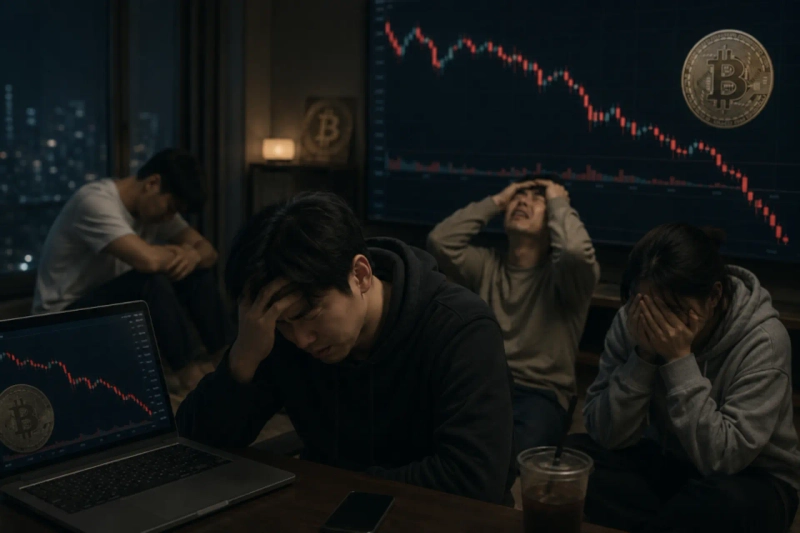
Starting January 1, 2027, income from the transfer or lending of virtual assets will be taxed as miscellaneous income under the Income Tax Act, according to the National Law Information Center.
A 22% tax rate will apply to annual virtual-asset income exceeding the 2.5 million won ($1,800) basic deduction. That consists of a 20% miscellaneous income tax and a 2% local income tax.
Kim, a 29-year-old investor, said the move looked driven by electoral calculations.
“When they moved to abolish the financial investment income tax, they were watching the 14 million retail stock investors,” Kim said. “But crypto has more than 10 million users and they’re pushing ahead anyway.”
“Crypto investors are younger and less organized, so they are seen as the easiest group to tax.”
Data released in March by the Financial Intelligence Unit showed there were 11.13 million user accounts eligible for trading as of the end of last year.
By age group, people in their 30s accounted for 26.8% of those accounts, while those in their 20s and younger made up 19.0%. Combined, they represented 45.8% of the total.
Another investor, Park, 36, said the policy amounts to discrimination between asset classes.
“Stocks get a pass while crypto is taxed, even though both generate investment income,” Park said. “There is also no loss carryforward. If I lost 50 million won ($36,000) last year and made 30 million won ($21,600) this year, I am still down 20 million won ($14,400), but I would still have to pay tax.”
“That’s not a tax on income. It’s a penalty on trading.”
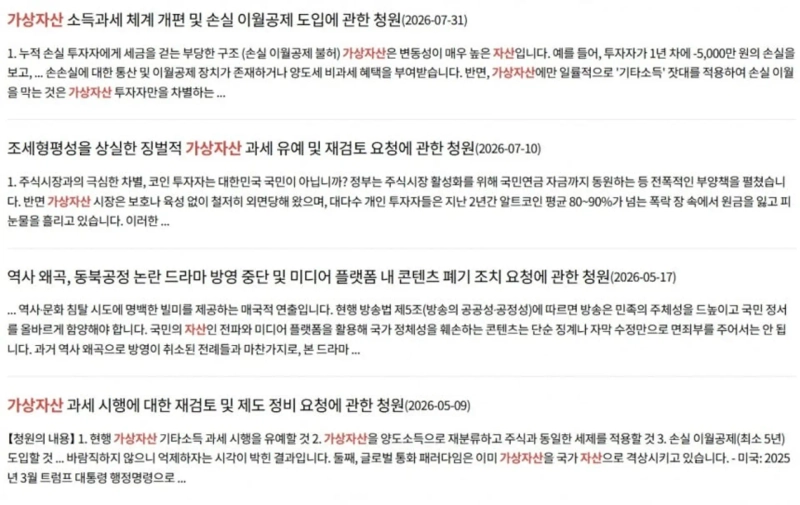
Petitions opposing virtual-asset taxation have continued to appear on the National Assembly’s public petition platform.
In a petition posted on July 31, the petitioner said the government’s proposed crypto tax had completely lost the core tax principles of “fairness” and “effectiveness,” calling it punitive regulation.
The petitioner also argued that the government had supported the stock market through various policy measures and even expanded National Pension Service investment, while neglecting the virtual-asset market despite heavy losses suffered by most investors.
◇ Government Says It Still Plans to Start Taxing Crypto Next Year
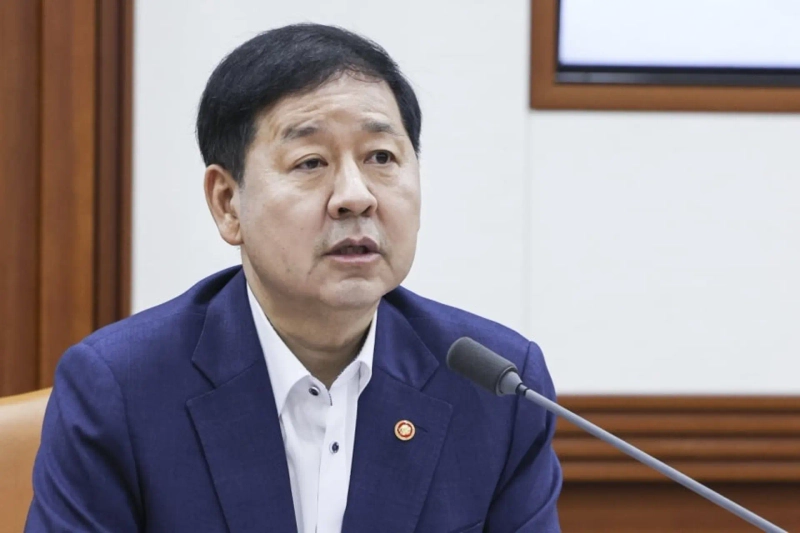
The government says it will proceed without any further delay.
Speaking at the National Assembly’s Strategy and Finance Committee on July 29, Koo said the government was, for now, moving ahead with taxation from next year as scheduled.
On the issue of loss carryforwards, Koo said stock investment losses also cannot be carried forward. He added that classifying crypto income as miscellaneous income already provides certain benefits, and that the government could revisit the issue after implementation if necessary.
The National Assembly Research Service has also raised concerns that full-scale taxation could lead to legal disputes.
According to political sources, the legislative research body pointed to the need for more detailed tax standards for newer forms of acquisition such as staking and airdrops, the lack of loss carryforwards, and the possibility of double taxation on income from overseas exchanges.
Calls to delay or repeal the tax have also continued within the People Power Party.
Lawmaker Song Eon-seok said at a blockchain event on July 22 that a quick decision was needed on whether to delay or abolish the tax. Scrapping the income tax could provide momentum for further industry growth, he said.
Lawmaker Park Soo-young told reporters on August 3 that he had consistently opposed taxation of digital assets and that a strong response was again needed.
Lawmaker Jeong Seong-guk has introduced an amendment to the Income Tax Act that would delay the tax by three years.
A National Tax Service official said the agency was moving ahead without disruption in securing data through its systems and institutions in time for enforcement.
Addressing concerns that assets moved to overseas exchanges would be harder to trace, the official said cross-border crypto-asset information would begin to be exchanged next year through the Crypto-Asset Reporting Framework, or CARF.
If foreign tax authorities obtain exchange data in their jurisdictions, that information can be shared with South Korea, the official said. The country is gradually building a framework to secure data from overseas exchanges.
Lee Jeong-woo, Hankyung.com reporter krse9059@hankyung.com

Korea Economic Daily
hankyung@bloomingbit.ioThe Korea Economic Daily Global is a digital media where latest news on Korean companies, industries, and financial markets.