Kim Min-seok Elected Democratic Party Leader With 54.08% in Preferential Vote
Summary
- The Democratic Party elected lawmaker Kim Min-seok as its new leader at the national convention with a final vote share of 54.08%.
- The race combined 70% from delegate and party-member voting and 30% from a public opinion poll, with the winner decided by a preferential voting system if no candidate secured a majority.
- Kim Min-seok takes over as the second ruling-party leader under the Lee Jae-myung administration, with the tasks of addressing falling approval ratings and easing internal party tensions.
Forecast Trend Report by Period


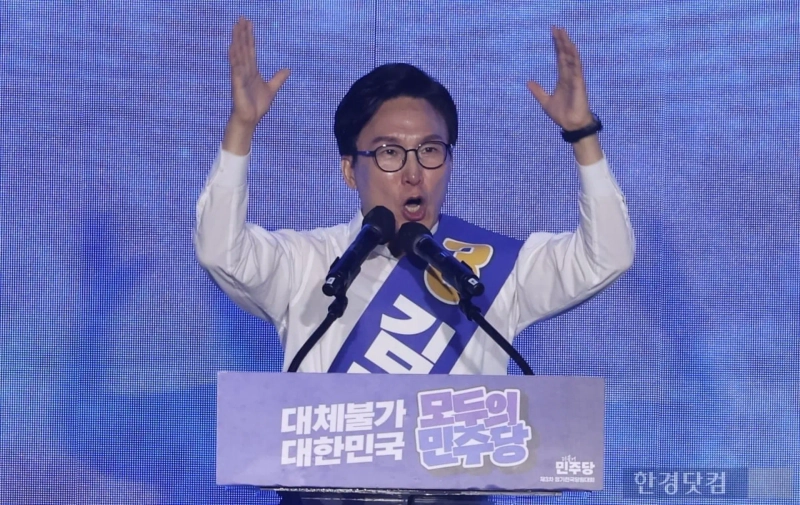
Kim Min-seok, a four-term lawmaker, was elected leader of South Korea’s Democratic Party. The race was decided by a preferential vote after no candidate won a majority in the first round.
The party held its national convention at the Daejeon Convention Center on Aug. 17 and picked Kim as the second ruling-party leader under President Lee Jae-myung’s administration. Kim won 54.08% of the final vote, defeating Jung Chung-rae, who received 45.92%.
The contest combined delegate and party-member voting, which accounted for 70%, with a public opinion poll weighted at 30%. Because no candidate secured a majority in the first tally, the race moved to a preferential vote.
Under the preferential voting system, voters rank candidates by preference. If no candidate wins a majority in the initial count, votes cast for the lowest-ranked candidate are redistributed based on the next preference to determine the winner.
Kim takes over the ruling party as support for Lee’s administration declines. He now faces the task of backing the government’s policy agenda while easing internal party tensions that intensified during the convention process.
Kim, who represents Seoul’s Yeongdeungpo-B district, served as the first prime minister under the Lee Jae-myung administration. In the campaign, he called for stable coordination between the party and government and stressed the success of the Lee administration.
Kim Hee-seon, Hankyung.com reporter, gimme_sun@hankyung.com

Korea Economic Daily
hankyung@bloomingbit.ioThe Korea Economic Daily Global is a digital media where latest news on Korean companies, industries, and financial markets.