Kim Min-seok, Who Said He Dreamed of Leading Party, Becomes Democratic Party Chief Seven Months Later
Summary
- Kim Min-seok was elected the new leader of the Democratic Party, taking charge of the ruling party, and pledged to support the success of the Lee Jae-myung administration.
- Kim, a four-term lawmaker and former first prime minister, won the party leadership race with 54.08% of the vote, defeating Chung Cheong-rae.
- Kim apologized again for his past party defection and stressed party unity, while pledging stable cooperation between the party and government and to build “a ruling party worthy of being the ruling party.”
Forecast Trend Report by Period


A former political wunderkind backed by ex-President Kim Dae-jung has become head of South Korea’s ruling party after years out of office and a career marked by political setbacks. Kim Min-seok, elected leader of the Democratic Party on Aug. 17, is one of the ruling camp’s best-known strategists. He is a four-term lawmaker who also served as the first prime minister of President Lee Jae-myung’s administration.
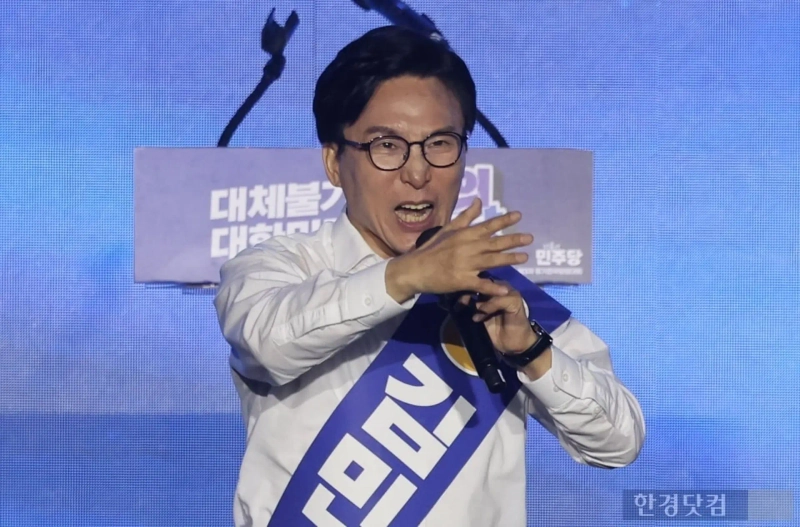
Kim beat Chung Cheong-rae at the Democratic Party’s national convention at the Daejeon Convention Center on Aug. 17. He won 54.08% of the vote, versus 45.92% for Chung.
The contest was not settled in the first round. With no candidate winning a majority, the race moved to a preferential ballot count. Under that system, voters rank candidates by preference, and if no one secures a majority, ballots cast for the last-place candidate are redistributed according to the next preference until a winner is decided. In the party leadership race, delegates and dues-paying party members accounted for 70% of the result, with 30% based on a public opinion poll.
Kim was born in Seoul in 1964 and graduated from Seoul National University with a degree in sociology. He belongs to South Korea’s so-called 386 generation and served as president of the university’s student council. At Kim Dae-jung’s urging, he entered politics and won a seat in Seoul’s Yeongdeungpo-B constituency in the 1996 general election as a National Congress for New Politics candidate. He was 32 at the time. He retained the seat in the next general election, becoming a two-term lawmaker.
After winning a second term at a young age, Kim emerged as a rising figure in the ruling camp while serving as chief secretary to party leader Kim Dae-jung. That was when he acquired the nickname “DJ Kid.”
His political career later faltered. In the 2002 local elections, he ran for Seoul mayor as the Millennium Democratic Party candidate but lost to Lee Myung-bak of the Grand National Party. Later that year, ahead of the presidential election, he left the Democratic Party and backed National Alliance 21 candidate Chung Mong-joon, a move that remained a political burden for years.
Kim rejoined the Democratic Party in 2003, but lost in the following year’s general election and failed repeatedly to return to parliament. During his years out of office, he strengthened his policy credentials with a master’s degree in public administration from Harvard Kennedy School, a master’s degree in law from Tsinghua University and a doctorate in law from Rutgers Law School in Newark.
His political comeback accelerated after he returned to the Democratic Party in 2016. He expanded his role in party policy and strategy as head of the Democratic Institute and chairman of the party’s policy committee. In the 2020 general election, he won Seoul’s Yeongdeungpo-B seat, returning to the National Assembly for the first time in 18 years. He held the district again in the 2024 general election, securing a fourth term.
Kim also deepened his political ties with Lee during that period. In the 2024 general election, he served as the Democratic Party’s situation room chief and oversaw campaign strategy. He later campaigned alongside Lee, then a candidate for party leader, at the party convention and was elected senior supreme council member.
After Lee’s government took office, Kim was tapped as its first prime minister. While still serving in the role, he said in a January appearance on YouTube channel SamproTV that he had “a romantic dream” of becoming party leader, signaling his intention to pursue the post.
After stepping down as prime minister, Kim returned directly to party politics and used the convention campaign to stress stable cooperation between the party and government and the success of the Lee administration. He also repeatedly pledged to build “a ruling party worthy of being the ruling party.”
He also revisited old political wounds while calling for unity. After launching his bid for party leader, Kim visited former President Roh Moo-hyun’s gravesite and again apologized for leaving the party during the 2002 presidential election.
Kim takes over the ruling party as President Lee’s approval rating declines. He now faces the task of supporting the government’s governing momentum while repairing internal rifts that deepened during the leadership race.
Born in Seoul in 1964; graduated from Seoul National University’s sociology department; former president of the Seoul National University student council; master’s degree in public administration from Harvard Kennedy School; master’s degree in law from Tsinghua University; doctorate in law from Rutgers Law School in Newark; member of the 15th, 16th, 21st and 22nd National Assembly; former chief secretary to party leader Kim Dae-jung; former head of the Democratic Institute; former chairman of the Democratic Party’s policy committee; former senior supreme council member of the Democratic Party; 49th prime minister.
Shin Hyun-bo, Hankyung.com reporter greaterfool@hankyung.com

Korea Economic Daily
hankyung@bloomingbit.ioThe Korea Economic Daily Global is a digital media where latest news on Korean companies, industries, and financial markets.