Trump Turns to North Korea as Iran War Exit Eludes Him, Orders UFS Drill Scale-Back
Summary
- President Donald Trump said he had ordered a sharp reduction in the scale of the Ulchi Freedom Shield (UFS) joint exercise between the U.S. and South Korea, sending a conciliatory signal to North Korea.
- The report said Trump is seeking a short-term diplomatic achievement on North Korea ahead of the November midterm elections, as worsening public opinion driven by the prolonged Iran war and rising prices weighs on his administration.
- In the U.S., analysts said Trump’s latest move could heighten security anxiety among Asian allies and raise questions about America’s defense commitments and deterrence.
Forecast Trend Report by Period


Trump orders U.S.-South Korea drills scaled back in conciliatory gesture to Pyongyang
Cites his “very good relationship” with Kim Jong Un
Move seen as part of search for Iran war off-ramp before election
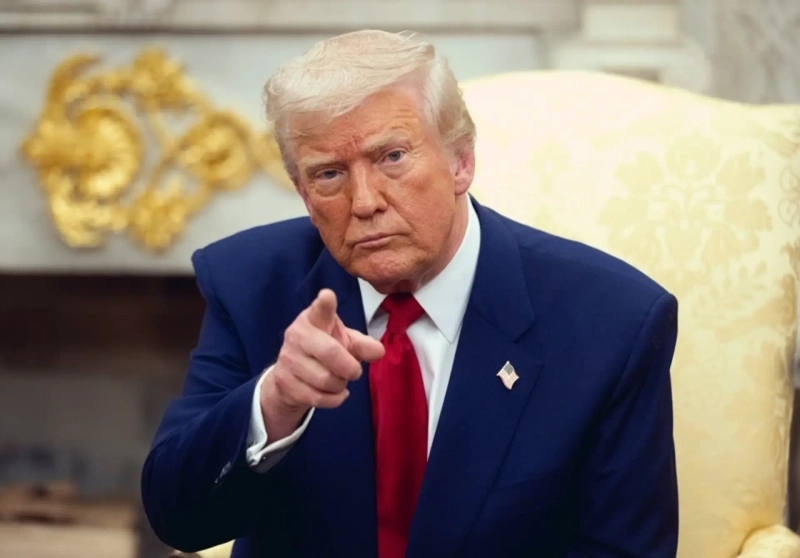
President Donald Trump ordered a sharp reduction in the scale of the Ulchi Freedom Shield, or UFS, joint military exercise between the U.S. and South Korea on Aug. 16, when the drills began.
Trump wrote on Truth Social that he did not like the longstanding U.S. commitment to participate in joint military exercises with South Korea, given what he called his “very good relationship” with North Korean leader Kim Jong Un. The U.S. and South Korean militaries began the UFS exercise on Aug. 16 and plan to continue it through Aug. 27. Trump posted the message at 6:04 a.m. Korea time on Aug. 17.
He said the joint drills are expensive and that the U.S. pays a significant share of the cost. The exercises also send a wholly inappropriate and hostile signal to North Korea, he wrote. Trump added that it was too late to cancel them and that he had instructed Defense Secretary Pete Hegseth to scale them back sharply.
Some analysts view the move as an attempt to secure a short-term diplomatic win with North Korea ahead of the November midterm elections, as Trump struggles to find a clear breakthrough in the prolonged war with Iran. A resumption of U.S.-North Korea talks could help shift public opinion before the vote.
Political pressure mounts before election as Trump presses allies on burden-sharing
Bid for diplomatic gains through North Korea also vents frustration over Iran and South Korean investment
Trump’s decision to scale back UFS and send a conciliatory signal to North Korea appears rooted in electoral calculations ahead of the November midterms. With no clear exit from the drawn-out Iran war, he appears to be seeking a near-term diplomatic achievement through the North Korea issue. The message also reflected broader frustration with South Korea over Iran, investment in the U.S. and defense cost-sharing.
Trump under pressure before the midterms
Many observers believe Trump’s immediate goal is to bring Kim back to the negotiating table. Joint U.S.-South Korea exercises have long been one of Pyongyang’s main demands in dealing with Washington. During his first term, Trump also criticized the drills as costly “war games” after the June 2018 Singapore summit with Kim. The Ulchi Freedom Guardian exercise scheduled for August that year was later suspended.
Trump underscored his personal ties with Kim about 30 hours before the latest post. At 11:08 a.m. on Aug. 15, he uploaded an old photo with the North Korean leader on Truth Social and wrote, “Kim Jong Un and I get along very well.”
Some in Seoul also see the move as an attempt to redirect public attention from the Iran war to North Korea before the midterms by scaling back the exercises. Public dissatisfaction with the administration has been rising as the prolonged conflict with Iran fuels inflation. A Financial Times poll found that more than 53% of voters said economic conditions had worsened since Trump returned to office.
Trump’s message also carried a clear note of frustration toward South Korea. He said, in what he described as a somewhat unrelated point, that he had asked President Lee Jae-myung whether Seoul was willing to join efforts to denuclearize Iran, but that the South Korean side replied, “No thanks.” He brought an issue unrelated to UFS into the same post.
Criticism of Trump also emerges in the U.S.
Diplomatic observers say the remarks show Trump’s belief that while the U.S. devotes major resources to South Korea’s defense, Seoul has not responded adequately on overseas security issues Washington considers important. They view that as an extension of Trump’s transactional approach to alliances, in which relationships are measured less by shared values than by costs and contributions. Delays in South Korean investment pledged for the U.S. are also cited as a potential source of irritation. The U.S. government has been pressing Seoul to move quickly on promised investment plans.
Experts in the U.S. said Trump’s post could deepen security anxiety among America’s Asian allies. Adam Farrar, a former National Security Council official responsible for Korea, said the episode would raise questions about U.S. defense commitments to allies in Asia and could potentially affect deterrence. He added that South Korea’s importance as an ally extends beyond security to industry as well.
It remains unclear whether Kim will respond to Trump’s overture. Lim Eul-chul, a professor at Kyungnam University’s Institute for Far Eastern Studies, said North Korea has significantly reduced its diplomatic dependence on the U.S. through closer military and economic ties with Russia and cooperation with China. As a result, Pyongyang feels less urgency to engage Washington at the cost of making concessions, he said.
The presidential office said South Korea is not standing aside on Iran. It said on Aug. 16 that Seoul has been actively participating in international discussions on a ceasefire in Iran and the restoration of freedom of navigation through the Strait of Hormuz. It also said it is in close talks with the U.S. on practical and military ways to contribute, while taking into account readiness on the Korean Peninsula and domestic legal procedures.
Kim Da-bin, Lee Sang-eun in Washington, Han Myung-hyun and Kim Hyung-kyu, Hankyung.com reporters davinci@hankyung.com

Korea Economic Daily
hankyung@bloomingbit.ioThe Korea Economic Daily Global is a digital media where latest news on Korean companies, industries, and financial markets.