South Korea Watchdog Monitors Stock-Price Boosting Tactics Used to Dodge Delisting
Summary
- Financial authorities said they are intensively monitoring listed companies showing signs of artificial share-price support and matched orders aimed at avoiding delisting.
- Under tougher delisting rules, companies are being designated as management issues and moved into delisting procedures based on 30 consecutive trading days below 1,000 won and market capitalization thresholds.
- Financial authorities said they are reviewing measures to ease delisting pressure on special technology listings and other promising companies, including factoring in recent stock-market declines during delisting reviews.
Forecast Trend Report by Period


Financial authorities move to refine one-size-fits-all delisting rules
Stocks trading below 1,000 won for 30 straight sessions are tagged as management issues
Some companies briefly push shares to 1,000 won to avoid the designation
Regulators to closely inspect companies suspected of artificially inflating share prices
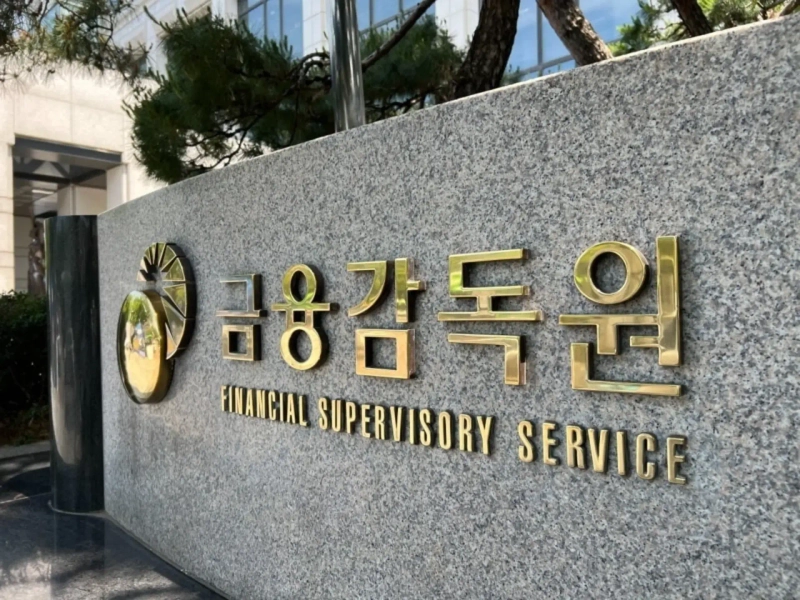
South Korea’s financial authorities have begun intensive monitoring of listed companies suspected of artificially boosting share prices to avoid delisting. At the same time, regulators are reviewing ways to shield promising companies from delisting risk amid recent weakness in the Kosdaq market. The move follows growing criticism that rules introduced to weed out troubled companies have produced side effects because they rely on uniform standards.
According to financial authorities and industry officials on Aug. 18, the Financial Supervisory Service and the Korea Exchange are closely examining listed companies suspected of artificially lifting share prices or engaging in matched orders to avoid designation as management issues. About five companies are currently under review, and that number could rise.
The tougher delisting rules are driving the behavior. Since July, the Financial Services Commission has fully enforced a system under which a company is designated as a management issue if its stock trades below 1,000 won for 30 consecutive trading days or if its market capitalization falls below 30 billion won ($21.7 million) on the Kospi or 20 billion won ($14.5 million) on the Kosdaq. If the company then fails to recover those thresholds for 45 consecutive sessions within 90 trading days, it enters delisting procedures. Under the new standards, 39 companies were designated as management issues this month.
The problem is that the standards are so rigid that some companies are finding ways around them. Company A, a Kosdaq-listed renewable energy firm, traded below 1,000 won for 25 consecutive sessions from July to early August and was flagged as a stock at risk of being designated a management issue. The next day, however, other corporate investors bought several million shares, pushing the closing price to exactly 1,000 won. A day later, the stock fell nearly 10% and dropped back into the 900-won range, but it had already escaped the 30-consecutive-session rule. A financial authority official said the case showed signs of possible artificial price support.
Many companies are also pursuing reverse stock splits to avoid falling into penny-stock territory. According to the Financial Supervisory Service, 281 disclosures on stock consolidation decisions had been filed this year as of Aug. 18. That was 23.4 times the 12 filings recorded in the same period last year. Critics say the practice runs counter to the original policy goal of narrowing the Korea discount because it is a stopgap rather than a genuine increase in corporate value through improved earnings.
The side effects of the uniform standards go beyond that. Companies listed through South Korea’s special technology listing track, which allows firms to go public based on growth potential, are facing mounting pressure. Such companies often need time before research and development efforts produce results. But a recent slide in the Kosdaq index has driven share prices sharply lower and pushed more firms toward delisting risk. Shaperon, Abion, Noul and E8, all designated as management issues this time, are among them.
Financial authorities are aware of the problem. One official said regulators are preparing supplementary measures, taking into account concerns that uniform standards may fail to screen out companies that should be removed while unfairly pushing promising firms toward delisting. They are also reviewing a plan to consider recent stock-market declines during the delisting review process.
Lee Sun-a, Hankyung reporter suna@hankyung.com

Korea Economic Daily
hankyung@bloomingbit.ioThe Korea Economic Daily Global is a digital media where latest news on Korean companies, industries, and financial markets.