US Stocks Fall as Treasury Yields Rise; Philadelphia Semiconductor Index Drops More Than 5%
Forecast Trend Report by Period


Brent crude tops $91 a barrel; Philadelphia Semiconductor Index falls more than 5%
Rate swaps still price in better-than-60% odds of a September pause
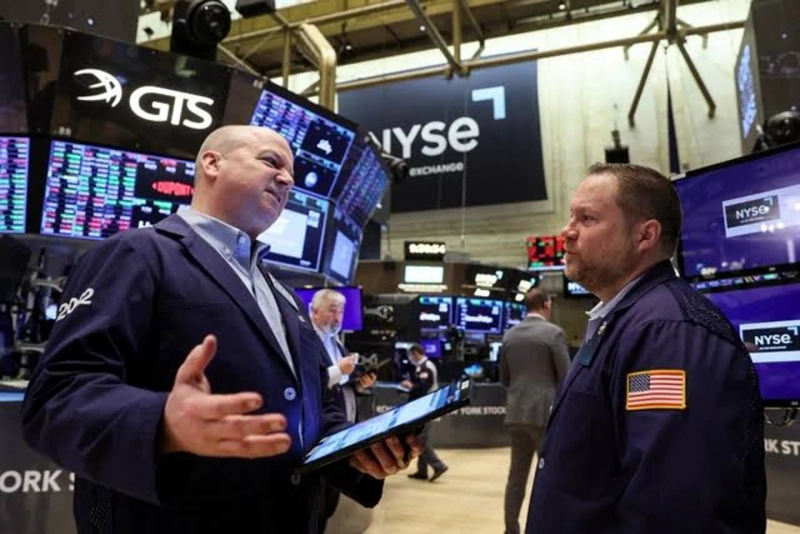
US stocks came under pressure on August 18 as Treasury yields rose again amid elevated oil prices. Semiconductor shares, which had advanced a day earlier, also retreated, sending the Philadelphia Semiconductor Index, or SOX, down more than 5%.
Yields on Treasuries across all maturities rose by 1 to 2 basis points, adding to the recent climb in longer-dated debt. The 10-year Treasury yield rose about 2 basis points to 4.75%, the highest level in 19 months.
The 30-year Treasury yield briefly approached 5.33% in morning trading, its highest level in more than two decades.
As of 10 a.m. in New York, the S&P 500 was down 0.4%, while the Nasdaq Composite had fallen 1.1%. The Dow Jones Industrial Average slipped 0.1%.
Nvidia fell 2%, Micron dropped more than 4%, SanDisk lost 6%, and SK Hynix ADRs slid more than 5%. Intel and AMD also fell more than 4%, with most semiconductor shares trading lower.
US West Texas Intermediate crude futures traded above $85 a barrel and Brent crude futures topped $91 as talks between Iran and the US remained deadlocked. Uncertainty over whether oil prices will stay elevated has been pushing up long-term bond yields. President Donald Trump said a day earlier that he would attack Oman if it obstructed the negotiations.
Peter Boockvar, chief investment officer at OnePoint BFG Wealth Partners, said investors had largely looked past the steady rise in global bond yields because of strength in AI-related investment. If that rate trend continues, it could become a problem.
European stocks also turned lower in morning trading. The pan-European Stoxx 600 Index fell 0.51%.
Asia-Pacific markets closed lower. South Korea's Kospi fell 1.55% and Japan's Nikkei 225 dropped 2.54%. China's CSI 300 fell 0.32%, while Hong Kong's Hang Seng Index declined 2.54%.
Despite the recent surge in long-term Treasury yields, expectations remain dominant that the Federal Reserve will leave interest rates unchanged in September after data this month pointed to a cooling US labor market and slower inflation.
According to CME Group's FedWatch tool, traders in rate swaps see a 63% chance the Fed will hold rates steady at its September meeting. The probability of a rate increase is 37%.
Kim Jung-a, guest reporter

Korea Economic Daily
hankyung@bloomingbit.ioThe Korea Economic Daily Global is a digital media where latest news on Korean companies, industries, and financial markets.