SK Hynix Surges 13% After $28.9 Billion Buyback, Fueling Hopes for Samsung Payout
Summary
- SK Hynix shares surged after the company announced a $28.9 billion share buyback and retirement and a plan to return more than 50% of free cash flow to shareholders.
- Brokerages and a global investment bank said the move showed confidence in earnings durability and cash-generation capacity, and would help address undervaluation while serving as a catalyst for further gains.
- The market expects Samsung Electronics to announce a policy that includes about $108.4 billion in shareholder returns and a special dividend of at least $72.3 billion, a move that could lift corporate value and drive a rerating of valuations on South Korea's main stock market.
Forecast Trend Report by Period


SK Hynix unveils $28.9 billion share buyback and retirement
Company also targets shareholder returns of more than 50% of free cash flow
Brokerages say move signals confidence in earnings durability
Samsung special dividend could exceed $72 billion, analysts say
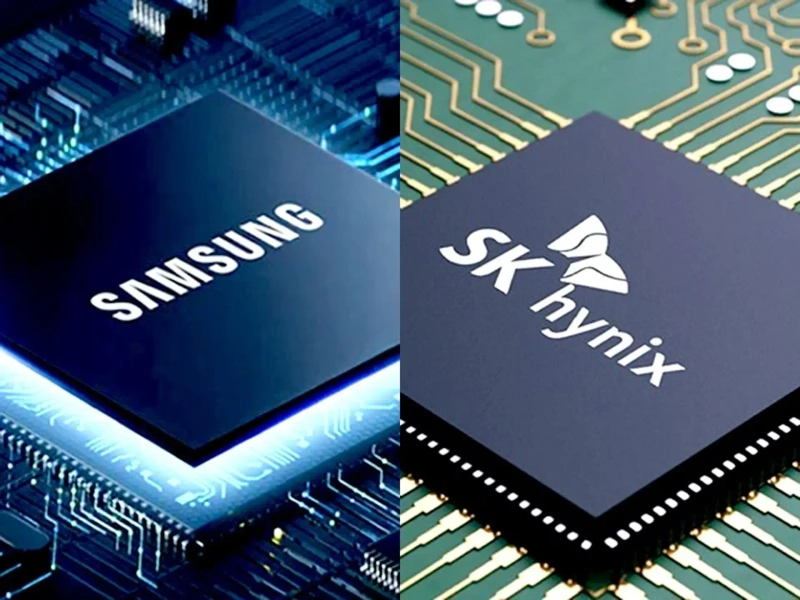
SK Hynix shares jumped more than 10% on Aug. 20 after the company unveiled a record shareholder-return plan. Brokerages in South Korea and overseas welcomed the move as a sign of confidence in the durability of earnings. Attention is now turning to Samsung Electronics ahead of its own shareholder-return announcement.
According to the Korea Exchange, SK Hynix closed at 1.691 million won on Aug. 20, up 191,000 won, or 12.73%, from the previous session. The stock briefly reclaimed the 1.7 million won level during the session. Foreign investors were net buyers of 539.3 billion won ($389 million) worth of SK Hynix shares, helping drive the rally.
Investor sentiment strengthened after U.S. Treasury yields, which had weighed on confidence in the durability of big tech artificial intelligence spending, showed signs of easing. The rally gained further momentum after SK Hynix disclosed what amounts to an unprecedented shareholder-return package. On Aug. 19, the company said it would buy back 40 trillion won ($28.9 billion) of its own shares and retire the full amount. The repurchase period runs from Aug. 21 through Nov. 19.
The plan is the largest treasury-share retirement ever announced by a listed South Korean company. Based on the Aug. 19 closing price of 1.5 million won, the company could repurchase about 3.6% of its outstanding shares. Retiring the entire amount would raise earnings per share by about 3.8%, according to market estimates. Investors also focused on the company's revised shareholder-return target for cumulative free cash flow from 2025 through 2027, which was raised from "up to 50%" to "more than 50%."
Brokerages responded positively to the scale of the plan. Park Jun-young, an analyst at Hanwha Investment & Securities, said the company decided on a large shareholder return before this year's and next year's free cash flow had been finalized. That showed confidence in future cash-generation capacity and in meeting financial soundness targets. Because SK Hynix effectively shifted 50% from a ceiling to a floor, actual shareholder returns could exceed 245 trillion won ($177 billion), he added.
The move also helped ease skepticism over how long memory-chip makers can sustain profits during the artificial intelligence-driven supercycle. Lee Jong-wook, an analyst at Samsung Securities, said the market had moved beyond a phase of earnings surprises and into one focused on earnings durability. In that environment, shareholder returns are a necessary event, he said. Such measures should support the stock's downside and underscore further upside.
Barclays also praised the buyback in a report released on Aug. 20. The global investment bank called it a "strong signal" and said the current share price remained undervalued. Simon Coles, a Barclays analyst, wrote that SK Hynix should still be able to meaningfully expand production capacity over the next several years and invest in new opportunities even while returning about 15% of its market capitalization to shareholders. Barclays viewed it positively that the company could expand shareholder returns without cutting capital spending.
Market attention is now shifting to Samsung Electronics, which is preparing to announce its own shareholder-return plan. After Japan's Kioxia, US NAND flash maker SanDisk and now SK Hynix moved to large-scale shareholder payouts, expectations are rising that Samsung will follow.
According to industry officials, Samsung Electronics will unveil a shareholder-return package of about 150 trillion won ($108.4 billion) this month. That would mark the largest such plan in the history of South Korea's listed companies. Samsung's board plans to approve a shareholder-return proposal centered on share buybacks and a special dividend at a meeting later this month. This year's total shareholder return is known to be around 150 trillion won. Some in the market had speculated it could reach as much as 200 trillion won, but the final plan is set to align with the company's principle of returning 50% of free cash flow to shareholders.
Kim Dong-won, head of research at KB Securities, said Samsung Electronics' policy of returning 50% of cumulative free cash flow from 2024 through 2026 implies a special dividend of at least 100 trillion won ($72.3 billion). He said large-scale shareholder returns would serve as a powerful catalyst not only for Samsung's corporate value, but also for a rerating across South Korea's main stock market.
Ko Jeong-sam, Hankyung.com reporter jsk@hankyung.com

Korea Economic Daily
hankyung@bloomingbit.ioThe Korea Economic Daily Global is a digital media where latest news on Korean companies, industries, and financial markets.