Kospi Rises 0.88% as Samsung, SK Hynix Shareholder Returns Offset Higher US Yields
Summary
- Analysts said rising yields on 10-year US Treasuries and pressure from the US fiscal deficit and high oil prices continue to weigh on the Kospi.
- Large-scale share buybacks and cancellations and broader shareholder returns by Samsung Electronics and SK Hynix are helping the Kospi hold in a slightly positive range.
- Samsung Electronics' pledge to return 50% of FCF to shareholders over the next three years, along with Nvidia earnings and the PCE price index, will be key for AI and semiconductor investment sentiment.
Forecast Trend Report by Period


US 10-year Treasury yield climbs back above 4.7% as Kospi gains 0.88%
US fiscal-deficit and high-oil risks persist
Samsung, SK Hynix shareholder returns drive rebound
Samsung discloses 110 trillion won shareholder-return plan after the close
Nvidia earnings next week in focus
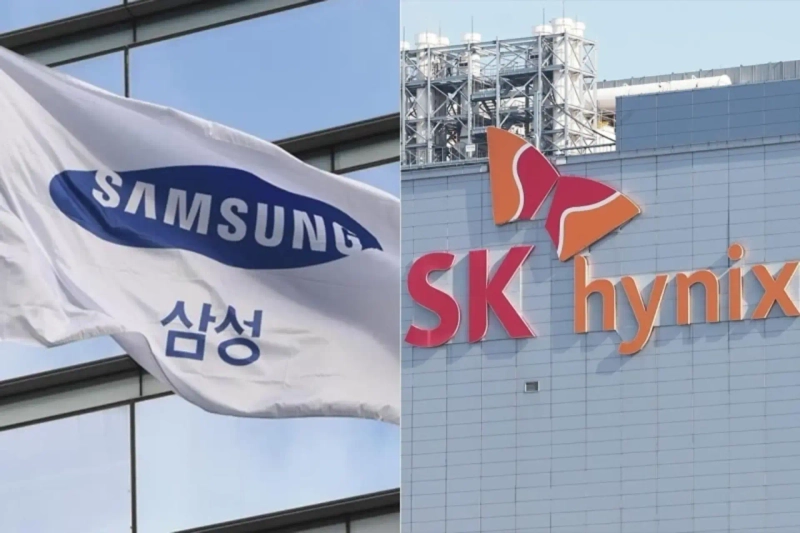
The Kospi is being pulled between macroeconomic risks and support from large shareholder-return plans. News of SK Hynix's aggressive share buyback and cancellation improved sentiment, but rising US Treasury yields kept the market from extending the move into a full V-shaped rebound. Still, market watchers said the downside pressure from macro headwinds could give way to a medium- to long-term recovery as companies step up shareholder returns.
◇ SK Hynix Lifts Market as Other Corporations Buy 1.0838 Trillion Won
The Kospi closed at 6,912.95 on Aug. 21, up 0.88% from the previous session after choppy trading. The index fell early after the benchmark 10-year US Treasury yield climbed back above 4.7%, despite US Treasury Secretary Scott Bessent's push to expand Treasury buybacks to stabilize yields. Higher Treasury yields tend to curb demand for risk assets and weigh on AI megacaps and chip stocks.
The Kospi later rebounded as expectations spread that Samsung Electronics would announce a shareholder-return plan worth more than 100 trillion won. Samsung Electronics rose 3.87%, while Samsung Electronics preferred shares jumped 8.26%. SK Hynix added 2.31% after buying back another 650,000 shares, extending the purchases it began a day earlier. Individuals and foreign investors were net sellers of 966.5 billion won and 428.6 billion won, respectively, on the Kospi. Other corporations, reflecting SK Hynix's buyback activity, were net buyers of 1.0838 trillion won. Lee Jae-won, an analyst at Yuanta Securities, said a new source of demand had emerged for the Kospi, which had previously relied heavily on foreign buying.
For the week, however, the Kospi rose just 0.6%, or 43.12 points. On a closing basis, it has remained boxed in the 6,000 range for 15 straight trading sessions. Lee said concerns over the US fiscal deficit, the burden of higher long-term Treasury yields and conflict in the Middle East continued to pressure the market, while strong shareholder-return announcements helped keep the index modestly positive.
◇ US PCE, Nvidia Earnings in Focus
Macro uncertainty is unlikely to ease anytime soon. The deterioration in US fiscal conditions and elevated oil prices, the main forces pushing long-term Treasury yields higher, are not easily resolved in the near term. Next week's US July personal consumption expenditures price index and the Jackson Hole meeting are also key variables. If the July PCE reading due on the evening of Aug. 26 in Korea comes in above the market forecast of 3.6%, inflation concerns could intensify and raise the chances of another Federal Reserve rate increase. Minutes from the Fed's July Federal Open Market Committee meeting released on Aug. 19 also showed that many officials discussed the need for further rate hikes.
Even so, brokerages say strong shareholder-return policies could offset some of the macro concerns. After the market closed, Samsung Electronics disclosed that it would return 50% of free cash flow to shareholders over the next three years.
Share buybacks and cancellations during a semiconductor upcycle reduce the number of shares outstanding, lifting earnings per share and lowering the price-to-earnings ratio, making valuations more attractive. According to Yahoo Finance, Samsung Electronics and SK Hynix traded at 12-month forward P/E ratios of 5.14 and 4.08, respectively, as of Aug. 21, both below Micron Technology's 6.04. China's ChangXin Memory Technologies, or CXMT, which recently listed on the Shanghai Stock Exchange, traded at 22.42 times.
Nvidia's fiscal second-quarter earnings for May through July, due early on Aug. 27 in Korea, are also set to shape the market's near-term direction. Analyst consensus calls for revenue of $91.8 billion to $91.9 billion. Lee Kyung-min, an analyst at Daishin Securities, said Nvidia's results would mark a key turning point for AI investment sentiment. Investors will be watching the ramp-up of the next-generation Blackwell AI chip, shipment prospects for Rubin and whether gross margins hold up.
Lee Sun-a, Hankyung.com reporter suna@hankyung.com

Korea Economic Daily
hankyung@bloomingbit.ioThe Korea Economic Daily Global is a digital media where latest news on Korean companies, industries, and financial markets.