PiCK
SK Hynix’s $1,200 Share Price Spurs Stock-Split Talk After $28.9 Billion Buyback
Forecast Trend Report by Period


SK Hynix Unveils $28.9 Billion Shareholder Return Plan
Stock-Split Talk Builds as Shares Top 1.7 Million Won
Chey Tae-won Says Company Would Review It if Investors Ask
HBM Demand, Memory Prices Matter More Than Liquidity Boost
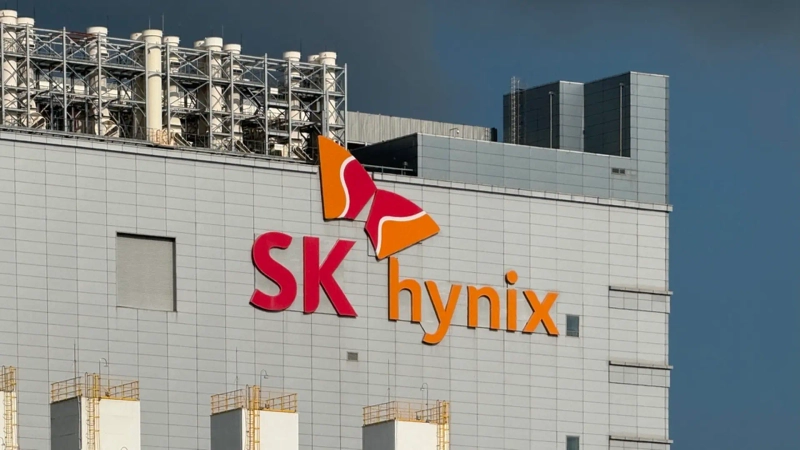
Analysts are discussing a potential stock split as SK Hynix’s next shareholder return measure after the company announced a 40 trillion won ($28.9 billion) share buyback and cancellation plan. With the stock having climbed above 1.7 million won, the high entry cost for retail investors has fueled expectations that the company could take additional steps to improve accessibility and trading liquidity.
$28.9 Billion Buyback to Be Fully Canceled
According to EpicAI, an AI-based investment information platform, SK Hynix fell 9.75% to close at 1.5 million won on the Kospi on Aug. 19. Rising global long-term bond yields weighed on valuations for growth stocks, while foreign selling sparked profit-taking in large semiconductor names including Samsung Electronics and SK Hynix.
Sentiment reversed after the close. SK Hynix announced a 40 trillion won ($28.9 billion) share buyback and cancellation plan, and the stock recouped most of its losses in Nextrade’s after-hours market, ending at 1.624 million won, down 2.29% from the previous session. That was an 8.27% rebound from the regular-session close.
Lee Jae-won, an analyst at Yuanta Securities, said the move should provide strong downside support for the stock and a catalyst for re-rating because improving earnings are being translated into actual shareholder returns. The reduction in shares outstanding from the buyback and cancellation could increase earnings per share and lower the price-to-earnings ratio, helping narrow the stock’s discount, he added.
SK Hynix plans to buy 24.07 million common shares on the open market and cancel all of them. Based on the Aug. 18 closing price of 1.662 million won, the planned purchase totals 40.00434 trillion won ($28.9 billion), equal to about 3.3% of shares outstanding. The purchase period runs from Aug. 22 through Nov. 19. The company said it plans to cancel all of the shares within one to two weeks after completing the purchases.
The size of the program exceeded brokerage estimates. Hana Securities had forecast SK Hynix’s total shareholder returns this year at 40 trillion won to 60 trillion won ($28.9 billion to $43.4 billion), including 20 trillion won to 30 trillion won ($14.5 billion to $21.7 billion) in buybacks. With the announced repurchase alone reaching 40 trillion won and the company signaling additional return measures, total shareholder returns could exceed earlier projections.
Kim Rok-ho, an analyst at Hana Securities, said the 40 trillion won buyback is clearly positive for shareholders. It exceeded his earlier estimate of 20 trillion won to 30 trillion won, and the company is still expected to share additional return policies.
Shares Above 1.7 Million Won May Intensify Calls for a Split
Alongside broader shareholder returns, SK Hynix’s high per-share price has become a fresh market focus. As of Aug. 21, the stock had closed above 1.7 million won. That has sharpened investor interest in the possibility of a stock split. Some investors expect that if the so-called emperor stock, priced above 1 million won a share, lowers its sticker price through a split, it could attract a broader base of buyers and support the share price.
A stock split increases the number of shares by dividing them at a fixed ratio. For example, if an investor owns one share priced at 1 million won and the company executes a 10-for-1 split, that investor would then hold 10 shares priced at 100,000 won each.
The move lowers the price per share without changing the company’s value. As the number of shares rises, the price per share falls by the same ratio, leaving market capitalization unchanged. The main effect is to lower the barrier for retail investors and potentially improve trading activity and liquidity.
SK Group Chairman Chey Tae-won raised the possibility of a stock split at a press briefing after an opening event for SK Hynix’s American depositary receipts listing at Nasdaq’s headquarters in New York in July. Asked whether the company was reviewing a split to improve access for retail investors, Chey said, “If there are more requests, we would of course review it.” Investors took notice because the group’s top decision-maker left the door open.
Eom Soo-jin, an analyst at Hanwha Investment & Securities, said stocks priced in the hundreds of thousands or millions of won per share are burdensome for retail investors to buy and tend to see low trading volume. Lowering the share price through a split would improve access for individual investors and make trading more active, increasing demand, she said.
Samsung Electronics went through a similar process. In May 2018, it relisted after a 50-for-1 stock split when its shares were trading above 2.5 million won. The face value fell from 5,000 won to 100 won, and the stock price dropped into the 50,000-won range. On the first day after relisting, Samsung’s trading volume jumped more than 100-fold from earlier levels, setting a one-day record. An influx of small investors helped the company earn a reputation as a national retail favorite.
A Stock Split Wouldn’t Guarantee a Share Rally
A stock split does not guarantee a rise in the share price because the company’s value does not change. Some investors also argue that splits are less of a catalyst than they once were because exchange-traded funds and fractional-share trading now offer more ways to gain exposure without buying a single high-priced stock.
Hur Jae-hwan, an analyst at Eugene Investment & Securities, said a stock split can briefly lift a stock because it makes shares easier for retail investors to access and increases liquidity. But while it can improve liquidity, it has little effect on a company’s intrinsic value.
An industry official said SK Hynix’s share performance is more likely to be driven by earnings fundamentals than by any stock-split effect. Key factors include rising demand for high-bandwidth memory used in AI data centers, memory supply discipline and whether profitability improves as prices move.
Kang Kyung-ju, Hankyung.com reporter qurasoha@hankyung.com

Korea Economic Daily
hankyung@bloomingbit.ioThe Korea Economic Daily Global is a digital media where latest news on Korean companies, industries, and financial markets.