PiCK
BOJ Rate-Hike Clock Speeds Up as Yen Nears 160, With Two Moves Seen This Year
Forecast Trend Report by Period


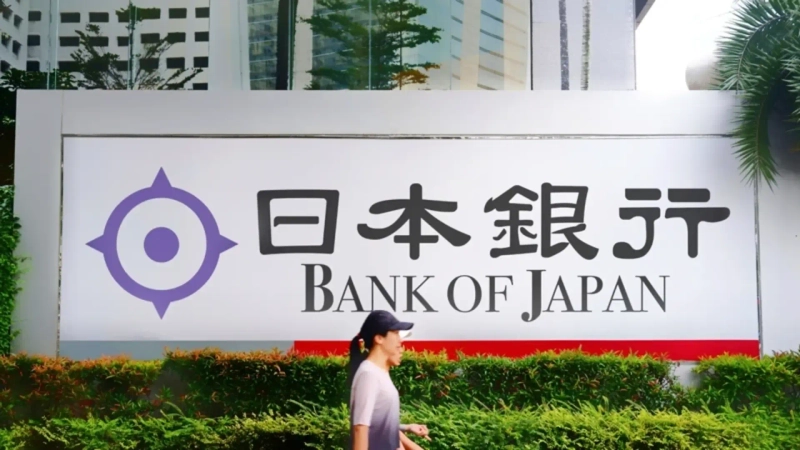
Expectations are growing in Tokyo financial markets that the Bank of Japan will raise interest rates twice this year, with a policy-rate increase next month followed by another in December. As Japan’s tightening cycle gathers pace, some market participants say the yen, which nearly weakened to 164 per dollar, could strengthen over the medium to long term.
Could the BOJ Raise Rates Every Three Months?
The BOJ will hold a two-day monetary policy meeting on Sept. 17-18 to discuss whether to raise rates again, according to the central bank. In Tokyo markets, the odds of a September rate increase are above 80%. Some financial firms are reportedly structuring bond strategies on the assumption that a September hike is a certainty.
Markets are also weighing the possibility that the BOJ will follow a September move with another increase in December. If the bank raises rates in September, it would come just three months after the previous increase in June. A December hike would again leave only a three-month gap. That would mark a sharp acceleration from the roughly six-month intervals the BOJ has maintained until now.
A main reason the BOJ is considering a faster pace is the yen’s persistent weakness. The dollar-yen exchange rate nearly reached 164 last month, pushing the Japanese currency to its weakest level since 1986, or almost 40 years. After the US and Japan conducted joint yen-buying intervention in late July, the rate briefly fell to the 156 range. It has since climbed back to around 160 this month.
The Nikkei newspaper reported that a Japanese government official said conditions set by the US for joint intervention included faster rate hikes by the BOJ. The implication is that Washington is pressing the central bank for additional tightening because Japan’s low policy rate is viewed as a major driver of yen weakness.
The BOJ is also wary that a weak yen could reignite inflation. Japan’s corporate goods price index rose 7.2% in July from a year earlier. Consumer inflation excluding fresh food and energy was 1.9%, with the pace of increase quickening for the first time in nine months. As companies pass higher raw-material and import costs on to customers more quickly than before, concerns are rising that yen-driven inflation could flare up again.
Voices within the BOJ have argued that inflation could rise more than expected and do significant damage to the economy unless the pace of rate increases picks up. Many policy board members also agree that the current six-month interval between hikes should be shortened.
Fighting Yen Weakness Risks Higher Debt Costs
As the BOJ’s tightening stance becomes clearer, views are spreading in the market that the yen may be near a bottom. The main rationale is a narrowing US-Japan interest-rate gap. While the BOJ continues to raise rates, the US could begin cutting them around 2028 as concerns over an economic slowdown mount. Some market participants also project the BOJ’s policy rate could rise above 2%.
SMBC Nikko Securities said the yen could temporarily strengthen to around 145 per dollar next year. Still, structural factors driving yen selling remain in place, including trade and services-account deficits and rising investment in overseas securities. That suggests any shift toward a stronger yen is more likely to unfold gradually over the medium to long term rather than immediately.
The challenge is that faster rate hikes would also increase the Japanese government’s fiscal burden. Japan’s government debt stands at about 1,347 trillion yen, or about $9.2 trillion. If government bond yields rise, the country will face higher interest costs each time maturing debt is refinanced.
Japan’s Ministry of Finance estimates debt-servicing costs for fiscal 2027 will reach a record 36.6 trillion yen. That would be 5.3 trillion yen more than the initial budget for fiscal 2026. The higher rates climb, the more expensive it becomes to carry the country’s massive debt load. Japan is caught in a dilemma: it needs to raise rates to curb yen weakness and inflation, but accelerating tightening would also put greater pressure on public finances.
Choi Man-su, Tokyo correspondent, Korea Economic Daily, bebop@hankyung.com

Korea Economic Daily
hankyung@bloomingbit.ioThe Korea Economic Daily Global is a digital media where latest news on Korean companies, industries, and financial markets.