US Weighs $1 Trillion Treasury Buybacks as Long-Bond Yields Surge
Forecast Trend Report by Period


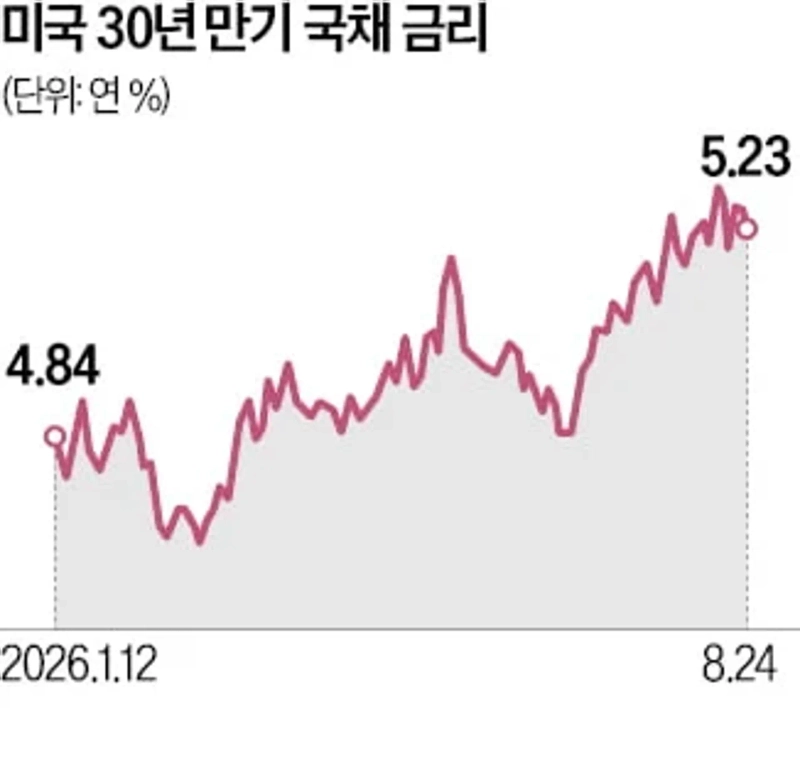
The US Treasury is considering deploying $1 trillion of cash to buy long-term government bonds. The move would add fresh firepower after the department doubled the size of its Treasury buyback operations as long-dated yields climbed to their highest levels in two decades.
CNBC reported on Aug. 24, citing two senior Treasury officials, that the department could tap the Treasury General Account, or TGA, to finance the buybacks. The TGA is effectively the US government's cash account at the Federal Reserve, where it holds money raised through taxes and Treasury issuance. The balance stands at about $950 billion, far above the Biden administration's target range of $550 billion to $600 billion.
The Treasury is examining the TGA as long-term yields have risen sharply. On Aug. 19, the department doubled the per-operation cap for buybacks of less actively traded off-the-run long-term Treasuries to at least $4 billion from $2 billion. The 30-year yield fell 0.09 percentage point immediately after the announcement, but the effect faded quickly. In a Treasury market worth tens of trillions of dollars, buybacks of only a few billion dollars at a time have been criticized as too small to push yields lower. That has put the TGA in focus as another option because it would allow the Treasury to buy long-dated bonds with existing cash.
Any easing in long-term Treasury yields could support South Korean stocks. Higher US yields tend to sap appetite for risk assets and weigh on AI-related megacap technology and semiconductor shares. Samsung Electronics and SK Hynix fell 8.70% and 3.41%, respectively, on the day amid concern over rising US Treasury yields.
US Treasury Steps Up Bond Market Defense Amid Fears of Spillover to Mortgages and Corporate Debt
Long-Term Treasury Yields Drop Across the Curve, but Fiscal Impact Remains Uncertain
US long-term Treasury yields fell across the curve on Aug. 24 after news emerged that the Treasury may use the TGA. The 30-year yield declined 0.041 percentage point from a day earlier to 5.235%, while the 10-year yield fell 0.032 percentage point to 4.706%. Still, it remains unclear whether the move will last. After the Treasury announced the expanded buyback program on Aug. 19, the 30-year yield also dropped to around 5.18% before rebounding. CNBC noted that using the TGA also has limits: if the Treasury spends TGA cash on buybacks and then wants to restore the balance to current levels, it would need to rebuild cash through tax revenue or issue more debt.
The Treasury is widely seen as making an all-out effort to contain the rise in long-term yields. Inflation remains too high for the Federal Reserve to return easily to quantitative easing. US consumer prices rose 3.4% in July from a year earlier, above the Fed's 2% target. Higher long-term yields lift not only the government's interest burden but also borrowing costs for the private sector, including mortgages and corporate bonds. That helps explain why the Treasury has moved to respond directly.
Treasury Secretary Scott Bessent's approach to the national debt has also shaped the department's aggressive stance on long-term yields. His plan is to reduce the burden of federal debt, now above $40 trillion, relative to gross domestic product through economic growth rather than sweeping austerity. "The way to deal with a mountain of national debt is global growth," Bessent told CNBC. "Given the debt built up during the Covid-19 era, the biggest threat to financial stability is a lack of growth." A sharp rise in long-term yields could curb investment and consumption and threaten that strategy, adding urgency to efforts to stabilize rates.
The Treasury views the recent jump in long-term yields as a temporary supply-demand imbalance rather than a structural market reassessment of rising federal debt. Increased corporate bond issuance has temporarily worsened supply conditions for long-dated Treasuries. "Expanding buybacks is also a signal that we believe yields are not reflecting underlying fundamentals," Bessent said.
Lee Hye-in and Lee Sun-a, Korea Economic Daily reporters hey@hankyung.com

Korea Economic Daily
hankyung@bloomingbit.ioThe Korea Economic Daily Global is a digital media where latest news on Korean companies, industries, and financial markets.