Samsung Electronics, SK Hynix Slide as IR Criticism, US Chip Selloff Hit Sector
Summary
- Samsung Electronics, SK Hynix and other South Korean chip stocks fell sharply as disappointment over shareholder return plans combined with the fallout from a pullback in US semiconductor shares.
- Market participants say the IR practices of Samsung Electronics and SK Hynix fall short of global standards, adding to uncertainty over share buybacks and cancellations.
- Brokerages say memory prices and earnings estimates remain solid, making the latest decline look more like a short-term move tied to fading shareholder return expectations and caution ahead of Nvidia’s earnings release.
Forecast Trend Report by Period


Samsung Electronics down 4.09% at 247,000 won
SK Hynix down 5% at 1,568,000 won
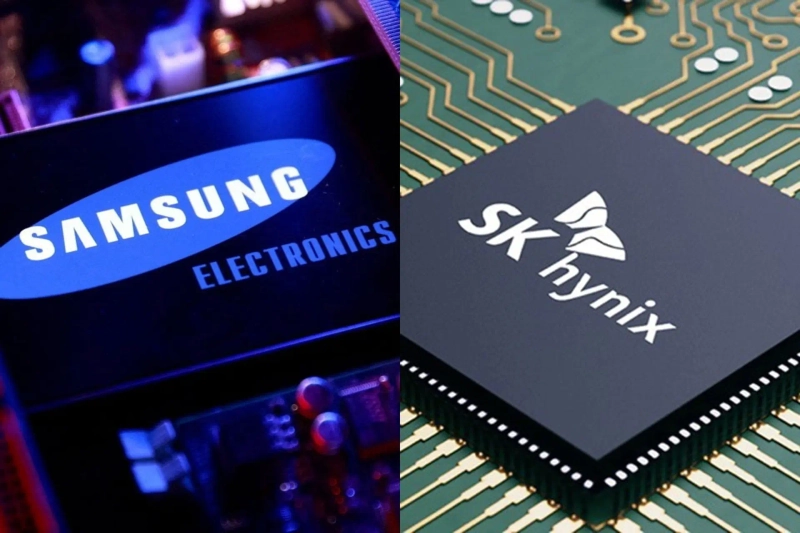
Samsung Electronics Co. and SK Hynix Inc. fell in early trading on Aug. 25 as profit-taking spread through South Korea’s chip sector after a broad overnight pullback in Nvidia Corp. and other major US technology and semiconductor stocks. Disappointment over Samsung Electronics’ shareholder return plan, combined with caution ahead of Nvidia’s earnings, added to selling across the sector.
As of 9:15 a.m., Samsung Electronics was down 4.09% at 247,000 won, while SK Hynix had fallen 5% to 1,568,000 won. SK Square Co. was down 5.76% at 100,900 won, Samsung Electronics preferred shares were off 2.96% at 182,600 won, and Samsung Electro-Mechanics Co. had dropped 5.39% to 122,800 won.
The decline in chip-related shares followed overnight profit-taking in large US technology and semiconductor stocks. The Dow Jones Industrial Average rose 0.3%, while the S&P 500 fell 0.3% and the Nasdaq Composite lost 0.8%.
Micron Technology Inc. slid 5.9%, SanDisk Corp. fell 6.5% and Nvidia lost 2.9%. Advanced Micro Devices Inc. and Broadcom Inc. dropped 3.49% and 2.63%, respectively. Selling was broad across chip and technology stocks, with SanDisk and Seagate Technology Holdings Plc both tumbling more than 6%.
The latest weakness came after a correction in South Korean chip stocks that began with Samsung Electronics’ shareholder return announcement, while caution ahead of Nvidia’s earnings further damped sentiment. Nvidia shares have now declined for seven straight sessions for the first time in four years, prompting some investors to cut semiconductor exposure in advance.
In South Korea’s regular session on Aug. 24, Samsung Electronics came under selling pressure after announcing, after the close on Aug. 21, a shareholder return plan worth 90 trillion won to 110 trillion won. Lee Kyung-min, an analyst at Daishin Securities Co., said weakness spread across Samsung affiliates after the plan fell short of market expectations.
Some market participants also criticized the investor relations approach of Samsung Electronics and SK Hynix as falling short of global standards. One industry official said it was disappointing that the companies left room for investor interpretation by postponing details on the scale and timing of share buybacks and cancellations, the issues investors most wanted clarified. “It makes you wonder whether Samsung can only do IR this way,” the person said.
The official added that Samsung Electronics and SK Hynix are no longer companies focused only on the domestic market, but established global leaders whose investor relations practices should match that status. Giving investors the most specific and predictable information possible, and communicating actively with the market, is the way to raise corporate value, the person added.
Brokerages, however, say there is little basis to argue that semiconductor-sector fundamentals have been damaged. With no clear signs of weakening in memory prices or earnings estimates, the recent drop is closer to a short-term move driven by fading expectations for shareholder returns and caution ahead of Nvidia’s earnings release.
Han Ji-young, an analyst at Kiwoom Securities Co., said South Korea’s stock market could attempt a rebound, helped by views that the US chip selloff has already been priced in, easing pressure from rising interest rates, weaker oil prices and bargain buying after the previous session’s sharp decline.
Kang Kyung-ju, Hankyung.com reporter qurasoha@hankyung.com

Korea Economic Daily
hankyung@bloomingbit.ioThe Korea Economic Daily Global is a digital media where latest news on Korean companies, industries, and financial markets.