Gartner Sees Semiconductor Revenue Jump 92%, With Memory Making Up 54% of Market on AI Demand
Summary
- Gartner said global semiconductor revenue will rise 92% this year, with memory expanding its share to 54% of the market.
- DRAM revenue is projected to climb 246.6% this year and NAND flash 371.9%, a positive development for Samsung Electronics and SK Hynix.
- By 2030, the AI data center ecosystem will account for more than 53% of total semiconductor revenue, boosting demand beyond memory into non-memory chips as well.
Forecast Trend Report by Period


"Memory's share of total chip market to reach 54%\n### AI data center ecosystem to account for more than 53% by 2030"
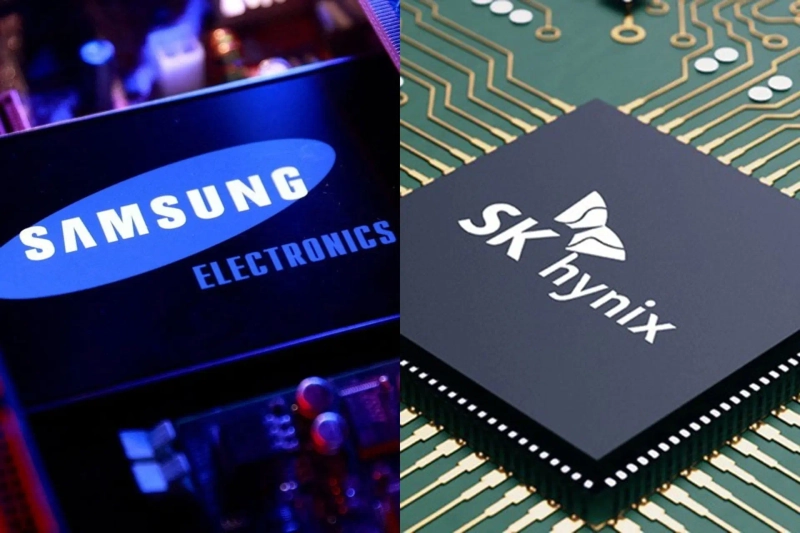
Global memory-chip revenue is projected to surge about 280% this year from 2025, according to Gartner. Memory is also set to account for more than half of the broader semiconductor market as AI data center investment boosts demand not only for high-bandwidth memory, but also for DRAM, NAND and non-memory chips.
On Aug. 25, the market research firm said global semiconductor revenue will rise 92% this year to $1.5552 trillion from $809 billion last year. It expects the figure to increase to $1.9399 trillion next year.
Memory is driving an even larger share of that growth. Gartner forecasts memory-chip revenue will reach $837.3 billion this year, up about 280% from $220.1 billion last year. Memory's share of total semiconductor sales is projected to climb to 54% this year from 27% last year.
Ben Lee, a director analyst at Gartner, said the semiconductor industry is entering a new growth phase. Continued investment in AI infrastructure and stronger-than-expected increases in memory prices are fueling the industry's rapid expansion.
DRAM to Rise 246.6%, NAND 371.9%
DRAM and NAND flash are both poised for sharp growth this year. Gartner projects DRAM revenue will increase 246.6% from a year earlier, while NAND flash revenue will jump 371.9%.
That outlook is a positive for Samsung Electronics Co. and SK Hynix Inc. Both companies make high-bandwidth memory, commodity DRAM and NAND, while demand for higher-value memory used in AI is rising and prices for standard DRAM and NAND remain firm. Gartner expects supply-demand conditions to stay tight even as additional capacity comes online next year because memory consumption tied to AI infrastructure will keep growing.
Sreejesh Pant, a director analyst at Gartner, said AI infrastructure has changed the dynamics of the memory market. This year, higher prices will accelerate growth. After 2027, continued AI infrastructure build-outs, rising memory content per AI server and solid demand for high-bandwidth memory will support further gains in memory revenue.
AI Data Center Ecosystem to Account for More Than Half of Chip Sales by 2030
Semiconductor demand is also shifting quickly. Gartner said the AI data center ecosystem's share of global semiconductor revenue will rise from 36.5% this year to more than 53% by 2030. That means more than half of worldwide chip sales will be linked to AI data centers within four years.
Lee said AI infrastructure is reshaping not only investment across the semiconductor ecosystem but also the industry's demand mix. The AI data center ecosystem's share of overall semiconductor revenue is projected to expand from 36.5% in 2026 to more than 53% in 2030.
Products beyond memory are also set to benefit. As AI clusters grow in scale, computing speed and power consumption, demand is also increasing for central processing units, networking chips, power-management semiconductors, analog devices and optical interconnects.
Gartner forecasts semiconductor revenue excluding memory will increase 21.9% to $717.9 billion this year from $589 billion last year. It expects that figure to reach $864.4 billion next year.
Lee said AI is not benefiting only a single product category. It is expanding opportunities across the semiconductor market through the entire infrastructure stack.
Hong Min-seong, Hankyung.com reporter mshong@hankyung.com

Korea Economic Daily
hankyung@bloomingbit.ioThe Korea Economic Daily Global is a digital media where latest news on Korean companies, industries, and financial markets.