Korea Says Offshore STOs Backed by Domestic MMFs Lawful, Opening Door to ETFs
Summary
- The Financial Services Commission said it would be difficult to view the overseas issuance and sale of tokenized securities (STOs) backed by domestic MMFs as a violation of the Electronic Securities Act.
- The legal interpretation gives Korean asset managers a new distribution channel to attract overseas on-chain capital, and whether it expands to won-denominated bonds, ETFs and real estate will be a key point to watch.
- Tokenized MMFs carry lower credit risk than stablecoins while offering interest income, which could broaden demand from the digital-asset industry. Still, the eventual size of the market will depend on securing overseas demand for won-denominated assets.
Forecast Trend Report by Period


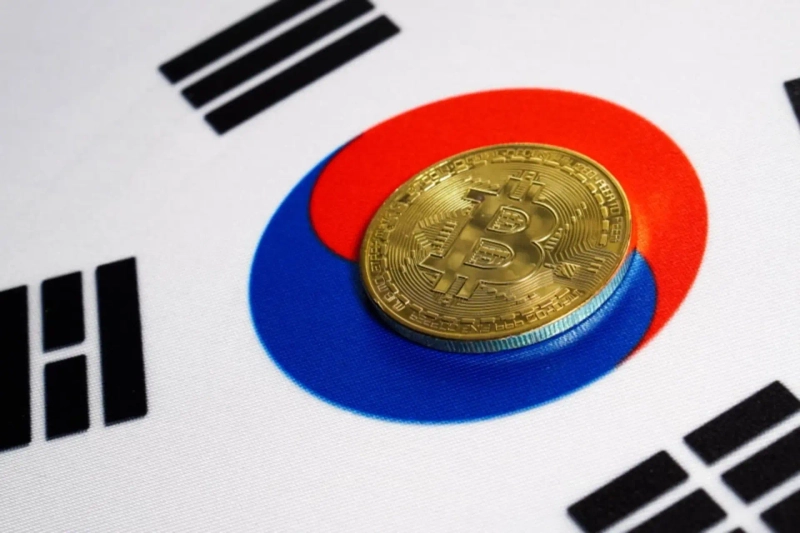
South Korea has opened the door to issuing and trading tokenized securities in overseas blockchain markets using domestic underlying assets such as money market funds, or MMFs.
The interpretation could eventually be applied to other won-denominated assets, including Korean bonds, ETFs and real estate, potentially broadening its impact. Let’s take a closer look with Ko Young-wook from the securities desk.
Ko, what exactly have the financial authorities allowed?
The Financial Services Commission, South Korea’s top financial regulator, has concluded that issuing and selling tokenized securities overseas based on domestic underlying assets is difficult to regard as a violation of the current Electronic Securities Act.
The interpretation was issued in response to an inquiry limited to MMF products offered by Korean financial companies. With amendments to the Electronic Securities Act governing distributed ledgers not due to take effect until February 2027, the decision helps reduce uncertainty during the regulatory gap.
The same logic could later be extended to other won-denominated assets, including bonds, ETFs and physical assets such as Korean real estate.
So what changes in practical terms?
In simple terms, an overseas firm can buy a financial product created by a Korean asset manager and resell it abroad. The product is sold in token form so it can trade on a blockchain.
The underlying product in this case is an MMF created by a Korean asset manager. MMFs invest in short-term instruments such as government bonds and commercial paper and are commonly used as cash-management vehicles.
An offshore institution independent of the Korean financial company buys the MMF and places it into an offshore fund. Shares in that offshore fund are then issued as blockchain tokens. Overseas investors buy those tokens and receive the interest income generated by the MMF.
The FSC said the current Electronic Securities Act does not apply if both issuance and sales take place outside Korea and do not affect the domestic market.
The tokens, however, must be sold only through private placements to overseas investors. Purchases and resales by Korean residents must also be blocked through technical and contractual means.
How do Korean asset managers make money from that structure?
They do not earn fees from issuing the tokens. Instead, they collect management fees on the money raised overseas.
For example, if an overseas institution raises 1 trillion won by selling tokens and invests all of it in a Korean MMF, that asset manager’s fund assets would increase by 1 trillion won.
MMF fees, however, are typically below 0.1% a year, or less than 10 basis points.
That means the immediate earnings impact may be limited. The bigger significance is that Korean asset managers have secured a new distribution channel to attract overseas on-chain capital.
Kiwoom Securities described MMF tokenization as the first step toward making on-chain finance a reality rather than a simple experiment. Tokenized MMFs carry lower credit risk than stablecoins while still paying interest, the brokerage said, which could gradually expand demand from the digital-asset industry.
Samsung Securities also said the interpretation reduces legal uncertainty around a structure in which Korean assets are supplied domestically and tokenized overseas.
Does that mean it will be linked to Korea’s domestic tokenized securities market, which is preparing to launch?
For now, the two markets are separate. The investor base is different, and so are the products being traded.
A domestic tokenized-securities exchange is intended as a market where Korean investors trade profit rights tied to nonstandard assets such as real estate, art and Korean beef. Those products are issued under Korean law and distributed through licensed domestic infrastructure.
By contrast, the newly permitted structure involves issuance overseas and trading only among overseas investors. Once the tokens are transferred to a Korean resident, the basis for the legal interpretation no longer holds. That means they cannot simply be listed on the domestic market.
Still, the decision points to the direction of travel for the market. Korea’s tokenized-securities debate began with fractional investing, but in the US, tokenization of conventional financial products such as MMFs and Treasuries is already growing rapidly.
The latest interpretation raises the possibility of a two-track market. Korea could build closed domestic infrastructure while won-denominated assets circulate overseas on public blockchains.
What hurdles remain before products are launched and the market expands?
First, this was not approval for a product launch. It was a legal interpretation that a specific structure does not fall under Korea’s current Electronic Securities Act.
Shinhan Asset Management is conducting a proof of concept for the overseas tokenization of a won ultra-short bond fund. The product name, issuance size and target assets under management have not yet been decided.
Overseas investors would also have to bear the risk of won depreciation and the cost of currency hedging. Whether such products can generate demand comparable to offerings backed by the dollar and US Treasuries is a separate question.
In other words, the legal path is now open, but the ultimate size of the market will depend on how much overseas demand can be secured for won-denominated assets.
The interpretation is also limited to a specific offshore fund holding MMFs. It does not automatically extend to other won-denominated assets such as bonds, ETFs or real estate. Whether the framework is broadened will be the key point to watch.
Thank you. That was Ko Young-wook from the securities desk.
Ko Young-wook, Hankyung TV reporter yyko@hankyungtv.com

Korea Economic Daily
hankyung@bloomingbit.ioThe Korea Economic Daily Global is a digital media where latest news on Korean companies, industries, and financial markets.