Samsung, SK Hynix Shareholder Returns May Strengthen Won; Dollar-Won Seen Finding Support at 1,340-1,350
Summary
- NH Investment & Securities said large shareholder return programs by Samsung Electronics and SK Hynix could generate dollar-selling demand, adding pressure for further declines in the dollar-won exchange rate.
- NH Investment & Securities put the first support level for the dollar-won exchange rate at 1,340 won to 1,350 won, implying about 30 won to 40 won of additional downside from current levels.
- NH Investment & Securities estimates that about 40% to 50% of shareholder return funding will actually come from foreign-currency conversion, making a drop in the exchange rate as strong as the earlier SK Hynix ADR conversion episode unlikely.
Forecast Trend Report by Period


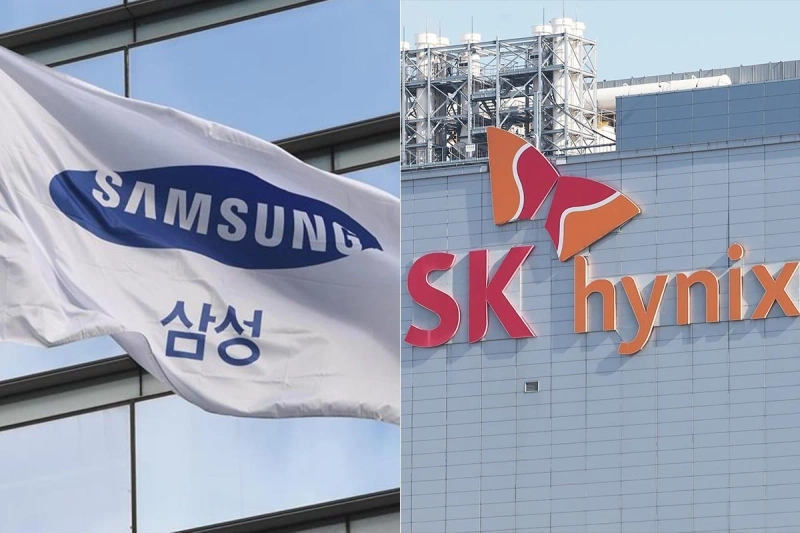
Large shareholder return programs by Samsung Electronics Co. and SK Hynix Inc. could add to downward pressure on the dollar-won exchange rate through related foreign-exchange conversions.
In Seoul trading on Aug. 26, the dollar-won rate stood at 1,384.8 won as of 3:30 p.m., down 1.3 won from the previous session. The pair traded in a narrow range in the mid-1,380s ahead of the Bank of Korea’s policy-rate decision on Aug. 27.
Market participants expect an initial floor around 1,340 won to 1,350 won per dollar even if the exchange rate falls further from current levels. Kwon A-min, an analyst at NH Investment & Securities, estimates the first support level at 1,340 won to 1,350 won once potential dollar-selling demand tied to shareholder returns at Samsung Electronics and SK Hynix is factored in. That suggests room for an additional decline of about 30 won to 40 won from current levels.
Recent won strength has been driven by dollar selling from South Korean exporters and conversions related to SK Hynix’s American depositary receipt issuance. The company brought home dollars raised overseas and exchanged them into won, increasing dollar supply in the foreign-exchange market. Much of that flow has already been absorbed, however, and the pace of the exchange rate’s decline has slowed.
A new variable is the shareholder return plans at Samsung Electronics and SK Hynix. SK Hynix on Aug. 19 announced a 40 trillion won ($28.9 billion) share buyback and cancellation plan. Samsung Electronics on Aug. 21 set this year’s shareholder return plan at about 90 trillion won to 110 trillion won ($65.1 billion to $79.5 billion). It plans to first pay about 30 trillion won ($21.7 billion) in cash dividends in the third quarter, with the remaining methods and amounts to be finalized in January 2027.
The market is watching whether the process will generate demand to convert foreign-currency holdings overseas into won. Buybacks and dividend payments to domestic shareholders require won funding, making the plans a potential source of dollar selling in the foreign-exchange market.
Still, the full size of the shareholder return programs is unlikely to translate directly into dollar-selling flows. NH Investment & Securities previously estimated that if SK Hynix converted funds raised through its ADR issuance over 30 trading days, the daily amount would equal about 2% of the dollar-won spot market’s average daily turnover of $43.7 billion in the second quarter.
If Samsung Electronics and SK Hynix fund all shareholder returns through foreign-currency conversion and spread the execution over 60 trading days, the supply-demand effect would be similar, the brokerage said. Conversions tied to SK Hynix’s 40 trillion won ($28.9 billion) buyback would equal about 1.1% of average daily spot turnover. Samsung Electronics’ cash dividends and employee stock purchase-related flows were estimated at 0.8% and 0.4%, respectively. Together, the three categories amount to about 2.3%, similar to the effect of SK Hynix’s earlier ADR-related conversions.
That calculation assumes all shareholder return funding comes from dollar sales. If Samsung Electronics and SK Hynix instead use won already on hand and cash generated from domestic operations, the amount supplied to the foreign-exchange market would be smaller.
NH Investment & Securities estimates that only about 40% to 50% of shareholder return funding will come from foreign-currency conversion. On that basis, the brokerage said the companies’ large payout programs could support further won strength, but probably not produce a drop in the exchange rate as sharp as the one seen during SK Hynix’s earlier ADR conversions.

Suehyeon Lee
shlee@bloomingbit.ioI'm reporter Suehyeon Lee, your Web3 Moderator.