BOK Weighs Back-to-Back Rate Hikes as Growth, Inflation Stay Firm
Summary
- Solid growth, including 0.6% real GDP growth in the second quarter and a 15.6% surge in real GDI, has increased the odds of an additional rate hike.
- July core inflation of 2.6% and consumer inflation of 2.8% remained above the BOK’s 2% target, reinforcing the case for a continued tightening phase.
- However, market attention is focused on the stability of the won-dollar exchange rate, along with the dot plot and the possibility of dissent, for clues on the odds of an additional rate hike in October if the BOK holds this time.
Forecast Trend Report by Period


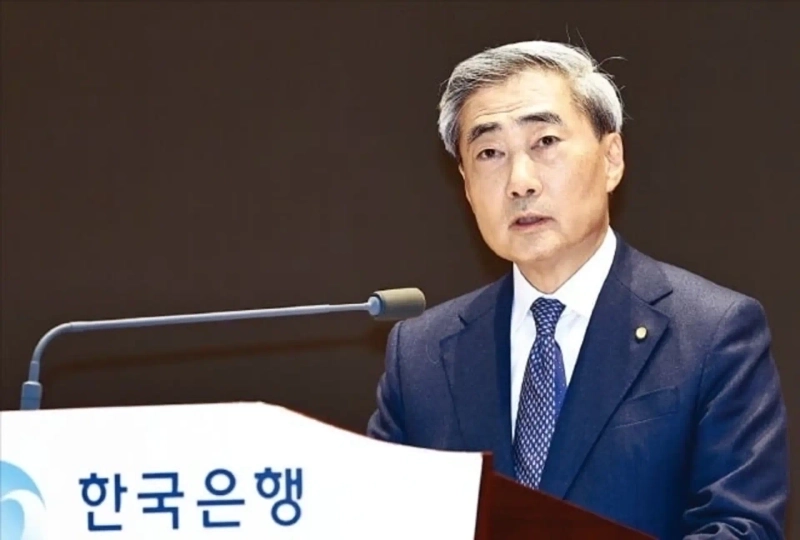
The Bank of Korea’s Monetary Policy Board meets on Aug. 27 to decide the benchmark interest rate, with markets split on whether it will follow last month’s move with another increase or pause after a single hike.
There is broad agreement that the BOK entered a tightening cycle after raising rates last month for the first time in three years and six months. The debate now centers on pace. One side argues another increase is warranted given resilient growth and elevated inflation, while the other says the bank may adjust the pace to avoid the burden of consecutive hikes.
Governor Shin Hyun-song said after last month’s rate increase that the BOK would keep all options open for its August decision. He pointed to second-quarter real gross domestic product growth and July core inflation as key gauges. The bank wanted to assess both export growth led by semiconductors and the inflation impact of higher oil prices tied to the Middle East.
Data released since then have strengthened the case for another increase. Preliminary second-quarter real GDP growth came in at 0.6%, well above the BOK’s May forecast of 0.2%. That followed a rebound from -0.1% in the fourth quarter of last year to 1.8% in the first quarter, extending a relatively solid growth trend into the second quarter.
Real gross domestic income, a measure of the economy’s purchasing power, also surged. Second-quarter GDI rose 15.6% from a year earlier, the fastest since the first quarter of 1988, when it increased 16.4%. Stronger income conditions have fueled views that domestic demand is in a better position than before to withstand another rate increase.
Inflation also remains above the BOK’s comfort zone. Core inflation rose 2.6% in July, the highest since December 2023, helped by higher prices for durable goods and other items. Consumer inflation slowed to 2.8% from 3.2% a month earlier, but it still stood well above the BOK’s 2% target.
A large current-account surplus also underscores the economy’s resilience. South Korea posted a record June current-account surplus of $49.73 billion. The cumulative surplus for January through June reached $191.01 billion, also a record for any first half, raising the possibility that the BOK will revise up its full-year forecast of $250 billion.
By contrast, a more stable won-dollar exchange rate is cited as a reason the BOK does not need to rush another hike. The won moved below 1,500 per dollar last month and stabilized around the 1,400 level in August. On Aug. 24, it strengthened to as much as 1,376.5 per dollar in intraday trading, the strongest level since September 2025. That has reduced the need for an additional increase aimed at supporting the currency.
Attention is also on the board members’ dot plot for clues on the future policy path. Seven Monetary Policy Board members, including Shin, will each present three projections for the benchmark rate six months ahead. As of May, 3.00% was the most common among 21 projections, with 10 dots, followed by 2.75% with seven. Both 3.25% and 2.50% had two each.
Another key question is whether any dissent emerges. If the BOK leaves rates unchanged on Aug. 27, markets see the chances of an additional increase in October rising. If policymakers deliver a second straight hike, focus will shift to the new dot plot and board members’ views for signals on whether further tightening will extend through the fourth quarter and into next year.
Shin is scheduled to hold a press briefing at 11:10 a.m. on Aug. 27 to explain the rationale for the board’s rate decision and the direction of future monetary policy.

Suehyeon Lee
shlee@bloomingbit.ioI'm reporter Suehyeon Lee, your Web3 Moderator.