BOK’s Back-to-Back Rate Hike Keeps Korea-US Gap at 0.75 Point; Will Won Strengthen Further?
Summary
- The Bank of Korea said it delivered a back-to-back rate hike, raising the benchmark rate to 3.00% and maintaining the Korea-US rate gap at 0.75 percentage point.
- Governor Shin Hyun-song said a further decline in the won-dollar exchange rate after the rate hike would help lower import-price inflation and support domestic price stability.
- The possibility of additional rate hikes this year and broader dollar-selling pressure from falling global oil prices are likely to support further won strength.
Forecast Trend Report by Period


Korea-US rate gap remains at 0.75 percentage point, with another hike possible this year
Oil weakens for a fourth straight session; further declines could spur dollar selling
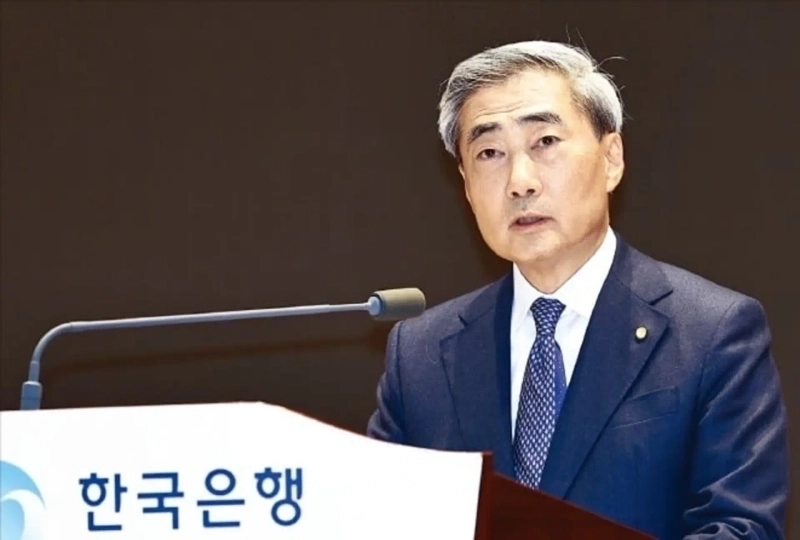
The Bank of Korea raised its benchmark interest rate by 25 basis points to 3.00% from 2.75% on Aug. 27, delivering a second straight monthly increase. Investors are now focused on whether the move will accelerate won gains.
As of 3:30 p.m. in Seoul, the won had strengthened to 1,380.9 per dollar, its strongest level since September 2025. It touched 1,377.3 during the session.
The drop in the dollar-won rate was driven by exporter dollar sales, demand for foreign-exchange conversion from domestic semiconductor companies, and pre-settlement flows tied to expectations for a rate increase by the Monetary Policy Board. Lower international oil prices also supported the won.
BOK Governor Shin Hyun-song said at a press conference after the policy meeting that the exchange rate had fallen substantially from late June and had become more stable. By historical standards, however, it remains high.
A further drop in the exchange rate following the rate increase would help ease import-price inflation and support domestic price stability, Shin said. He added that predictability matters more than any specific level, because companies and households need stable conditions to plan investment and spending.
Shin also said an early monetary-policy response helps steady the foreign-exchange market and contributes to exchange-rate stability. There is room for the won to strengthen further, he added, and the 19% rise in import prices would be offset to a considerable extent.
The BOK’s preemptive tightening is seen easing upward pressure on the exchange rate for now. The Korea-US policy-rate gap remains at 0.75 percentage point, and markets are still pricing in one or two more increases this year.
The latest decision narrowed the gap between South Korea and the US to 0.75 percentage point at the upper end of the range. The Federal Reserve is set to hold its next Federal Open Market Committee meeting in September, where a pause appears to be the most likely outcome, leaving the policy rate at 3.50% to 3.75%.
Markets expect the BOK to raise rates one or two more times, reflecting strong growth and inflation pressure.
Cho Byung-hyun, an analyst at Daol Investment & Securities, said Shin appeared to signal a preference for a lower exchange-rate range. Unless the dollar-won rate posts another sharp drop, the likely path is one additional increase in the fourth quarter and another in the first half of next year, he said.
Ahn Ye-ha, an analyst at Kiwoom Securities, said she expects one more increase in November, followed by another in the first half of next year. Even if the BOK slows the pace after two consecutive hikes, it will be difficult to end the tightening cycle early, she added.
In the near term, a fourth straight decline in oil prices and continuing US-Iran talks despite lingering tensions are also helping push the exchange rate lower.
On the New York Mercantile Exchange, West Texas Intermediate for October delivery settled at $82.23 a barrel, down 13 cents, or 0.16%, from the previous session. It was the fourth straight daily decline.
On London’s ICE Futures Europe exchange, Brent crude for October delivery, the global benchmark, fell 74 cents, or 0.84%, to $87.84 a barrel.
WTI and Brent at one point fell to their lowest levels since Aug. 10.
If oil falls back into the $70s, that would further ease inflation risks and reduce pressure on long-term bonds, Park Sang-hyun, an analyst at iM Securities, said. Additional declines in crude could also broaden selling pressure on the dollar, providing further support for the won.
Noh Jung-dong, Hankyung.com reporter dong2@hankyung.com

Korea Economic Daily
hankyung@bloomingbit.ioThe Korea Economic Daily Global is a digital media where latest news on Korean companies, industries, and financial markets.