Why 30-Year Treasury Yields Rose Less Than 2-Year Rates Despite Warsh’s Hawkish Turn
Summary
- Warsh reaffirmed the 2% inflation target and the use of short-term interest rates to control inflation, while leaving open the possibility of an additional rate increase.
- Bessent outlined a policy approach aimed at easing 30-year Treasury liquidity and supply pressure through expanded long-dated Treasury buybacks and issuance-policy adjustments.
- The path of long-term Treasury yields, the dollar, and Treasury demand will hinge on September’s buyback operations, the September FOMC, and November’s Treasury issuance plan.
Forecast Trend Report by Period


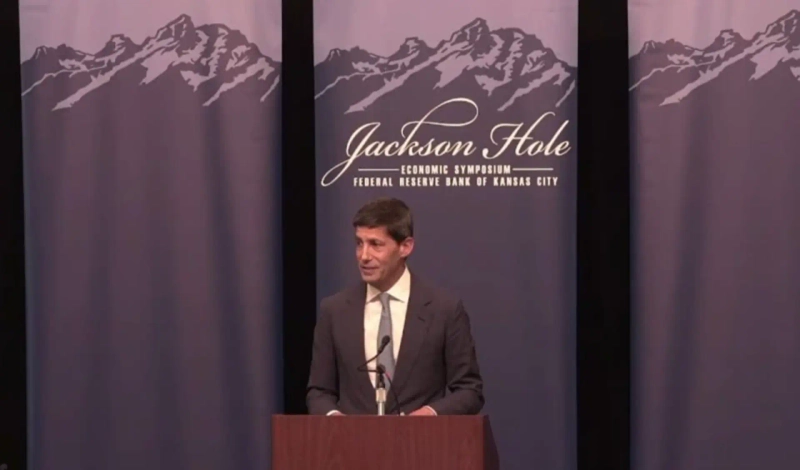
Analysis is growing that a new policy mix could be taking shape in Washington, with Federal Reserve Chair Kevin Warsh and Treasury Secretary Scott Bessent addressing US interest rates through separate channels. The Fed would use short-term policy rates to control inflation and inflation expectations, while the Treasury would manage liquidity and supply pressure in the long-end of the Treasury market through buybacks and issuance policy. The two men have not formally agreed to such a division of labor, but their recent actions and remarks suggest the two approaches could work as functional complements.
Treasury Expands Long-Bond Buybacks
The Treasury moved first. On Aug. 19, it said it would more than double the cap on liquidity-support buybacks of nominal Treasuries with maturities of 10 to 20 years and 20 to 30 years, raising the size to at least $4 billion per operation from as much as $2 billion. The change will apply from Sept. 10 through Nov. 4. The official aim is not to defend any particular long-term yield, but to provide more liquidity to the long-dated Treasury market.
Bessent described the policy more aggressively a day later. In a CNBC interview on Aug. 20, he said liquidity in the 30-year Treasury market was especially poor and argued that yields were not reflecting underlying fundamentals. He called the expanded buybacks a kind of “Treasury twist” designed to send a signal to markets and said purchases could exceed $4 billion per operation.
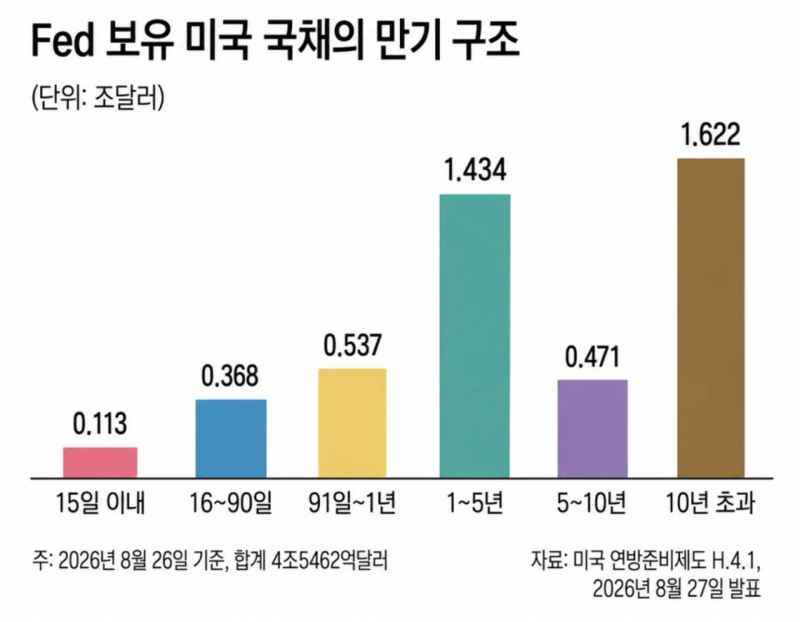
The Treasury has also indicated it could adjust issuance policy in response to the Fed’s balance-sheet runoff. Bessent said that if the Fed reduces its Treasury holdings, “the Treasury and the Fed will work together,” adding that the department would adjust issuance policy in line with Fed asset roll-offs and balance-sheet reduction.
If the Fed does not reinvest proceeds from maturing Treasuries into new securities, the Treasury must place more refinancing supply with private investors because the central bank is no longer replacing that demand. If the Treasury also increases long-term issuance, private investors would have to absorb more duration risk, adding upward pressure on long-term yields. If, instead, the Treasury cuts long-bond issuance or buys back outstanding long-dated debt, it can ease the added supply burden created by the Fed’s balance-sheet reduction.
Bessent, however, drew a clear distinction between that coordination and the Fed’s policy-rate decisions. Asked whether Treasury buybacks could conflict with a Fed rate increase aimed at curbing inflation, he said the buyback decision announced that week “has nothing to do with that.”
Warsh then used his Jackson Hole speech on Aug. 28 to define the Fed’s role. “Two percent is a firm and fixed target,” he said. “Short-term interest rates are the primary tool for achieving our dual mandate.” Unless there is confidence that underlying inflation is moving clearly and very quickly toward target, “we still have work to do.”
The remarks reaffirmed the Fed’s preference for steering inflation and aggregate demand mainly through short-term policy rates rather than through routine purchases of long-dated Treasuries or an expanded balance sheet.
Warsh’s assessment of the economy also left open the door to further tightening. He said the personal consumption expenditures price index, the Fed’s preferred inflation gauge, was running at 3.7% over the past 12 months and a little above 4% on a six-month annualized basis. Of 199 PCE components, 54% rose more than 3% over the past 12 months, and the share was 49% over the past six months. Summer inflation data had been better than expected, he said, but “do not tell us that the underlying trend has improved meaningfully.”
By contrast, Warsh said a labor market with a 4.1% unemployment rate was broadly consistent with full employment. Investment in equipment and intangible assets rose about 9% over the past four quarters, while profits at S&P 500 companies climbed more than 20% over the past year. He also said corporate-bond spreads and corporate lending markets showed no clear signs of tightening. “It is difficult to describe broad financial conditions as restrictive.”
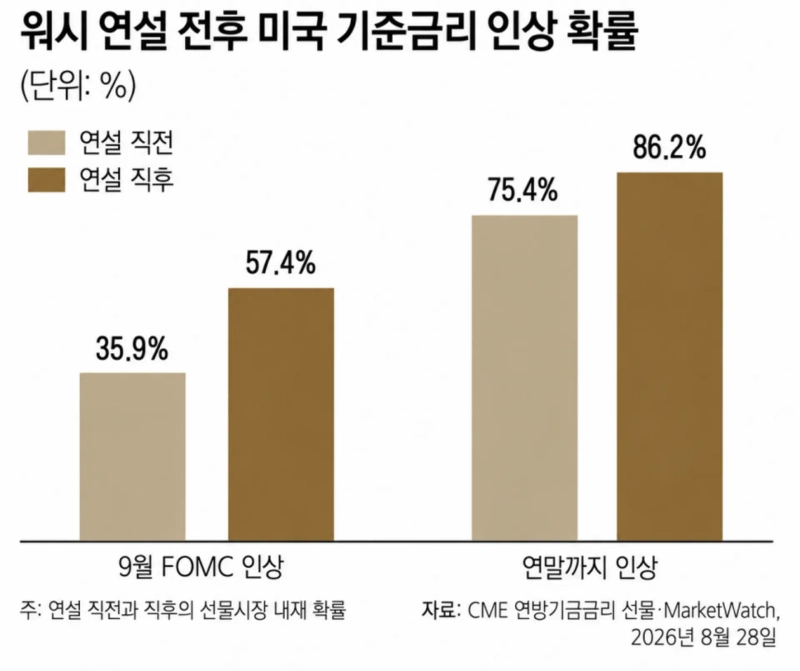
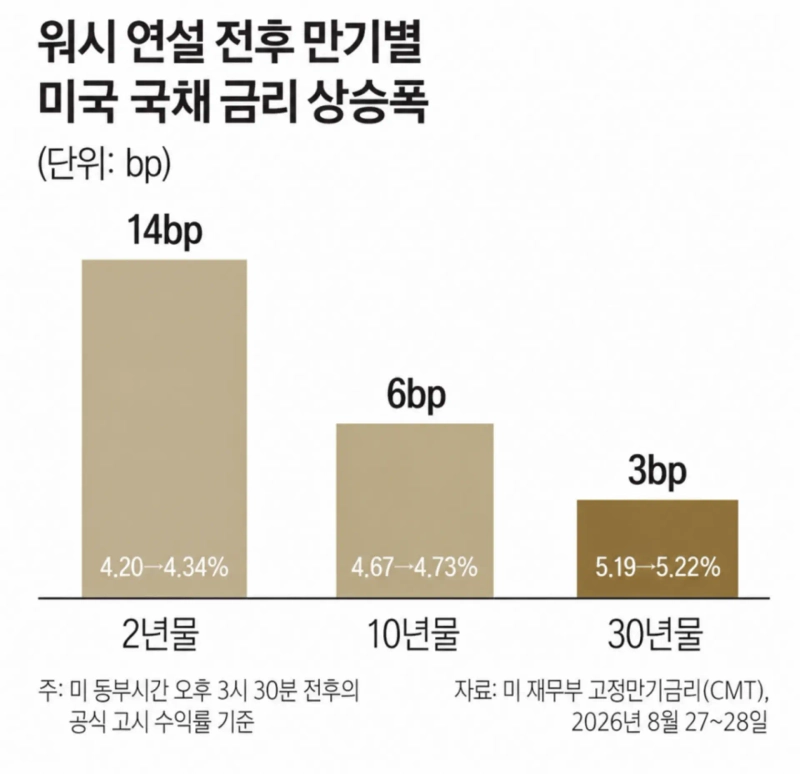
Markets interpreted the speech mainly as a signal of higher short-term policy rates. Based on US Treasury constant maturity rates, the two-year yield jumped 14 basis points at the Aug. 28 close from the previous day. The 10-year rose 6 basis points, while the 30-year added just 3 basis points. In Reuters intraday data, the two-year was up about 11 basis points to 4.34%, the 10-year rose 5 basis points to 4.72%, and the 30-year gained 1.6 basis points to 5.206%. The implied probability of a 25-basis-point rate increase at the Sept. 15-16 Federal Open Market Committee meeting also climbed to 57% to 60% from 35% before the speech.
Focus Shifts to Long-Term Treasury Yields
Investors focused on the fact that short-term Treasury yields rose far more than long-term yields. The market strongly repriced the chance of a near-term rate increase after Warsh’s inflation message, but it did not raise long-term inflation risk by the same amount.
That has prompted analysis linking Warsh’s stance with Bessent’s policy approach. Warsh is seeking to control inflation and inflation expectations through short-term rates. Bessent, by contrast, wants the Treasury to buy illiquid long-dated bonds directly to reduce the strain caused by poor market liquidity. Taken together, the approach suggests a functional split: the Fed handles short-term rates, while the Treasury handles long-end liquidity and supply.
Long-term Treasury yields reflect more than expectations for the path of short-term rates. They also incorporate compensation for holding duration risk and concerns about future inflation. If Warsh signals that rates may stay high or rise further, short-term yields can move up. But if the Fed also reinforces its credibility on the 2% inflation target, longer-term inflation concerns could ease. And if Treasury buybacks improve trading conditions in the long-bond market, the liquidity premium embedded in long-term yields could decline as well.
Warsh’s earlier thinking supports that interpretation. In July 2025, before becoming Fed chair, he argued for a new “Treasury-Fed accord.” He said that if the Fed chair explained the central bank’s long-run balance-sheet target and the Treasury secretary laid out issuance plans to match, markets could more accurately estimate the flow of government debt coming from both institutions. Even then, he made clear that this would not mean the Fed sets policy rates in response to pressure from the administration.
In effect, the Fed would still set policy rates independently based on inflation and employment, while the Fed’s balance sheet and Treasury issuance would be coordinated to manage the combined supply shock hitting the market. If that line holds, the two institutions could work together to stabilize the Treasury market without undermining the Fed’s policy independence.
Market participants picked up on that division of roles in Warsh’s speech. Christopher Hodge, chief US economist at Natixis, said the market had been underpricing the odds of a rate increase and that Warsh strengthened the Fed’s anti-inflation credibility by explicitly acknowledging the inflation problem and reaffirming the 2% target. Given solid growth, full employment and loose financial conditions, Hodge said the Fed appeared inclined to keep rates high or raise them again if inflation does not improve. He also highlighted Warsh’s emphasis on short-term rates, rather than the balance sheet, as the main policy tool.
Brian Storey, senior vice president for multi-asset strategy at Brinker Capital, said Warsh’s reaffirmation of the 2% target and the Fed’s responsibility gave the bond market some reassurance. Mark Cabana, head of US rates strategy at Bank of America, said Warsh’s more orthodox inflation-fighting speech at Jackson Hole was helping calm the bond market.
Nathan Sheets, chief investment officer at SEI Investments, said the speech was difficult to read as anything other than hawkish. He added that the market had been underestimating the Fed’s willingness to act. Karl Schamotta, chief market strategist at Corpay, said Warsh reduced ambiguity around the Fed’s 2% target and emphasized the role of short-term rates. Gary Schlossberg, strategist at Wells Fargo Investment Institute, said that “connecting the dots” suggests the case has been made for at least one more rate increase, and possibly more.
Still, it is too early to say the policy mix has worked. The 30-year yield briefly fell in intraday trading after the speech, but later turned higher again. US long-term borrowing costs have not actually declined.
The Treasury’s expanded buybacks have not yet begun. Some expectations tied to the Aug. 19 announcement may already have been reflected in prices, but no operation above $4 billion has actually been carried out. The effect of larger buybacks on trading costs and yields in long-dated Treasuries cannot be tested until after Sept. 10.
Warsh’s policy path is also not fully clear. Ellen Hazen, chief market strategist at F.L.Putnam, said markets remain “in the dark” because the Fed has not disclosed its reaction function. Phil Blancato, chief market strategist at Osaic, said investors now have a better sense of where the Fed wants inflation to go, but still know little about what mix of inflation and employment would trigger action. Michael Arone, chief investment strategist at State Street, said he was not yet ready to conclude that the Fed will raise rates.
Peter Anderson, founder of Anderson Capital, said investors wanted a GPS for the economy but the Fed gave them a compass. Eugene Epstein, head of trading and structured products at Moneycorp, said Warsh had delivered hawkish messages before without following through. If that happens again, market confidence could weaken.
There is also a risk that the Fed’s policy and the Treasury’s policy could clash rather than complement each other. Warsh said policymakers need to receive “as unfiltered as possible” market signals from Treasury prices and trading volumes, the value of the dollar, credit costs and commodity prices. The goal is to avoid a “hall of mirrors” in which markets price assets based on Fed rhetoric and the Fed then uses those same prices to make policy judgments.
But if the Treasury buys long-dated bonds directly and in size, the very market prices Warsh wants to use for policy decisions would themselves be shaped by government intervention. Reuters columnist Gabriel Rubin said investors are now dealing with “two referees” — the Fed and the Treasury. Warsh wants markets to set prices on their own, while Bessent is effectively blowing the whistle in the long-bond market.
If Treasury intervention becomes too large, other side effects could follow. Dirk Willer, Citigroup’s head of global macro and asset allocation strategy, said that if the Treasury tries too aggressively to hold 30-year yields below a certain level, investors may shift into bonds from countries where governments are not controlling prices, weakening the dollar. He said the Treasury still has policy tools available, but the question is “how many shots it has left and when they run out.”
Events to Watch
Whether the Warsh-Bessent policy mix actually works will likely be tested by three events ahead. The first is Sept. 9, when the expanded buybacks begin. The effect should not be judged simply by whether the Treasury purchases more than $4 billion in long-dated bonds. Investors also need to look at how much of the debt offered for sale the Treasury actually takes, whether older off-the-run bonds become easier to trade, and whether the yield gap between newly issued and outstanding bonds narrows.
If those measures improve and the 30-year yield keeps rising, the main driver of higher long-term rates would appear to be not poor liquidity, but the US fiscal deficit, high real rates and the growing volume of Treasury supply the market must absorb.
The second event is the Sept. 15-16 FOMC meeting. Markets raised the odds of a rate increase to 57% to 60% after Warsh’s speech, but he did not promise one. He said at the end of his remarks that he is “committed to discipline, not to any specific decision.” Whether the Fed actually raises rates, or explains the conditions under which it would do so if it holds steady, will shape confidence in Warsh’s inflation-fighting stance.
The third event is the Treasury’s quarterly borrowing plan on Nov. 4. The department is due to announce buyback sizes for the period after that date. The key questions are whether it extends long-dated purchases above $4 billion per operation, how it shifts the mix between short-term and long-term issuance, and whether it lays out concrete issuance plans tied to changes in the Fed’s balance sheet.
If the policy mix works as intended, Treasury buybacks should lower trading costs in long-dated bonds while the Fed anchors inflation expectations through short-term rates. That should show up in more stable 30-year yields and long-term inflation compensation, along with stronger demand at long-bond auctions.
If, instead, 30-year real yields keep climbing and long-dated auctions remain weak while the Treasury repeatedly expands buybacks, markets may read that not as a successful division of labor but as a failure of price management. If the dollar also weakens, that could signal that risk removed from Treasury yields has simply been transferred to the currency market.
Kim Joo-wan, Hankyung reporter, kjwan@hankyung.com

Korea Economic Daily
hankyung@bloomingbit.ioThe Korea Economic Daily Global is a digital media where latest news on Korean companies, industries, and financial markets.