PiCK
BOK’s Shin Says Up to $20 Billion of Annual US Investment Won’t Strain Won
Summary
- Shin said annual US investment of $20 billion would not place a major burden on the exchange rate, given South Korea’s foreign-exchange reserves and asset-management income.
- Shin said the Bank of Korea would not mechanically track the gap with US interest rates, and would instead communicate with markets based on a broader assessment of monetary policy and exchange-rate stability.
- Shin said South Korea has ample capacity to respond to external shocks based on its foreign-exchange reserves, interest rates, and exchange rate, while calling for preemptive action on financial imbalances such as the housing market and household debt.
Forecast Trend Report by Period


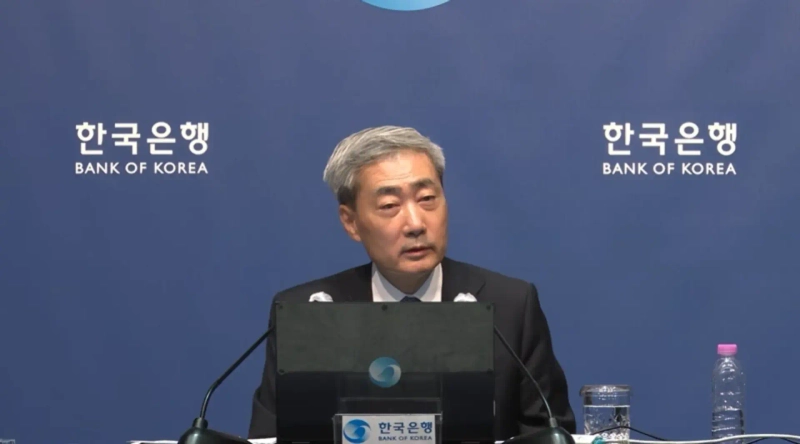
Shin Hyun-song, governor of the Bank of Korea, said an increase in South Korea’s investment in the US is unlikely to have a major effect on the won-dollar exchange rate. Given the country’s foreign-exchange reserves and investment income, annual investment of as much as $20 billion is manageable, he said.
Speaking at a meeting with New York-based Korean correspondents in Jackson Hole, Wyoming, on Aug. 28, Shin said South Korea has about $427 billion in foreign-exchange reserves and continues to earn returns on its assets. Against that backdrop, annual investment in the US of up to $20 billion would not place a significant burden on the exchange rate, he said.
Shin also said the Bank of Korea should play a more active role in stabilizing the currency. For South Korea, the exchange rate is especially important because of the country’s past foreign-exchange crisis and because it reflects both risk appetite and external confidence. The won has recently strengthened to around 1,380 per dollar, but that level remains high by historical standards.
He also reaffirmed that the central bank would not respond mechanically to the gap between US and South Korean interest rates, even as the possibility of additional Federal Reserve rate increases grows. The policy rate is not set by simply calculating the interest-rate differential, Shin said. If conditions surrounding monetary policy change, the Bank of Korea will reassess the situation and communicate with the market accordingly.
Shin expressed confidence in South Korea’s ability to withstand external shocks. The Bank of Korea will work to create conditions that allow it to respond to any shock from abroad while keeping interest rates and the exchange rate stable, he said. External variables often become more volatile in the fall, but South Korea is sufficiently prepared, he added.
On financial imbalances such as the housing market and household debt, Shin stressed the need for early action. Continued gains in home prices and household lending, combined with further expansion in broad liquidity and market-based funding, could heighten instability in financial markets, he said. Financial-stability risks need to be addressed at an early stage.
He also signaled the Bank of Korea could revisit how it communicates policy. Shin said the central bank would review the performance of its so-called K-dot plot over the next year before deciding whether changes are needed. What matters more is conveying the broad direction of policy, rather than allowing markets to focus excessively on a single phrase or word, he said.
Shin also gave a positive assessment of Federal Reserve Chair Kevin Warsh’s Jackson Hole speech. Warsh laid out the broad direction of policy and resolved many of the market’s questions, Shin said. The rise in short-term US Treasury yields, alongside the relatively muted move in 30-year yields, signals that markets trust the policy path. He added that the speech could also offer clues for next month’s Federal Open Market Committee meeting.
On US inflation, Shin said policymakers should be more wary of underlying price pressure than of the impact of tariffs. Markets increasingly see tariff effects as temporary, he said, but that is separate from the risk that broader inflation becomes entrenched and gains momentum. He left open the possibility of an additional monetary-policy response.

YM Lee
20min@bloomingbit.ioCrypto Chatterbox_ tlg@Bloomingbit_YMLEE