PiCK
Warsh Revives Shin’s ‘Hall of Mirrors’ to Challenge Fed Forward Guidance
Summary
- Warsh said forward guidance can distort the market’s price discovery function and make it harder to respond to new developments.
- Warsh and Shin said strong signals such as the dot plot and a projected rate path can create a “hall of mirrors” that weakens independent market signals.
- Shin said he will review the Bank of Korea’s communication framework and assess the K-dot plot over the next year before considering improvements, while stressing that markets should focus on the central bank’s broader message.
Forecast Trend Report by Period


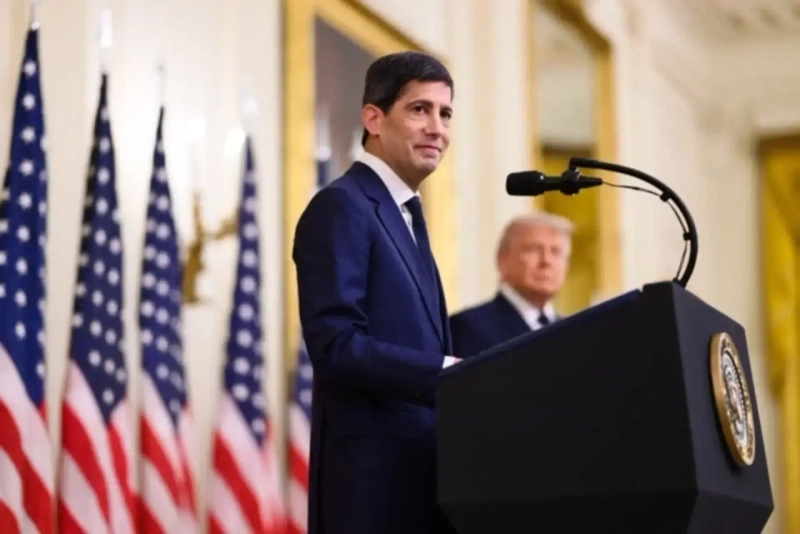
Federal Reserve Chair Kevin Warsh delivered a speech titled “In Our Time” at the annual Jackson Hole symposium in Wyoming on Aug. 28. He addressed artificial intelligence, the economy, monetary policy principles and how central banks communicate with markets, while making clear his skepticism toward forward guidance, or signaling the future path of policy in advance.
Warsh said markets can grow overly reliant on Fed guidance. If the central bank then turns to market prices to judge economic conditions, it may be less able to respond properly to new developments. In that part of the speech, he directly cited “The Social Value of Public Information,” a 2002 paper by Bank of Korea Governor Shin Hyun-song and Stephen Morris.
At a press briefing in Jackson Hole, Shin said the paper’s central message was the importance of two-way communication. If a central bank sends too strong a signal, market participants may simply follow that message rather than interpret information for themselves. Market prices, in turn, may fail to fully reflect independent information.
Shin used the phrase “a hall of mirrors” to describe the dynamic. When a central bank lays out a specific rate path, markets price it in. The central bank may then look at those prices and conclude that markets have reached the same judgment. In reality, what it sees is not an independent market signal but a reflection of its own message.
Shin said more communication does not automatically mean greater transparency. It can instead weaken the market’s ability to process information independently and erode price discovery.
That thinking also aligns with Warsh’s decision not to take part in the Fed’s dot plot since taking office and to largely avoid public comments on the future path of interest rates. He called forward guidance a legacy of the global financial crisis on Aug. 28 and said the practice had persisted for too long. Transparency about future policy decisions, he said, should not become an end in itself. Communication should be a means to sound monetary policy.
Warsh also said misguided guidance can reduce policy flexibility. If the Fed misjudges inflation or effectively makes a quasi-commitment on the path of rates, its future policy options may narrow. The harm, he said, could fall more heavily on vulnerable groups.
He did not suggest eliminating all policy signals. When economic indicators point clearly in one direction, Warsh said, the Fed may need to give a clearer account of its reaction function and the path of rates. The emphasis should be on explaining how policy will respond to economic conditions, rather than promising a preset course.
Shin said he also plans to review the Bank of Korea’s communication framework. Rather than immediately deciding whether to scrap or keep the so-called K-dot plot, the central bank will assess its operation over the next year and then consider improvements. He added that it is not desirable for markets to dissect every word of a policy statement like a treasure hunt, and said what matters is whether markets understand the broader message the central bank is trying to convey.

YM Lee
20min@bloomingbit.ioCrypto Chatterbox_ tlg@Bloomingbit_YMLEE