PiCK
Warsh Uses Jackson Hole to Assert Fed Independence as Rift With Bessent Deepens
Summary
- Warsh said at Jackson Hole that additional tightening is still needed and signaled the possibility of an additional increase in the benchmark interest rate.
- After the speech, the probability of a 0.25 percentage-point increase at the September FOMC meeting jumped to 57.4% from 35.7%, according to CME FedWatch, while the two-year Treasury yield rose.
- As Warsh’s tightening stance and Fed independence came into sharper focus, Wall Street increasingly backed his position and the clash with the Treasury’s plans for market intervention became more pronounced.
Forecast Trend Report by Period


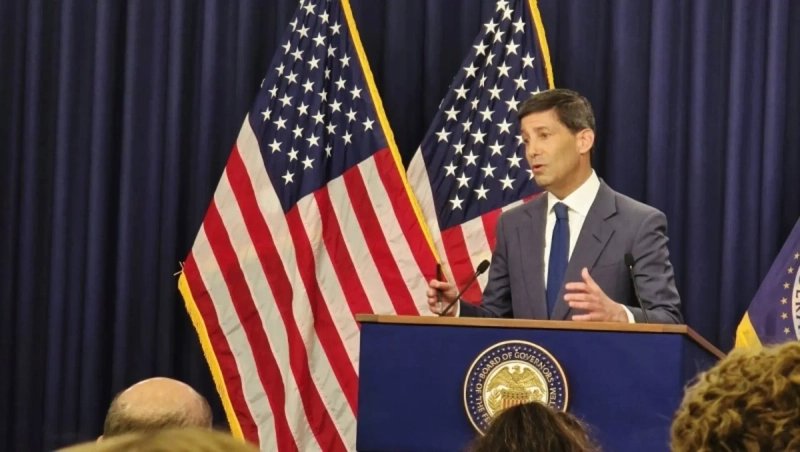
Federal Reserve Chair Kevin Warsh sharpened his policy split with Treasury Secretary Scott Bessent at Jackson Hole by signaling that further tightening may still be needed to contain inflation. The remarks also underscored the central bank’s independence from the Trump administration, which wants lower interest rates.
Speaking at the annual symposium in Jackson Hole, Wyoming, on Aug. 28, Warsh said it was difficult to conclude that underlying price trends had improved meaningfully. “There is still work to do.” Markets took the comments as a sign he was leaving the door open to another increase in the benchmark rate.
The tone marked a shift from the aftermath of the Federal Open Market Committee’s July meeting. Warsh had faced criticism then for failing to clearly explain why the Fed left rates unchanged even as he stressed the need for further tightening, leaving the policy path murky. His effort to reduce forward guidance also stirred concern that the Fed could be vulnerable to pressure from the administration.
This time, the message was clearer. Warsh emphasized that the personal consumption expenditures price index has stayed above the Fed’s 2% target for more than five years and said inflation must be brought back to target. He also reaffirmed that monetary policy would rely primarily on adjustments to short-term interest rates rather than nontraditional tools.
Markets reacted immediately. CME FedWatch showed the probability of a 0.25 percentage-point rate increase at the September FOMC meeting rising to 57.4% after the speech from 35.7% beforehand. The two-year Treasury yield climbed 0.12 percentage point, while the 30-year yield showed a more limited move.
With short-term yields up and long-term yields more contained, the market response suggested growing confidence that Warsh’s tightening stance could help restore price stability over time. Bloomberg said Warsh “got a failing grade after the July FOMC, but earned an A at Jackson Hole.” MarketWatch also said the bond market was beginning to trust his message.
The speech also threw his policy clash with Bessent into sharper relief. Bessent has recently expanded buybacks of long-dated Treasuries and argued that current interest rates are above levels justified by economic fundamentals. Warsh, by contrast, has said financial conditions are not yet restrictive enough and pushed back against the case for rate cuts.
The divide is also clear in their approach to market intervention. Bessent has left open the possibility of more active intervention in the foreign-exchange and Treasury markets. Warsh has taken a more cautious stance on using tools outside monetary policy to influence markets. His preference for shrinking the Fed’s balance sheet could also conflict with the Treasury’s efforts to stabilize rates.
On Wall Street, sentiment has so far tilted toward Warsh. Bessent’s long-bond buybacks have not significantly lowered market rates. Stanley Druckenmiller, who is close to both men, has also publicly criticized the Treasury’s approach to market intervention.
Even so, it remains unclear whether Warsh will sustain a prolonged confrontation with the Trump administration. While emphasizing central-bank independence, he has also said in the past that the relationship between the Treasury and the Fed may need to be revisited.
It is also uncertain whether the Fed will move as soon as September with a rate increase. Some in the market have raised the possibility that another hike could come around year-end, after the midterm elections. Still, Warsh’s Jackson Hole speech put policy independence at the forefront and heightened tensions between the Trump administration and the Fed.

YM Lee
20min@bloomingbit.ioCrypto Chatterbox_ tlg@Bloomingbit_YMLEE