Won Strengthens as Korea-US Rate Gap Narrows and Dollar Selling Increases
Forecast Trend Report by Period


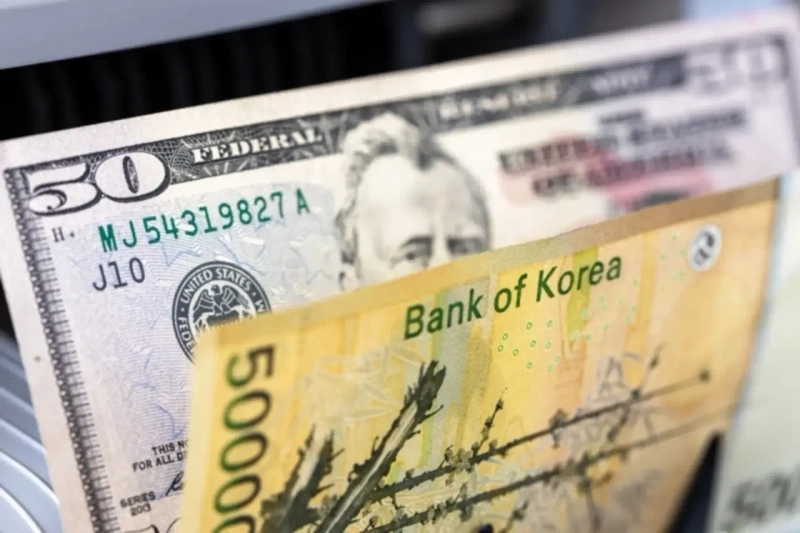
The won has risen to its strongest level against the dollar in 13 months, supported by a narrower interest-rate gap between South Korea and the US after consecutive Bank of Korea rate hikes. Increased dollar selling by semiconductor exporters has also bolstered the Korean currency.
In Seoul trading on Aug. 28, the won closed at 1,372.5 per dollar in the daytime session, the lowest level for the exchange rate since July 24, 2025, when it stood at 1,367.2. The dollar later rebounded after Federal Reserve Chair Kevin Warsh emphasized his commitment to price stability in a Jackson Hole speech, but the exchange rate remained below 1,380 won at 1,379.5 as of 6 a.m. on Aug. 29.
A key driver of the won's recent strength is the rapid narrowing in the policy-rate gap between South Korea and the US. The Bank of Korea raised its benchmark interest rate this month after also increasing it last month, taking the rate to 3.0%. That reduced the gap with the upper end of the US policy rate, at 3.75%, to 0.75 percentage point, the narrowest since November 2022.
Exporter demand to sell dollars is also adding downward pressure on the exchange rate. Samsung Electronics and SK Hynix have announced large investments in domestic semiconductor production facilities, increasing the need to convert overseas dollar earnings into won. Additional dollar selling may also emerge as the companies secure funds for shareholder returns.
The medium- to long-term outlook for the won also remains favorable. The Institute of International Finance said in a recent report that South Korea's current-account surplus could reach 10% of gross domestic product by next year. A large current-account surplus, combined with corporate demand for foreign-exchange conversion, could leave room for further won gains.
Kwon Ah-min, an analyst at NH Investment & Securities, said the won-dollar exchange rate could fall to 1,340 to 1,350 once foreign-exchange conversion demand from Samsung Electronics and SK Hynix begins in earnest.
In the bond market, investors priced in expectations that the Bank of Korea may not move as quickly as anticipated on further rate increases. The yield on three-year Korean Treasury bonds ended trading on Aug. 28 at 3.788%, down 0.066 percentage point from a week earlier.
The Bank of Korea raised its benchmark rate to 3.0% on Aug. 27, but the median projection from Monetary Policy Board members for the policy rate six months ahead was 3.25%. Markets interpreted that as a sign the central bank may monitor conditions for now and adjust the pace of any additional tightening.

YM Lee
20min@bloomingbit.ioCrypto Chatterbox_ tlg@Bloomingbit_YMLEE