Trump Administration’s 31 Corporate Stakes Face Rising Political, Legal Risks After Midterms
Summary
- The Trump administration invested about $4 billion in 31 companies across strategic industries including semiconductors, critical minerals and steel, helping drive sharp gains in their share prices.
- If Democrats take control of Congress in the November midterm elections, congressional probes and legal disputes over the government’s equity acquisitions could gather pace.
- Depending on the outcome of the Intel lawsuit and shifts in the political landscape, stocks including IBM and GlobalFoundries that have risen on expectations of government support could see greater volatility.
Forecast Trend Report by Period


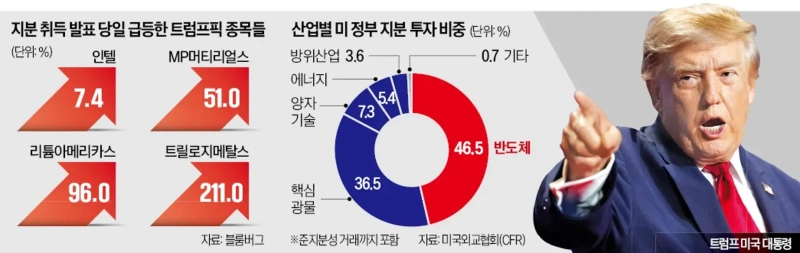
President Donald Trump’s acquisition of stakes in strategic-industry companies has drawn investor attention to so-called Trump-pick stocks. But the companies could face mounting political and legal pressure after the November midterm elections.
The number of companies in which the Trump administration holds stakes has risen to 31, Bloomberg reported on August 31. Since December 2025, the administration has spent about $4 billion acquiring stakes in companies tied to strategic industries including semiconductors, critical minerals and steel.
Shares of companies in which the government took stakes often jumped after the announcements. Intel has risen more than 300% over the past year since reports emerged that the government could acquire a stake. MP Materials and Trilogy Metals also surged after related announcements. Investors have taken the moves as a sign the government will support the growth of selected companies.
That arrangement could come under closer scrutiny if Democrats win control of the House in the midterm elections. Even if they capture only one chamber of Congress, they could hold hearings, call corporate executives to testify and examine the process and legal basis for the government’s stake acquisitions.
Legal challenges have already started. In March, some Intel shareholders sued the company’s board and the U.S. Commerce Department, asking a court to invalidate the government’s stake purchase. They argued that the CHIPS Act does not explicitly provide a basis for acquiring equity in listed companies.
Depending on the outcome of the Intel case, the dispute could spread to IBM and GlobalFoundries, where the government also acquired stakes under the same law.
The approach is also fueling concern about market distortions. Unlike past cases in which the government temporarily took stakes in troubled companies during emergencies such as financial crises or wars, the Trump administration is directly selecting companies it considers competitive in strategic industries and investing in them.
That could channel capital toward favored companies and leave rivals outside the program facing relatively worse financing conditions. There is also concern that management decisions at government-backed companies could be shaped more by political interests than by the interests of shareholders or customers.
Experts say the structure could undermine market competition and shareholder value over the long term. If the political landscape shifts after the midterm elections, stocks that climbed on expectations of government support could face additional volatility.

Minseung Kang
minriver@bloomingbit.ioBlockchain journalist | Writer of Trade Now & Altcoin Now, must-read content for investors.