Broadcom Earnings Set Up Three-Day Test for Samsung, SK Hynix on 2027 AI Outlook
Forecast Trend Report by Period


Broadcom to Report Fiscal Third-Quarter Results on Sept. 3
Investors Watching 2027 AI Revenue and Order Guidance
Broadcom Expands Ties With Samsung and SK Hynix
Results Seen as Key Test of AI Spending Durability
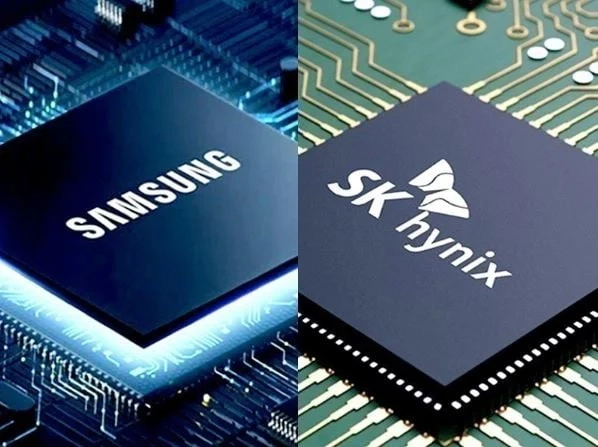
Samsung Electronics Co. and SK Hynix Inc. are heading into another test after Nvidia Corp.’s earnings report, with Broadcom Inc.’s results now in focus. Investors are looking beyond the quarterly figures to fiscal 2027 revenue and order guidance for signs of how long Big Tech’s artificial-intelligence spending can keep running. A reaffirmation of AI chip demand could help revive sentiment toward the two South Korean memory makers.
Broadcom is scheduled to report fiscal third-quarter 2026 earnings for the May-to-July period at 6 a.m. in South Korea on Sept. 3, according to the country’s financial investment industry on Sept. 2. The company supplies custom AI semiconductors, or ASICs, and data-center networking chips to major technology companies including Google. That puts it at the center of a different segment of the AI chip market from Nvidia, which dominates general-purpose graphics processing units.
An increase in Broadcom’s ASIC production would support demand for high-bandwidth memory, or HBM, and advanced packaging. Its earnings and order outlook therefore offer a window into the scale and staying power of AI spending by large technology companies. Investors are especially focused on whether Broadcom will offer more concrete fiscal 2027 AI revenue guidance.
JPMorgan projects Broadcom’s AI revenue will exceed $56 billion in fiscal 2026 and rise to $130 billion in fiscal 2027, above the company’s own forecast of more than $100 billion. The bank kept its overweight rating and $580 price target.
Broadcom shares began the year at $350 and climbed above $480 in early June before falling back to $370 as doubts spread about the durability of AI spending. If the company delivers stronger-than-expected AI revenue and order guidance, it could reinforce Nvidia’s message that AI demand remains firm.
A beat on earnings without equally strong guidance, however, would likely revive concerns that AI investment is slowing.
“The key issue in this earnings report is whether Broadcom raises AI revenue guidance for fiscal 2026 and 2027, and whether it has secured the supply chain needed to support that outlook,” Park Jae-hwan, an analyst at Eugene Investment & Securities, said.
Nvidia earlier reported second-quarter earnings that topped expectations and indicated supply bottlenecks in AI semiconductors could last through 2028. The market took that as a sign that demand for AI infrastructure could remain solid over the medium to long term.
South Korean chip stocks, however, did not ride that momentum. The semiconductor sector fell 1.5% in August, lagging major industries, according to Kiwoom Securities. Its share of Kospi market capitalization also shrank to 53.2% from 61.6% in June.
Rising interest rates and foreign selling weighed on the group. As long-term US yields climbed, valuation pressure increased on growth stocks such as chipmakers. Foreign investors were net sellers of 10.1659 trillion won on the Kospi in August and sold a net 7.13 trillion won of semiconductor shares. By company, net selling reached about 6.4 trillion won in SK Hynix and 820 billion won in Samsung Electronics.
Another reason Broadcom’s earnings matter to investors is the company’s deepening relationship with Samsung and SK Hynix. At an AI Summit in San Francisco in July, Samsung signed a strategic memorandum of understanding with Broadcom on building next-generation AI infrastructure.
The companies agreed to pursue $200 billion of cooperation in memory and foundry over the next five years through 2030. Samsung plans to supply cutting-edge memory products including HBM to help improve the performance of Broadcom’s AI accelerators.
SK Hynix is also strengthening its partnership with Broadcom. SK Group Chairman Chey Tae-won met Broadcom Chief Executive Officer Hock Tan at the company’s San Jose headquarters in February to discuss the medium- to long-term outlook for the memory market and supply strategy. SK Hynix shared its HBM roadmap and technology development plans, and the two sides agreed to broaden cooperation so the company’s most advanced memory technology can be applied from the early stages of Broadcom’s AI chip design.
With Broadcom working more closely with South Korea’s two largest chipmakers, this earnings release could do more than drive short-term market volatility. It may also help revalidate their longer-term growth case. If AI chip demand from global technology companies led by Broadcom remains solid, Samsung and SK Hynix stand to benefit further from their core technologies and leadership in HBM supply.
“Changes in AI revenue guidance for upcoming quarters and the pace of revenue recognition will be important in Broadcom’s earnings,” Han Ji-young, an analyst at Kiwoom Securities, said. “The result will have a strong impact not only on US AI stocks but also on the South Korean market.”
Kang Kyung-ju, Hankyung.com reporter qurasoha@hankyung.com

Korea Economic Daily
hankyung@bloomingbit.ioThe Korea Economic Daily Global is a digital media where latest news on Korean companies, industries, and financial markets.