PiCK
Soilonic Token Offers 1 Kilogram of Soil Per Coin, 35 Kilograms After 10 Years
Summary
- Soilonic said each SOILO token, built on Solana, gives holders the right to redeem 1 kilogram of regenerative soil, with that amount rising to 35 kilograms after 10 years of holding.
- The company said SOILO will have a maximum supply of 2.1 billion tokens, an initial price of $0.09, and that 50% of sale proceeds will be distributed to regenerative farms, with the rest used to secure soil reserve assets.
- Soilonic said it plans a public launch on Nov. 16, has secured an investment commitment of as much as $50 million from GEM, and is ultimately targeting a listing on Nasdaq, the New York Stock Exchange, or a European stock market.
Forecast Trend Report by Period


Interview with Benjamin Eymere, Soilonic co-founder
One token gives the holder rights to 1 kilogram of soil
Rights rise to 35 kilograms after 10 years
Half of sale proceeds go to regenerative farms
Launch set for November; company seeks South Korean partners
**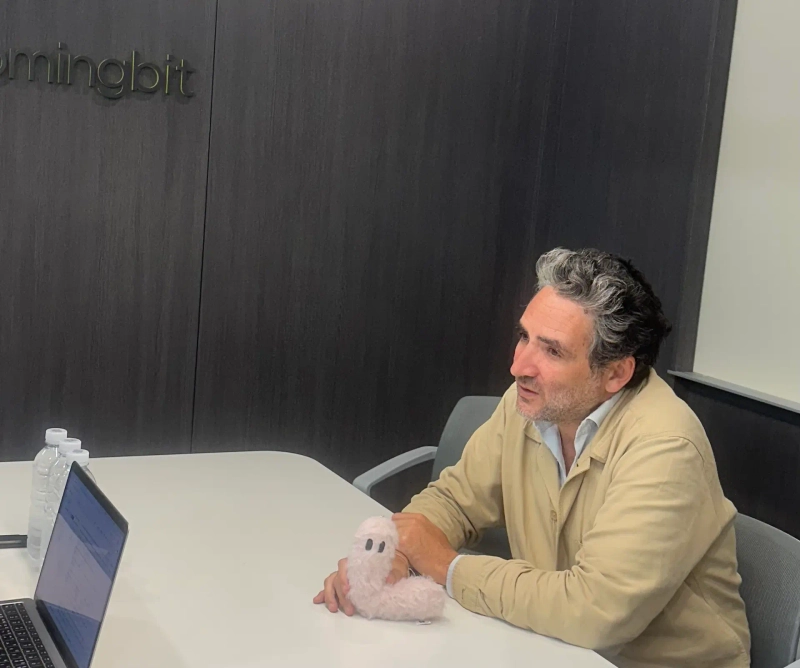
“Just as people do not keep gold bars at home and instead store them at a bank, soil can remain on a farm while still being owned. Our goal is to turn healthy soil into an asset traded like gold,” Benjamin Eymere, co-founder and chief executive officer of Soilonic, told Bloomingbit in an interview on Sept. 3.
Farmers who maintain healthy soil now see that value reflected only in crop prices and receive no separate compensation, he said.
Soilonic is a France-based Web3 startup that aims to link the economic value of soil managed through regenerative agriculture to blockchain. Eymere founded the company last year with arts curator Victoire de Pourtalès and model and environmental activist Arizona Muse. The goal is to combine agriculture and finance with fashion, art and content to create investment demand for healthy soil.
At the center of the model is SOILO, a token built on the Solana blockchain. It gives holders the right to receive a set amount of physical soil. Each year, 50% of token sale proceeds is distributed to regenerative farms that have received third-party certification. The rest is used to secure farmland and soil reserves for physical redemption. The model is designed to give farmers income beyond crop sales while offering investors redemption rights tied to healthy soil.
Eymere, a former chief executive of global fashion media outlet L’Officiel, moved from Paris to a farm in 2022. He converted a farm that had used pesticides and chemical fertilizers to regenerative agriculture, then used crops grown there to make building materials, clothing and artwork. That experience led to Soilonic’s creation.
“At first, we considered selling carbon credits as compensation for restoring soil, but income for farmers came to just 50 euros per hectare,” he said. “We concluded that meaningful income for farmers requires valuing healthy soil itself, not just agricultural products.”
One Token, 1 Kilogram of Soil; 35 Kilograms After 10 Years
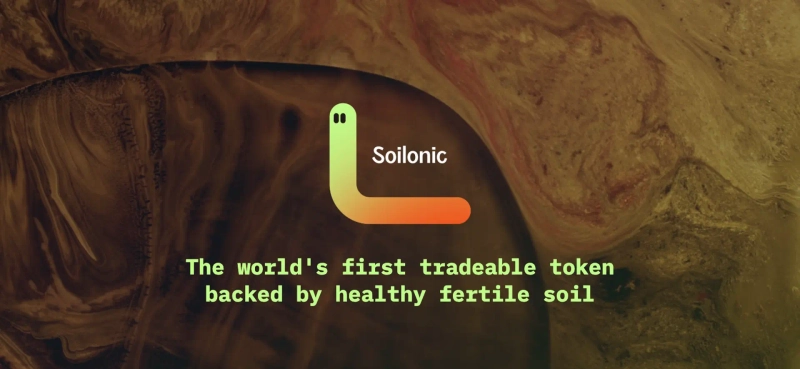
Soilonic grants SOILO holders the right to receive physical soil. One token can be redeemed for 1 kilogram of regenerative soil. If the token is held for 10 years, the redeemable amount rises to 35 kilograms.
“The terms — 1 kilogram initially and 35 kilograms after 10 years — are written into the smart contract and cannot be changed arbitrarily,” Eymere said. If a holder sells the token before then, the holding period accrued by the token and the redemption rights transfer to the new owner. The annual redemption ratio between year one and year 10 has not yet been finalized.
SOILO will have a maximum supply of 2.1 billion tokens. The initial sale price is set at $0.09 per token. Soilonic is currently conducting a private sale for companies and professional investors. It plans a public launch for retail investors at Solana’s annual Breakpoint event in London on Nov. 16. The company plans to initially release 3% to 4% of total supply into the market.
Half of token sale proceeds will be distributed each year to organic and regenerative farms that pass reviews by third-party certifiers. Eymere described that as a form of soil royalty, with farmers receiving fees for keeping soil healthy. The other half will stay with the company and be used to secure farmland that will serve as the token’s physical reserve asset.
The company has prepared soil reserve sites in France and the US. Token holders can visit those sites and collect soil directly, or pay an additional fee for delivery. Soilonic also plans to establish soil reserve sites in Asia.
Soil is already traded as a commodity in horticulture, landscaping and controlled-environment agriculture. Potting and garden soil is sold by weight or volume, and prices vary depending on organic matter, microbial content, water retention and end use.
“In France, standard cultivated soil sells for an average of $1.50 to $2 per kilogram, while specialty soil costs much more,” Eymere said. Farmland can trade for several thousand dollars per hectare depending on the region, but the retail value of healthy soil on top of it is far greater. “Our business model is about turning the value of the top 30 centimeters of land — something financial markets have not priced until now — into an asset.”
Beyond Soil Redemption, Into Art and Fashion
Soilonic also operates a SOILO Shop to broaden the token’s use cases. Users can spend the token not only on soil, but also on related products such as artwork, clothing and toys. The company plans to showcase works created with artists including Tom Sachs.
“Even people living in cities who do not need soil right away should be able to use the token,” Eymere said. “We want to combine soil with art, fashion and characters to create a cultural experience.”
Eymere said blockchain was chosen because it allows automated execution of both farm compensation and soil redemption rights. Smart contracts can distribute half of sale proceeds to farms and increase redeemable volume based on holding period.
The company is also pursuing corporate sales. “Carbon credits are closer to an expense that companies buy and then use up, but SOILO is a digital asset tied to rights over physical soil,” he said. “It is an attempt to turn environmental and social responsibility into an asset that companies can hold.”
Soilonic has secured an investment commitment of as much as $50 million from Global Emerging Markets, or GEM, he said. The company is also working with GEM to establish a $100 million fund. Its goal is to list a Soilonic entity on Nasdaq, the New York Stock Exchange or a European stock market within the next 18 to 24 months.
Seeking Farm and Content Partners in South Korea
Soilonic plans to use South Korea as a base for its expansion into Asia. It is looking for local regenerative farms to join its compensation program, as well as partners to handle token distribution and corporate sales. Eymere said he discussed possible cooperation with a South Korean tea farm using regenerative agriculture during his visit to the country.
Content is another pillar of its South Korea strategy. Soilonic has created a character named Soilo modeled on an earthworm commonly found in healthy soil. The company plans to use the character in animation, games, fashion and lifestyle products to expand the SOILO Shop lineup.
“South Korea is a market with a strong ability to turn characters and intellectual property into global brands,” he said. “We want to work with Korean content and marketing companies to make Soilo the world’s most famous earthworm character.”
Still, questions remain over how far SOILO’s rights to physical soil can be legally guaranteed across jurisdictions. Other variables include how to verify the quantity and quality of reserve assets, the cost of removing and shipping soil, and whether crypto-asset or securities regulations apply.
“Soilonic is still at an early stage and has not yet been offered publicly to retail investors,” Eymere said. “But if soil has a price, farmers who manage it well can receive recurring income.”
Blockchain’s role is to give investors an economic stake in protecting soil, rather than leaving the issue at the level of principle alone, he added.

Doohyun Hwang
cow5361@bloomingbit.ioKEEP CALM AND HODL🍀