Lutnick Renews Chip Tariff Threat, Tells Makers to Build in US or Pay
Forecast Trend Report by Period


Citing TSMC and Micron
Pressure also builds on Samsung and SK hynix to invest in US
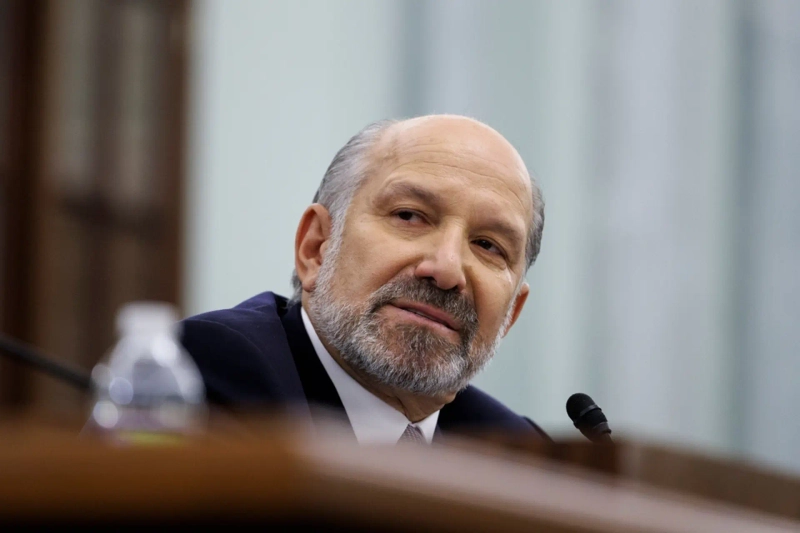
US Commerce Secretary Howard Lutnick reiterated his determination to impose tariffs on semiconductors.
In an appearance on Bloomberg TV on September 2, Lutnick said the Trump administration has consistently told chipmakers that products made in the US would not face tariffs. Companies that are unwilling to start construction in the US will have to pay a price to access the world’s largest market, he said. A targeted, carefully designed tariff policy will be unveiled soon, he added.
Lutnick also said a Politico report that the US government is pursuing sweeping semiconductor tariffs was accurate. He said the administration had lowered tariffs for companies that manufacture innovative drugs in the US and adopted a most-favored-nation policy there. The same approach should be expected for semiconductors, he said.
The US, in a trade agreement signed with Taiwan in January, promised tariff exemptions for semiconductor companies that build production facilities in the country. The exemption would cover output equal to 2.5 times planned production, and would fall to 1.5 times output after factories are completed.
When a Bloomberg TV anchor said the tariff plan amounted to a warning for Samsung and SK, Lutnick said the companies should recognize that they will build factories in the US. He said he did not know whether those projects could be completed within the Trump administration’s term, but at a minimum construction could begin during that period.
Samsung Electronics is building a foundry plant in Taylor, Texas. SK hynix broke ground late last month on a high-bandwidth memory, or HBM, packaging facility in Lafayette, Indiana. But there are still no US plants producing memory semiconductors such as DRAM and HBM.
Lutnick said tariff pressure could help bring the semiconductor industry back to the US. America’s share of semiconductor production had been below 2% and is now heading toward 40%, he said. If Intel succeeds, that figure could reach 50% by the end of the Trump administration, he added. He also said companies have already committed $1.2 trillion in construction spending, including $265 billion from TSMC and $250 billion from Micron, which together top $500 billion. Taiwan is expected to announce another $20 billion to $30 billion in investment plans as early as next week, he said.
Lee Sang-eun, Washington correspondent, Korea Economic Daily, selee@hankyung.com

Korea Economic Daily
hankyung@bloomingbit.ioThe Korea Economic Daily Global is a digital media where latest news on Korean companies, industries, and financial markets.