PiCK
Yen Carry Unwind Fears Reignite as Japan 10-Year Yield Tops 3%, but Brokers See Limited Risk
Summary
- Securities firms said the likelihood of a large-scale yen carry trade unwind remains limited for now despite rising Japanese government bond yields and yen strength.
- The prevailing view is that the still-wide U.S.-Japan interest-rate gap continues to preserve the incentive to fund overseas asset purchases in yen.
- Markets see yen volatility as a potential driver of short-term moves in Asian equities and risk assets, but not a trigger for a large-scale unwind like those seen in the past.
Forecast Trend Report by Period


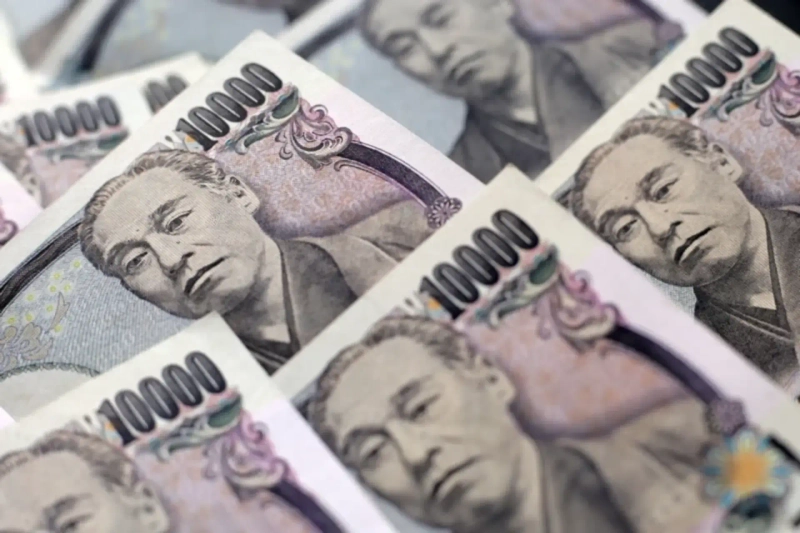
Rising Japanese government bond yields and a stronger yen are reviving concerns across global financial markets about a yen carry trade unwind. Securities firms, however, say the risk of a large-scale liquidation remains limited for now, citing the still-wide U.S.-Japan interest-rate gap and Japan's expansionary fiscal stance.
The yen carry trade involves borrowing in low-yielding yen and investing in higher-yielding overseas assets, including in the U.S. When Japanese interest rates rise or the yen strengthens rapidly, borrowing costs and foreign-exchange losses increase, potentially prompting investors to close out existing positions.
The latest bout of market caution has been driven by simultaneous gains in Japanese yields and the yen. Japan's 10-year government bond yield climbed above 3% intraday on September 2, the first breach of that level since 1996.
In foreign-exchange markets, the yen also strengthened noticeably. The dollar-yen exchange rate fell from around 160 yen the previous day to as low as 158.8 yen. Expectations for another Bank of Japan rate increase, along with reports that U.S. and Japanese authorities had discussed interest rates and exchange rates, spurred yen buying.
Against that backdrop, stocks in South Korea, Japan, Taiwan and China all experienced sharper intraday volatility at roughly the same time the previous day. That fueled market views that the possibility of a yen carry trade unwind had become a short-term source of instability.
Past episodes are also heightening caution. When the BOJ raised its policy rate two years ago, global financial markets were shaken, and an unwind in yen carry trades was cited as one of the main causes.
Still, many market participants do not see the current situation as directly comparable to that period. Even if Japan raises its policy rate again, the gap with major economies such as the U.S. would remain wide enough to preserve the incentive to borrow in yen and invest in overseas assets.
Markets are pricing in about a 75% chance that the BOJ will raise its policy rate by 0.25 percentage point this month. If that happens, Japan's policy rate would reach about 1.25%. That would still leave a wide gap with U.S. policy rates.
Lim Jae-gyun, an analyst at KB Securities, said the recent rise in Japan's 10-year yield appears to be driven more by higher real rates than by inflation expectations. Given that the 10-year yield traded in a 2% to 3% range even when Japan's policy rate was around 1% in the past, he said it is difficult to describe the current level of long-term yields as exceptional.
Japan's expansionary fiscal stance is also viewed as a factor limiting further yen strength. Fiscal expansion is pushing up government bond yields while also adding pressure through inflation and yen weakness, making policy choices more difficult for Japanese authorities.
Jung Yong-taek, an analyst at IBK Investment & Securities, said the yen has not strengthened as much as expected even as the U.S.-Japan rate gap narrows. If Japan continues raising rates to curb yen weakness, the government's interest burden would increase. If it instead tries to stabilize rates, inflation and renewed yen weakness could again become a source of pressure.
The dominant market view is that yen volatility could affect Asian equities and risk assets in the short term. But given the current rate gap and Japan's policy backdrop, the likelihood of a large-scale yen carry unwind on the scale of past episodes remains low.

YM Lee
20min@bloomingbit.ioCrypto Chatterbox_ tlg@Bloomingbit_YMLEE