China to Revamp GDP, Employment Data to Better Capture AI as Growth Slows
Summary
- China said it will revamp key economic indicators including GDP and employment and income data to better reflect growth in AI and the digital economy.
- It said recognizing data as an asset could increase gross capital formation and the size of GDP, though GDP is unlikely to rise sharply right away.
- Experts said China needs to narrow the gap between official data and lived economic conditions by tracking job quality, the distribution of working hours, and more detailed income statistics.
Forecast Trend Report by Period


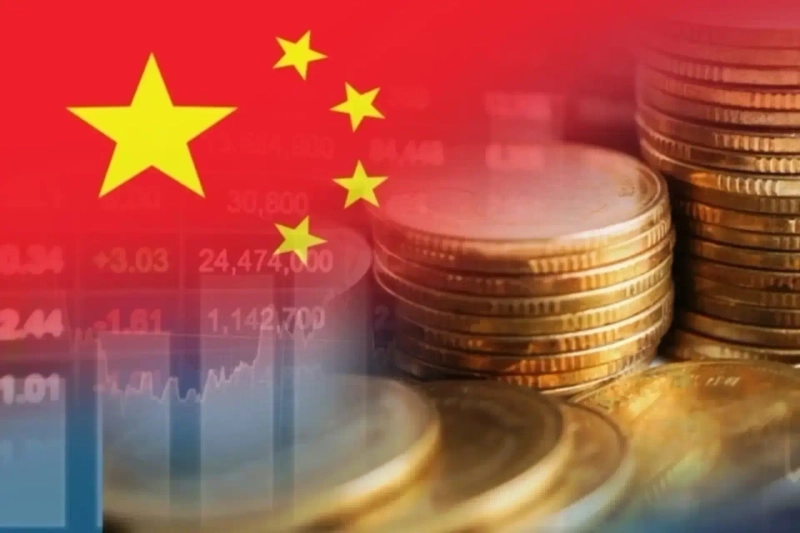
China is moving to revamp key economic statistics, including gross domestic product, employment and income data, to better reflect growth in artificial intelligence and the digital economy. The effort comes as economic growth has slipped into the 4% range amid a property slump and weak domestic demand, underscoring concerns that existing metrics do not fully capture the value created by AI, data and other emerging industries.
Broader GDP Accounting for AI and Services
According to Caixin on September 4, China has recently set up a research team to study revisions to the 2025 System of National Accounts, or SNA, and begun work on new GDP accounting standards aligned with updated international rules.
China's economy expanded 4.7% in the first half of this year. The National Bureau of Statistics said new growth drivers, including advanced manufacturing, the digital economy and modern services, accounted for more than 40% of first-half growth.
Even so, Chinese statistical experts argue that GDP still does not adequately capture the true contribution of AI, the digital economy and services.
A key part of the revision is likely to be treating data as an asset. In China, value added generated through data-based businesses such as ride-hailing services is already included in GDP. But most spending by companies to produce and accumulate data is still counted as intermediate input because data itself is not recognized as an asset.
The 2025 SNA adopted last year by the United Nations Statistical Commission classifies production data used for more than one year as a fixed asset and includes related spending in gross fixed capital formation. If China adopts the standard, both gross capital formation and the size of GDP could rise.
That does not mean GDP will jump immediately. Data is difficult to value at market prices, and many Chinese companies still do not account for data as an asset. There is also skepticism that China will be able to fully implement the new SNA by around 2030, the timetable recommended by the United Nations.
GDP, Unemployment and Income Statistics Up for Broad Revamp
China is also revising consumption statistics. Since May, the National Bureau of Statistics has begun publishing growth in total retail sales of consumer goods and services, a broader measure designed to supplement the existing retail sales gauge focused on goods sales and restaurant revenue.
The change is intended to capture spending, including digital services, that older indicators missed. China's 15th Five-Year Plan for 2026-2030 also calls for stronger statistical monitoring of services consumption and new forms of consumption.
Employment data is also set for review. Since 2018, China has used the surveyed urban unemployment rate based on International Labour Organization standards as its main labor-market gauge instead of the registered unemployment rate. Anyone who worked for pay for at least one hour during the survey week is classified as employed.
The problem is that workers who lost traditional jobs in property or manufacturing can still be counted as employed after moving into ride-hailing or food delivery, even if their income and job security worsen. Critics say that helps explain why the official unemployment rate does not fully reflect labor-market stress felt by households.
Chinese statistical experts say indicators of job quality will become more important than a simple unemployment rate as AI speeds changes in the labor market. They argue that authorities should disclose not only weekly working hours but also the distribution of working hours and the labor-force participation rate. Income statistics, they add, should move beyond averages and be broken down more finely by income bracket.
Sheng Laiyun, a former deputy head of the National Bureau of Statistics, said income distribution in China is skewed, with 70% of people earning less than the average income.
Experts say China's effort to revamp economic statistics must also narrow the gap between official data and economic conditions felt on the ground as growth slows and job insecurity persists. As the country's growth engine shifts from factories and real estate toward data and AI, the standards used to measure the economy are changing as well.
Kim Eun-jung, Beijing correspondent, Hankyung.com, kej@hankyung.com

Korea Economic Daily
hankyung@bloomingbit.ioThe Korea Economic Daily Global is a digital media where latest news on Korean companies, industries, and financial markets.