[Reporter’s Notebook] South Korea Is Falling Behind in Digital-Asset Innovation
Summary
- The G20 said it recognized the transformative role of digital assets and digital financial innovation, while emphasizing the key role of the private sector.
- Global financial firms are treating stablecoins as a new financial infrastructure and expanding issuance plans and links to payment and settlement networks.
- South Korea could lose the initiative in the market to global financial firms if it moves too slowly to prepare enforcement decrees and supervisory rules after enacting the Digital Asset Basic Act.
Forecast Trend Report by Period


G20 Recasts Its View of Stablecoins
South Korea Must Speed Follow-Up Measures After Legislation
Cho Mi-hyun, Finance Reporter
“Digital financial innovation, including digital assets, can play a transformative role in supporting broad-based economic growth.”
That line appeared in the chair’s statement released after the G20 finance ministers and central bank governors meeting in Asheville, North Carolina, on September 1. The statement also said the private sector will play a key role in driving digital-finance innovation. China blocked the adoption of a joint communique, but it did not object to the section on digital-asset innovation.
That marks a notable change from a few years ago. When Facebook announced plans in 2019 to issue the Libra stablecoin, stablecoins quickly emerged as a new issue in international finance. At the time, the G20 held that stablecoins should not be issued until related risks were fully addressed. Even afterward, the group continued to place greater emphasis on financial stability and regulation. In just seven years, the G20’s view of digital assets has shifted toward innovation.
The latest statement is not a declaration that regulation should be eased. The premise remains the same: financial stability and trust in monetary and payment systems must be preserved. What has changed is the regulatory perspective. Rather than stopping at risk control, authorities are being urged to institutionalize a clear pathway for innovation.
Global financial firms are moving to seize an early lead by treating digital assets as a new financial infrastructure. Goldman Sachs, Deutsche Bank and UBS have announced plans to jointly pursue the issuance of a stablecoin. Payment companies including Visa and Mastercard are also expanding efforts to connect stablecoins to existing payment and settlement networks.
Those moves matter because of the trust traditional financial institutions have built over time. Backed by capital, customer bases and the ability to respond to regulation, they are likely to capture market share faster than existing virtual-asset service providers. As the stablecoin market grows, customer access points and strengths in security and internal controls will become competitive advantages for incumbent financial companies, according to a senior financial-industry official.
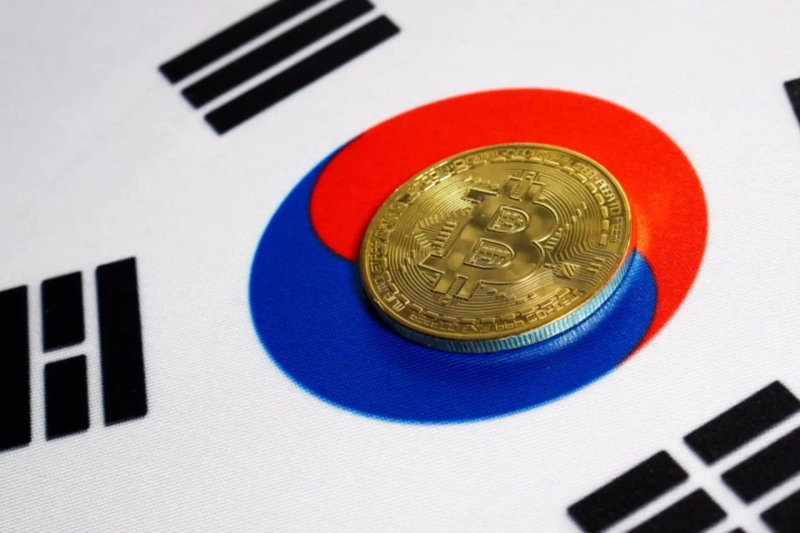
South Korea is still standing still. A Digital Asset Basic Act is expected to be proposed in the National Assembly this month. Even if it is enacted, authorities would still need to draw up enforcement decrees and supervisory rules that set the standards for business. That means it could take considerable time after the law’s passage before the market and companies begin moving in earnest.
If global financial firms secure the digital-asset market first, domestic financial companies will have fewer chances to gain the upper hand. That is why South Korea needs to be ready to accelerate follow-up measures as soon as the law is enacted.
Cho Mi-hyun, Hankyung.com reporter mwise@hankyung.com

Korea Economic Daily
hankyung@bloomingbit.ioThe Korea Economic Daily Global is a digital media where latest news on Korean companies, industries, and financial markets.