Nvidia-OpenAI Showdown Lifts Chip Stocks as Hugging Face Deal, GPT-6 Astra Speed AI Demand
Summary
- Nvidia’s acquisition of Hugging Face and OpenAI’s unveiling of GPT-6 Astra are accelerating AI development and adoption, increasing demand for compute and memory.
- Goldman Sachs said a leap in intelligence is spurring demand for more token use and easing concerns over falling token prices.
- The rebound showed that lower AI prices do not equal weaker hardware demand and that rising interest rates can increase investor preference for AI hardware companies with strong cash flow.
Forecast Trend Report by Period


Nvidia’s push to dominate the open ecosystem
The day it placed a $12.93 billion bet on Hugging Face
OpenAI unveils GPT-6 Astra
“Welcome to the age of AGI”
A day that flipped the token-price debate
Whether open or closed wins
Compute and memory demand rises
Two giants of the artificial-intelligence industry made decisive moves at the same time: Nvidia Corp. and OpenAI.
On Sept. 3, Nvidia officially announced that it would acquire Hugging Face, the world’s largest open-source AI platform, for $12.9303 billion. The deal marked its second-largest bet after the $20 billion acquisition of inference-focused AI chip designer Groq late last year.
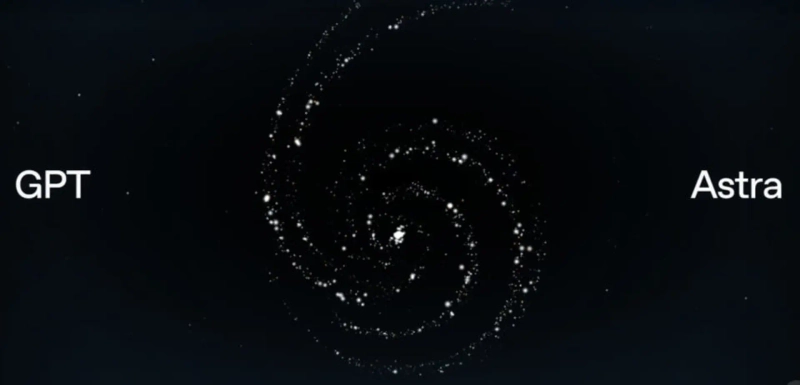
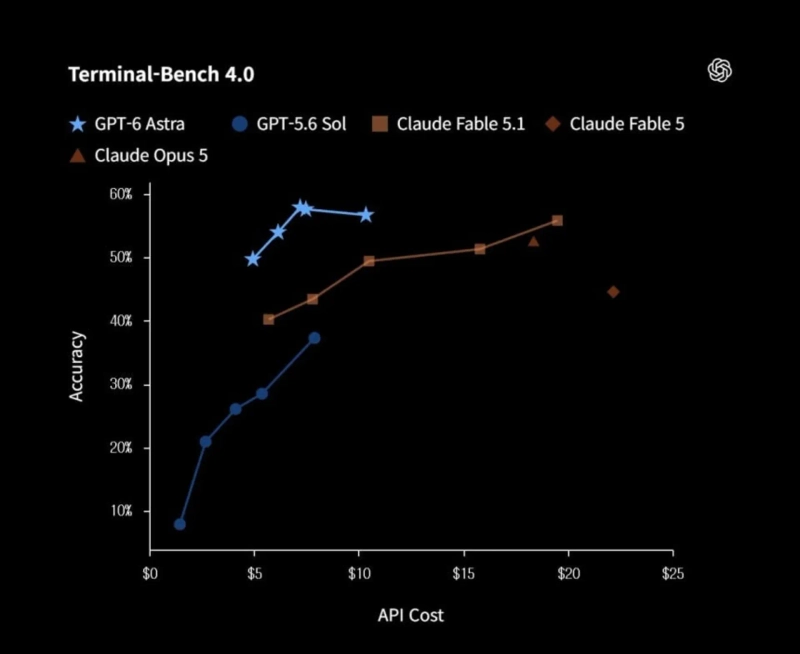
Hours later, OpenAI launched a limited release of GPT-6 Astra, the latest flagship model many had been waiting for. Its ARC-AGI-3 score, which measures an AI system’s ability to learn new environments on its own, surged to 99.9% from 7.8% in the previous version. OpenAI also said token usage for coding tasks was just 20% of Anthropic’s top model. Greg Brockman, OpenAI’s president, declared: “Welcome to the age of AGI.”
In other words, both the open-AI camp and the cutting-edge closed-model camp delivered major advances. Stocks responded by shaking off the market’s recent unease. In South Korea on Sept. 4, shares tied to data centers and sovereign AI, including SK Telecom Co. and Samsung SDS Co., rallied alongside chip heavyweights Samsung Electronics Co. and SK Hynix Inc.
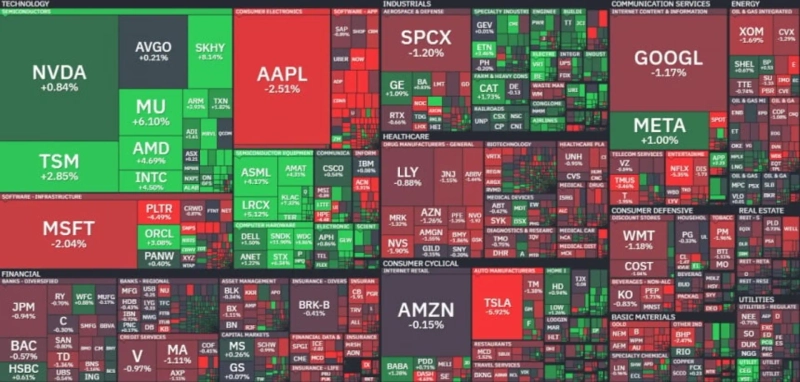
In the US market, stronger-than-expected August employment data pushed interest rates higher again and weighed on the broader indexes. Even so, AI hardware names rose sharply, including Micron Technology Inc., SanDisk Corp. and Western Digital Corp. Memory, semiconductors, chip-equipment makers, power, data-center and optical-networking stocks outperformed. Broadcom Inc., by contrast, was relatively weak despite its leadership in custom semiconductors for hyperscalers. Why?
Nvidia’s Bet on Open Models
Hugging Face is an open platform where developers upload and download AI models, much as coders exchange software on GitHub. It serves 18 million developers and 200,000 companies worldwide. The platform hosts 3 million models, 500,000 datasets and 1 million applications. Its annualized revenue is estimated at about $150 million.
Nvidia is paying 86 times that figure, or about $12.9 billion, for an open-model platform company. Late last year, Nvidia proposed a $500 million investment in Hugging Face that implied a $7 billion valuation. In just eight months, that figure nearly doubled. On the numbers alone, the bet looks hard to justify.
The move makes more sense when viewed through Nvidia’s long-standing formula for controlling industry ecosystems. Nvidia’s real moat lies not only in its graphics processing units, but also in CUDA, the platform used to run them. Developers programming GPUs naturally end up using CUDA, and the software stack and development practices built on top of it make it difficult to move away from Nvidia hardware.
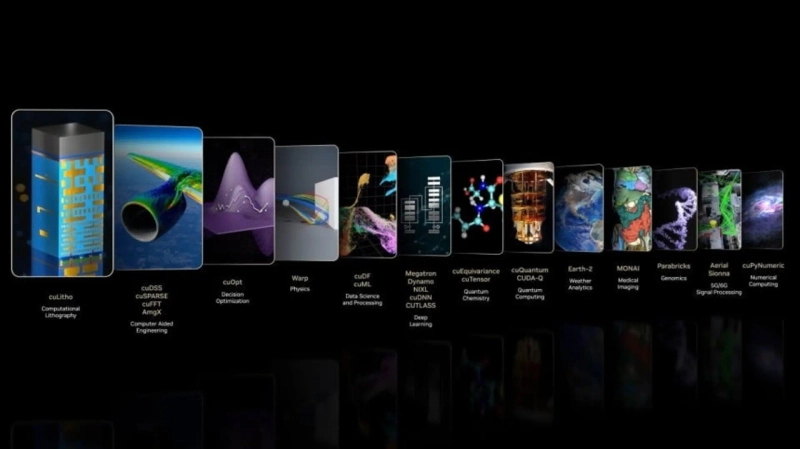
Hugging Face could play a similar role at the AI-model layer. Much of the process of choosing a model, tuning it and deciding what hardware to deploy it on already takes place on the Hugging Face platform. Through this acquisition, Nvidia is buying a chance to control the gateway for AI model distribution and shape the broader ecosystem.
The deal also fits Nvidia’s long-running open strategy. Jensen Huang has argued that open-weight models broaden access to AI and strengthen US technology leadership. He has also maintained that the world needs both cutting-edge closed models and open models.
Nvidia has developed high-performance open models including Nemotron and released data and developer tools on a large scale. More recently, it secured the rights to use model-development technology from AI startup Poolside for $6 billion to speed development. After announcing the Hugging Face acquisition, Huang pledged to keep the platform open and said Nvidia would not require users to run on Nvidia chips.
A “Cheap” $12.9 Billion Insurance Policy
This is not about altruism. Nvidia’s biggest GPU customers today are the major AI labs and hyperscalers that dominate the cutting-edge closed-model market, including OpenAI, Anthropic and Google. Those companies are racing to develop in-house chips to reduce their dependence on Nvidia. For Nvidia, heavy reliance on a small number of customers would weaken its bargaining power.
That helps explain why the company wants to dominate the open-AI ecosystem and expand the open-model market, encouraging more companies, governments and individuals to adopt AI more quickly. On a recent earnings call, Huang said that whether the model was DeepSeek, Kimi, Claude or Mistral, virtually every open model in the world was built and run on Nvidia because Nvidia chips and the CUDA ecosystem have the broadest installed base.
Raymond James described the acquisition as a hedge against the rising trend of closed-model builders running workloads on custom chips. Barron’s argued that while the purchase price may look expensive, it is cheap insurance for a company with a $5 trillion market value.
The spread of open models also changes the demand curve. So far, companies plugging directly into closed-model APIs have effectively rented AI from the cloud and paid by the token. Adoption started mainly with large companies that could absorb the cost.
As lower-cost open models proliferate, that cost barrier opens up new demand. Companies and governments concerned about data sovereignty and security can build domain-specific AI directly on-premises or on dedicated infrastructure using open models. That is one reason demand is surging for Nvidia’s AI factory systems. While guiding for 70% revenue growth in fiscal 2028, Nvidia said spending demand is broadening beyond hyperscalers to include neocloud providers, AI model developers, sovereign AI, enterprises and on-premises AI.
The virtuous cycle is straightforward: model competition drives efficiency; lower AI prices create more places to deploy it; token and agent usage then explodes; total compute demand rises; and demand for Nvidia systems increases with it. Nvidia is trying to build a market structure in which its infrastructure wins no matter which model prevails. The Hugging Face acquisition is one piece of that strategy.
The Model Built With 100,000 GPUs
The cutting-edge closed-model camp is moving just as fast. GPT-6 Astra, which OpenAI unveiled the same day, did not post the highest general-purpose benchmark scores. It did, however, show striking gains in long-horizon agent tasks and token efficiency, two of the capabilities that matter most in everyday use. Lee Young-jin, an analyst at Samsung Securities Co., called it the model that best expresses the idea of general intelligence for enterprise work, even if no universally accepted definition of AGI exists.
Astra was trained using more than 100,000 Nvidia GPUs at the Stargate data center in Texas. That is the largest training run in OpenAI’s history. The effort reinforced the AI scaling law — the idea that model performance improves as computing power increases. It also points to more demand ahead for both compute and memory.
OpenAI Chief Executive Officer Sam Altman said the goal is to offer the best price-performance at every level of intelligence. He added that the company can keep cutting prices dramatically while still generating enormous revenue. The pledge to make intelligence cheap and abundant overlaps with Huang’s goal of expanding adoption through cost-effective open models.
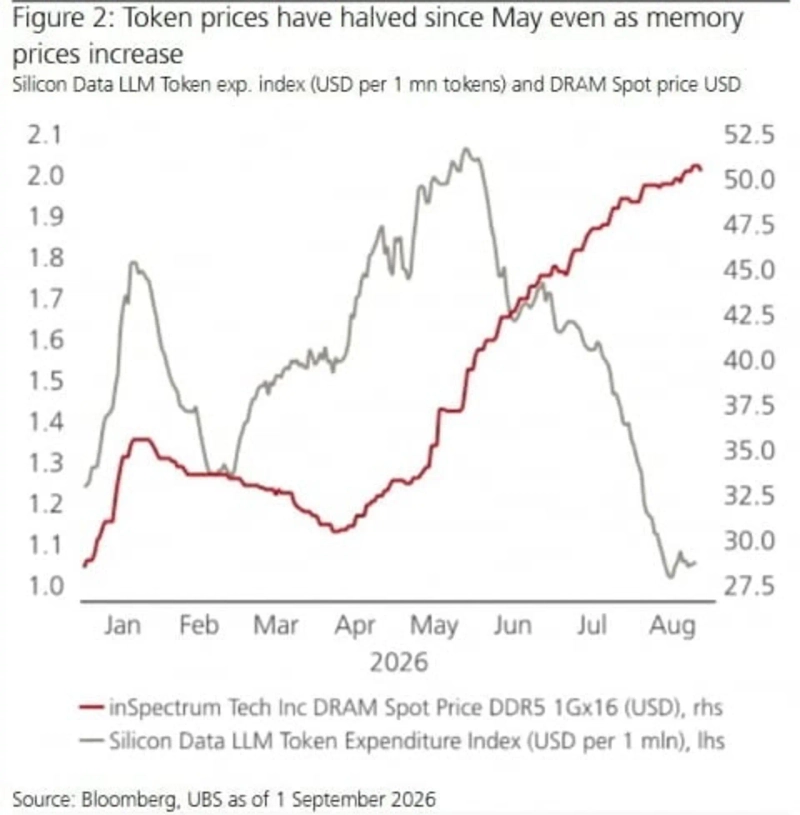
AI investors had long debated the rapid fall in token prices as cost-effective open models gained ground. Returns on massive AI investment could hinge on which moves faster: falling token prices or rising token consumption.
Bulls invoke Jevons paradox, arguing that cheaper intelligence leads to more usage. Skeptics question whether demand can grow fast enough to offset the collapse in unit prices. Silicon Data’s index, which tracks actual token prices, fell 29% in August. Since July, that skepticism had intensified selling pressure as flows that had piled into AI hardware began to unwind.
Goldman Sachs said Astra’s debut eased much of that concern. In a Sept. 4 note, the bank said a leap in intelligence rekindles both the desire and the need to use more tokens, making falling token prices less of a problem than they were before Astra arrived. Once a clear jump in capability is confirmed, the bank argued, everyone starts chasing again, the spending cycle holds and confidence returns that there is still meaningful room to build toward something better.
A Market Bets Again on Jevons Paradox
The stock market on Sept. 4 reflected that belief for the first time in a while. Investors piled into hardware shares on a bet that whether open or closed models win, faster AI progress and wider adoption will inevitably raise demand for compute and memory.
Not everyone benefited. Broadcom, which makes custom chips, or ASICs, for Google, Anthropic and OpenAI, lagged behind. The spread of open models favors more general-purpose infrastructure. Meta Platforms Inc., the US hyperscaler most committed to open models, also held up better than peers for the same reason.
Memory is a beneficiary across camps because it becomes more important as agents work longer and context windows expand, regardless of which model wins. The same applies to CPUs, where Nvidia, Arm Holdings Plc, Advanced Micro Devices Inc. and Intel Corp. compete. Surging inference demand also sent shares of Cerebras sharply higher because it offers inference-focused chips and cloud services.
As AI adoption accelerates, stocks tied to on-premises infrastructure are also drawing more attention. That helps explain why enterprise server makers such as Dell Technologies Inc., Hewlett Packard Enterprise Co. and Super Micro Computer Inc.; neocloud players including Nebius, CoreWeave Inc. and Iren; and South Korean companies grouped under sovereign AI and data-center themes are all cited as beneficiaries of wider open-model adoption. Companies building power and data-center infrastructure amid worsening supply shortages — including Vertiv Holdings Co., Eaton Corp., Bloom Energy Corp. and Caterpillar Inc. — were also strong.
The surge in AI hardware shares that day may prove temporary, driven by renewed inflows after investors had turned away. Combined with unfavorable September seasonality and multiple macro variables, the rally could reverse at any time. It is also worth remembering that as AI moves from the buildout phase to the diffusion phase, the period in which early infrastructure and hardware monopolized the gains may be nearing its end. Capital can continue to spread into the next stage, including AI infrastructure software. In other words, rushing into an all-in bet could be risky.
Still, the rebound showed at least one thing clearly: Lower AI prices do not necessarily mean weaker hardware demand, at least not yet. If cheaper intelligence creates new demand even faster, falling prices are not the enemy of AI investment. They become the catalyst for the next wave of demand. UBS emphasized that in AI inference, the hardware roadmap is shifting toward memory capacity, bandwidth and interconnects.
Higher interest rates could also increase investor preference for companies with the strongest current profits and cash flow rather than distant future growth. That is one reason the rebound in AI hardware is difficult to dismiss as a purely technical move.
Bin Nan-sae, Hankyung.com reporter, binthere@hankyung.com

Korea Economic Daily
hankyung@bloomingbit.ioThe Korea Economic Daily Global is a digital media where latest news on Korean companies, industries, and financial markets.