Nvidia Makes M&A Overture to Rebellion, South Korean AI Chip Startup Championing 'AI Independence'
Summary
- Rebellion is discussing cooperation with Nvidia that could include a technology partnership, investment, and an acquisition.
- Rebellion has emerged as a key player in advancing sovereign AI and K-NPUs, after receiving a $181 million investment from the National Growth Fund and securing strategic investment from backers including Aramco.
- Industry participants say cooperation with Nvidia could expand Rebellion's access to US data centers and hyperscalers, but they see the odds of an acquisition as low because of the National Growth Fund investment.
Forecast Trend Report by Period


K-AI Caught Between Principle and Pragmatism
CEOs of the Two Companies Meet in the US
Discuss Technology Tie-Up, Investment and Possible Acquisition
Big Tech Expands Further Into Inference Chips
Korean Firms Weigh Partnerships to Grow
Already Received $181 Million in Policy Funding
Industry Sees Low Odds of a Takeover
South Korea's neural processing unit, or NPU, industry is caught between the commercial advantages of Nvidia's vast ecosystem and the policy goal of "sovereign AI." Korean chip startups have drawn attention as alternatives that could reduce reliance on Nvidia, backed by Seoul's push to foster domestic AI semiconductors. But as Nvidia broadens its reach in inference chips through investments and acquisitions, those companies are being forced to consider cooperation. Whether they stay independent or join hands with Nvidia to scale up faster could reshape the growth model for Korean NPUs and influence the government's strategy for nurturing a homegrown AI chip industry.
◇ From Rival to Partner?
According to industry officials on September 7, Rebellion is internally discussing whether and how to work with Nvidia. Bloomberg previously reported that Nvidia Chief Executive Officer Jensen Huang met Rebellion CEO Park Sung-hyun at Nvidia's US headquarters to discuss possible cooperation. The talks are at an early stage and include a technology partnership, investment and even a possible acquisition, Bloomberg reported.
The news has caused a subtle stir in South Korea's AI industry. Rebellion has been viewed as a symbol of the country's drive for independence in AI semiconductors. Its NPUs have attracted attention as an alternative to Nvidia-dominated graphics processing units, or GPUs, offering better power efficiency and cost performance. In March, the National Growth Fund, a South Korean policy fund, invested 250 billion won ($181 million) in Rebellion as part of the government's effort to foster Korean NPUs and reduce dependence on Nvidia.
Rebellion has also long positioned itself as a challenger to Nvidia. The company has argued that surpassing Nvidia is unrealistic, but that it can replace a certain portion of GPU demand in the inference market. One of its main strategies has been to capture sovereign AI demand in Europe and the Middle East, where some customers are reluctant to become dependent on Nvidia's ecosystem. In 2024, it secured a strategic investment from Saudi Aramco, the Saudi state oil producer. Rebellion also established a Riyadh branch and recently signed a partnership with Kalosum, the first company backed by the UK government's sovereign AI fund, as it stepped up its push into non-US markets.
FuriosaAI, another leading South Korean NPU company, has taken a similar path. In March, it unveiled a "sovereign AI appliance" built entirely with Korean technology by combining its RNGD inference accelerator with LG's Exaone model. FuriosaAI also formally rejected an $800 million acquisition offer from Meta last year.
◇ Nvidia Expands Its Inference Chip Footprint
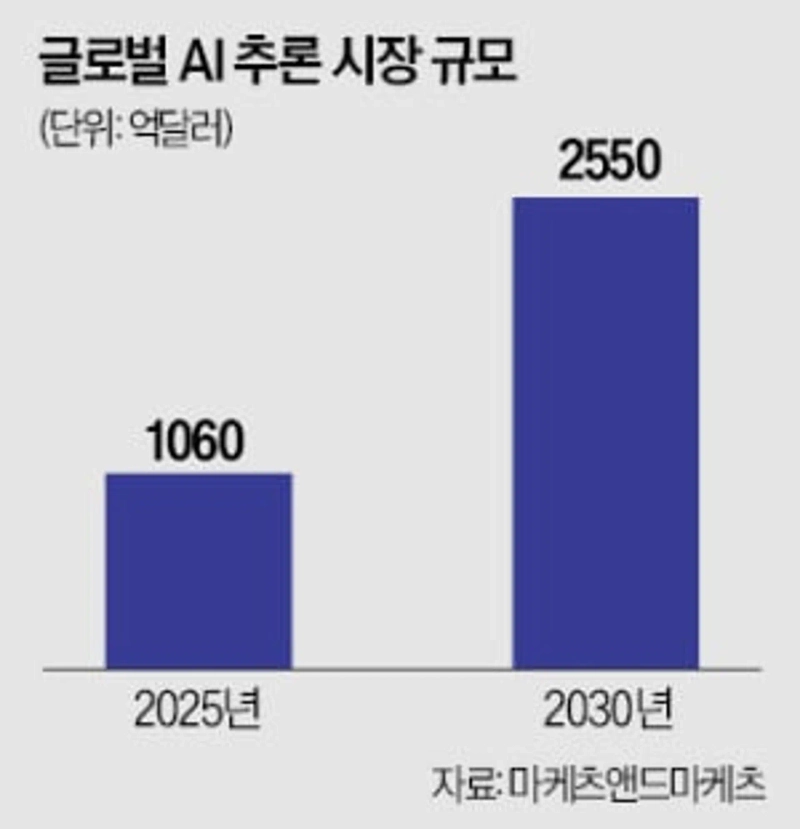
Rebellion's interest in working with Nvidia is being interpreted as a bid for growth. The NPU market is expanding, but Rebellion's revenue last year was still only in the 30 billion won range. Winning Nvidia's investment or forming a partnership would also significantly improve its chances of entering the US data-center market, the industry's largest. If that cooperation were to extend to the point where Rebellion's chips or technology are deployed on Nvidia's platform, which has relationships with hyperscaler customers, the company could gain access to a market on a completely different scale. Nvidia effectively completed a backdoor acquisition of inference-chip startup Groq late last year, and on September 24 announced that it would include the Groq 3 inference chip in its Vera Rubin platform.
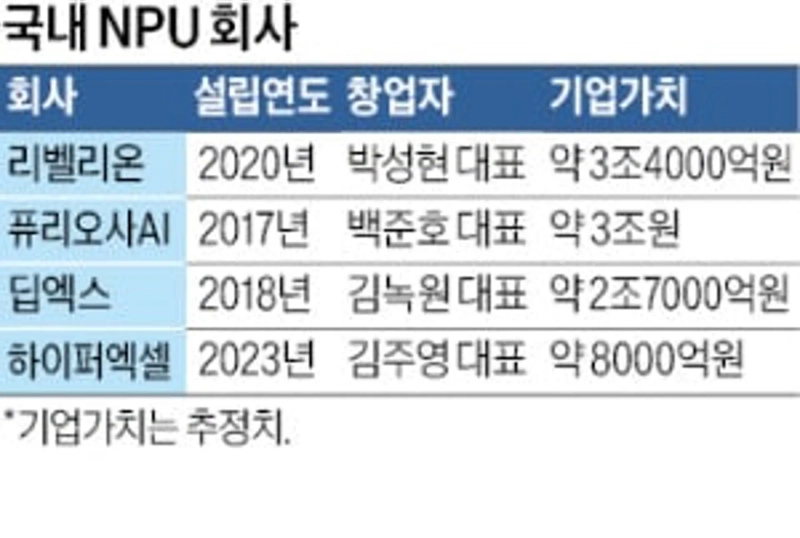
Relying solely on sovereign AI demand may also make it hard for Rebellion to achieve the global scale it wants. Inference-chip rivals such as Cerebras and Etched are valued at about $43.5 billion and $21.7 billion, respectively. That compares with Rebellion's valuation of about $2.5 billion. If Rebellion decides to work with Nvidia, the move could affect other Korean NPU companies as well. FuriosaAI rejected Meta's acquisition offer last year and chose to remain independent, but Rebellion could set a precedent by accepting investment from Big Tech.
Still, some in the industry say a sale to Nvidia would be difficult in practice given Rebellion's large investment from the National Growth Fund. Rebellion said only that the two CEOs did meet, but that it had nothing specific to disclose.
Park Han-shin, Hankyung reporter phs@hankyung.com

Korea Economic Daily
hankyung@bloomingbit.ioThe Korea Economic Daily Global is a digital media where latest news on Korean companies, industries, and financial markets.