Samsung, SK Hynix Earnings Set to Climb Further as AI Spending Surge Tightens Memory Supply
Summary
- Global DRAM revenue in the second quarter surged 59.5% from the previous quarter, while inventories fell to record lows, raising the possibility of an absolute supply shortage.
- Samsung Electronics remained in first place with a 39.4% market share, widening its lead over SK Hynix to 14.5 percentage points, while Micron rose to 23.3%, intensifying the battle for second place.
- Projected AI infrastructure investment by global big tech companies next year has been revised up to $1.3 trillion, a 60% increase, suggesting memory supply conditions could become even tighter.
Forecast Trend Report by Period


TrendForce: Q2 DRAM Revenue Jumps 59.5%
Samsung at 39.4%; SK Hynix at 24.9%, Micron at 23.3%
Low Inventories, Rising AI Spending Point to an Absolute Supply Shortage
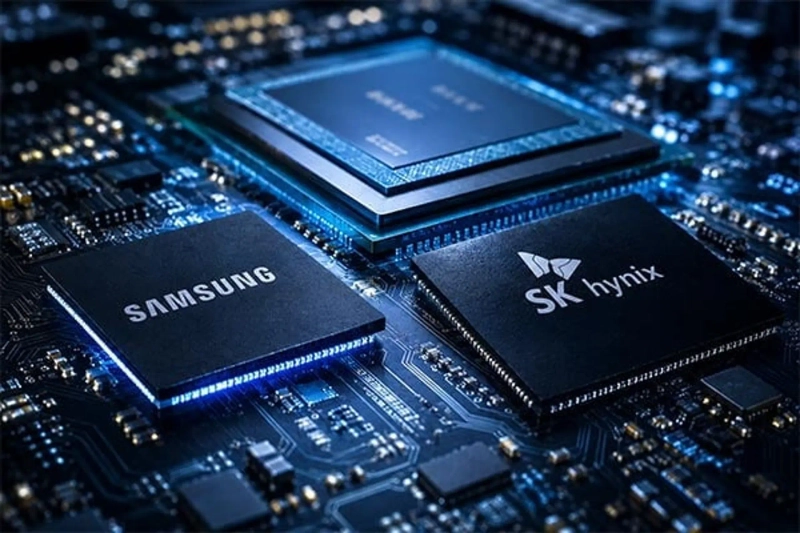
The global DRAM market grew sharply in the second quarter as demand for large language model training and AI inference remained strong. Samsung Electronics retained the top spot after increasing its market share, while SK Hynix and Micron narrowed the gap in the battle for No. 2. With inventories at record lows and AI infrastructure investment expanding, supply could tighten further.
According to TrendForce’s latest memory industry survey released on Sept. 7, global DRAM industry revenue totaled $15.473 billion in the second quarter, up 59.5% from the previous quarter. The firm attributed the increase to higher shipments across multiple memory products as LLM training and AI inference spread.
Supply, however, is not increasing at the same pace as demand. Memory makers’ inventories remain at record lows, and the increase in second-quarter DRAM shipments was limited. TrendForce projects shipment growth will remain constrained in the third quarter as well.
Prices are set to keep rising, though the pace of gains may slow from earlier quarters. TrendForce forecasts DRAM prices will increase 13% to 18% in the third quarter from the previous quarter. Some demand is shifting from higher-capacity to lower-capacity products, while mounting price pressure on PC and smartphone makers may limit further gains.
Samsung Leads at 39.4%, Widens Gap With SK Hynix
Samsung remained the top supplier in the second quarter with revenue of $6.098 billion, up 63.4% from the previous quarter. TrendForce said Samsung posted the biggest shipment increase among the three major memory makers, helped by early mass production of HBM4, or high-bandwidth memory.
Samsung’s share of the global DRAM market rose to 39.4% in the second quarter from 38.5% in the first quarter. As overall market revenue surged, Samsung outpaced the broader market and lifted its share.
SK Hynix posted second-quarter revenue of $3.859 billion, up 37.9% from the prior quarter. Its market share, however, fell to 24.9% from 28.8% in the first quarter as a higher proportion of HBM shipments limited gains in average selling prices.
That widened Samsung’s lead over SK Hynix to 14.5 percentage points in the second quarter from 9.7 percentage points in the first. Samsung’s revenue growth topped the market average, while SK Hynix lost share, expanding the gap between the top two players.
Micron at 23.3%, Closes In on SK Hynix
Micron posted revenue of $3.6 billion over the same period. Its 65.5% quarter-on-quarter growth outpaced both Samsung and SK Hynix. Its market share also rose to 23.3% from 22.4% in the first quarter.
The gap in market share between SK Hynix and Micron narrowed to 1.6 percentage points. In revenue terms, the difference between the two companies was about $259 million, intensifying competition for the No. 2 spot in the global DRAM market.
TrendForce projects Samsung, SK Hynix and Micron will accelerate transitions to leading-edge processes in 2026 and 2027 to expand shipments. Even so, the firm said the actual increase in supply may remain limited.
Taiwanese companies including Nanya, Winbond and PSMC are poised to continue growing, centered on products made with mature processes. As the three major memory makers focus production capacity on leading-edge products, Taiwanese rivals may absorb demand the bigger players cannot fully meet.
AI Spending Expansion Could Tighten Memory Supply Further
A key variable for future memory supply and demand is global big tech investment in AI infrastructure. KB Securities said projected AI infrastructure spending by global hyperscalers next year has recently been revised up to $1.3 trillion, a 60% increase from a year earlier, which could further tighten memory supply conditions.
Kim Dong-won, head of research at KB Securities, said Samsung and SK Hynix had less than 10 days of memory inventory as of the third quarter. The market may be moving beyond a simple demand recovery phase, with available supply itself increasingly at risk of becoming absolutely insufficient.
Hong Min-seong, Hankyung.com reporter mshong@hankyung.com

Korea Economic Daily
hankyung@bloomingbit.ioThe Korea Economic Daily Global is a digital media where latest news on Korean companies, industries, and financial markets.