Samsung, SK Hynix Swings Made South Korea’s Stock Market the Most Volatile Among Major Markets
Summary
- South Korea said stock-price volatility of 4.1% in its equity market from January through July was the highest among the world’s 30 largest markets by capitalization.
- Samsung Electronics and SK Hynix accounted for as much as 99% and 69.3% of moves during periods when the Kospi rose and fell, respectively.
- A surge in retail investors’ margin trading and leveraged ETF investment increased stock-price volatility, and the Bank of Korea said it will continue to monitor the trend.
Forecast Trend Report by Period


Stock Volatility Tripled Over the Past Year to 4.1%
Surge in Leveraged ETF Investing Also Cited
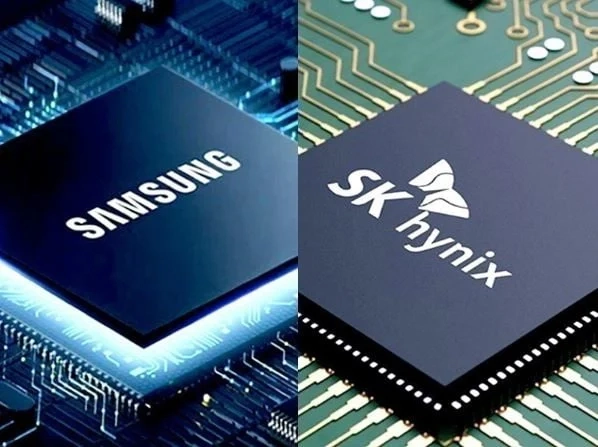
South Korea’s stock market was the most volatile among major markets from January through July this year, an analysis showed, with retail investors’ margin trading and leveraged exchange-traded fund investments adding to the swings. Samsung Electronics Co. and SK Hynix Inc. were found to account for as much as 99% of sharp moves in the market.
The Bank of Korea said in a monetary and credit policy report released on Sept. 10 that stock-price volatility in South Korea stood at 4.1% in the first seven months of the year. That was the highest among benchmark indexes in the world’s 30 largest equity markets by market capitalization. The figure was nearly triple last year’s 1.4%. Japan and Taiwan posted 2.1% and 2.0%, respectively, about half South Korea’s level, while the US was at 1.3%.
The central bank cited the market’s heavy dependence on semiconductor stocks as a cause of the sharp swings. In the stretch when the Kospi rose from 8,000 to 9,000, Samsung Electronics and SK Hynix accounted for 99% of the gain. In the period when the Kospi fell from 9,100 to 5,500, the two stocks made up 69.3% of the decline.
The BOK also said a surge in leveraged ETF investment had increased stock-price volatility. It said expectations for further gains in stock prices fueled a rapid increase in leveraged ETF investment, amplifying volatility through supply and demand. The central bank added that leveraged investment tied to South Korean stocks also increased in global financial markets, leading to more domestic spot and futures trading for hedging purposes and other unintended spillover effects.
Park Jong-woo, an assistant governor at the BOK, told a briefing on Sept. 10 that leveraged ETF investment has declined, but the situation is not yet reassuring and the central bank will continue monitoring it.
Jeong Yeong-hyo, Hankyung.com reporter, hugh@hankyung.com

Korea Economic Daily
hankyung@bloomingbit.ioThe Korea Economic Daily Global is a digital media where latest news on Korean companies, industries, and financial markets.