Xi Puts De-Dollarization, AI Cooperation at Center of BRICS Push for Multipolar Order
Summary
- At the BRICS summit, members signaled a push to reduce dependence on the US dollar by expanding local-currency settlement and improving interoperability in cross-border payments.
- China again underscored its plan to build an independent cooperation network based on the Global South through BRICS, proposing AI cooperation, supply-chain cooperation and participation in the World AI Cooperation Organization (WAICO).
- China is using BRICS as a key platform to bring together de-dollarization, AI standards, supply-chain cooperation and changes to global governance, while treating the bloc's expansion as an opportunity.
Forecast Trend Report by Period


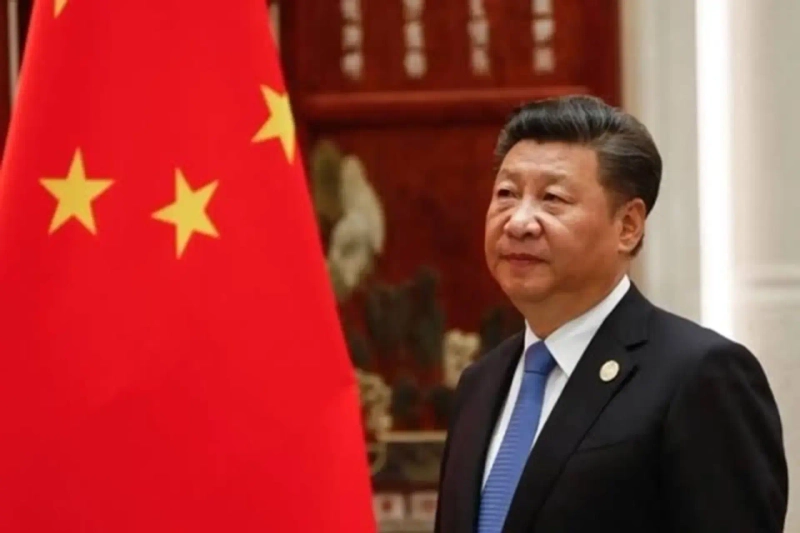
China is stepping up its challenge to the US-led international order by using BRICS as a counterweight.
Xi Jinping, making his first visit to India in seven years, used the BRICS summit in New Delhi to propose broader local-currency settlement, deeper artificial intelligence cooperation and tighter supply-chain links. He also renewed Beijing's push for a Chinese-style multipolar order centered on the Global South, or emerging and developing economies.
The message underscored China's intention to turn BRICS into an alternative cooperation platform spanning the economy, technology and security as it pushes back against US tariff pressure and technology restrictions.
China Uses BRICS to Shape a New Order
BRICS members unanimously adopted the 2026 New Delhi Declaration on September 12, calling for restraint in conflicts in the Middle East. They also agreed to keep expanding the use of local currencies in trade and payments. The group said it would continue work to improve interoperability in cross-border payments and build systems that are faster, cheaper and more transparent.
That has widely been interpreted as part of a broader push to reduce reliance on the US dollar. Still, the declaration said no single approach can be applied to every country and that each nation's policy priorities should be respected.
China also pushed AI cooperation to the forefront of the meeting's agenda. Xi proposed a new model of AI-driven industrialization and called for broader cooperation in research and development, industry and supply chains. He also urged BRICS countries to join the World AI Cooperation Organization, or WAICO, an initiative promoted by China.
As the US works with allies to tighten AI and semiconductor supply chains under what the article described as a "Pax Silica" framework, China appears to be building its own AI cooperation network around the Global South.
Without mentioning the US by name, Xi said decoupling and supply-chain disruptions would not stop China's development and that a "small yard with a high fence" would only divide the world. He also opposed protectionism and unilateralism, and called for preserving a multilateral system centered on the United Nations and the World Trade Organization. Xi further voiced opposition to withdrawals from international organizations, the scrapping of treaties and the creation of separate exclusive blocs.
China also called for a broader political and security role for BRICS. Xi said the group should reject Cold War thinking and bloc confrontation, and oppose violations of sovereignty and interference in internal affairs. He added that China would work with BRICS countries to promote peace and stability in the Middle East and the Gulf.
With BRICS unity being tested by the war in Ukraine, conflict in the Middle East and tensions among member states, China appears to be seeking a wider role not just in economic cooperation but also in mediating international disputes.
China's Voice Grows Louder in BRICS
In talks with Indian Prime Minister Narendra Modi, Xi said both sides should work together to safeguard peace and stability in border areas. Modi replied that he hoped India and China could become partners rather than rivals and view each other's development as an opportunity rather than a challenge.
BRICS began as an informal consultation among Brazil, Russia, India and China in 2006 and was formally launched in 2009. South Africa joined later, followed by Egypt, Ethiopia, Iran, the United Arab Emirates and Indonesia. The bloc now accounts for nearly half the world's population and about one-third of global gross domestic product. China will assume the rotating BRICS chair next year.
Some analysts also see the bloc's expansion as both an opportunity and a burden for China, because differing diplomatic and security interests among members are slowing consensus.
Even so, China is actively using BRICS as a key venue to tie together de-dollarization, AI standards, supply-chain cooperation and changes to global governance.
A diplomatic source said the summit took on added significance as Xi prepares for a visit to the US and a summit with President Donald Trump. In that context, the meeting served as a chance for China to showcase the scale and cohesion of the diplomatic and economic network it has built outside the West.
Kim Eun-jung, Beijing correspondent, Hankyung.com, kej@hankyung.com

Korea Economic Daily
hankyung@bloomingbit.ioThe Korea Economic Daily Global is a digital media where latest news on Korean companies, industries, and financial markets.