'Trapped in Samsung and SK Hynix, I'm Done With Stocks': Kospi Trading Value Falls to Year's Low
Summary
- The report said the Kospi's average daily trading value fell to the 21 trillion won range in September, the lowest this year, signaling a sharp drop in market liquidity.
- It said retail investor sentiment weakened as international oil prices and interest rates surged and concerns grew over slower AI investment, reducing demand for semiconductor shares.
- It said retail investors sitting on losses in Samsung Electronics and SK Hynix are moving into long-term holding, deepening the erosion of market buying power and stock-market liquidity.
Forecast Trend Report by Period


Kospi daily trading value drops to the 21 trillion won range in September
Down by half from June's 50 trillion won daily average
Retail sentiment cools sharply on rates and oil
Buying of Samsung Electronics and SK Hynix eases as momentum fades
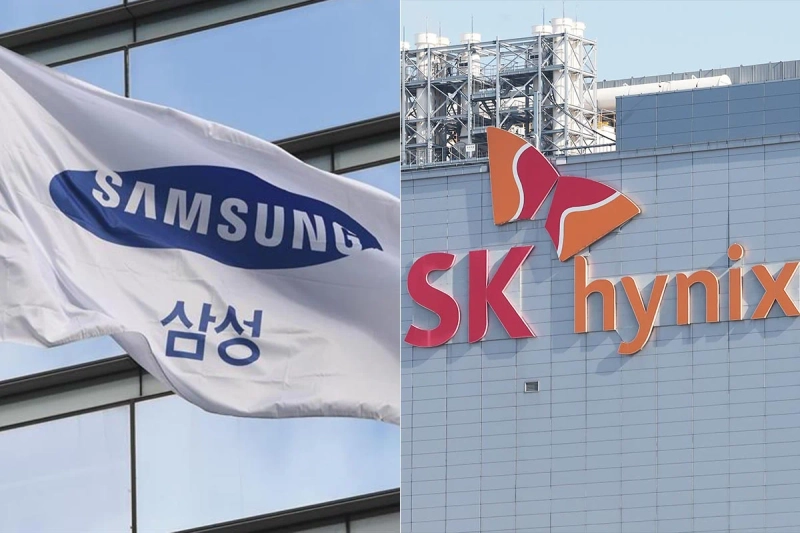
The average daily trading value on South Korea's Kospi has fallen to its lowest level this year in September. Surging oil prices and interest rates have sharply damped investor sentiment. Market interest is also fading as semiconductor shares that had led the market lose steam and concerns grow over a slowdown in artificial intelligence investment. At the same time, retail investors nursing losses in Samsung Electronics and SK Hynix are shifting into long-term holding, fueling expectations that the drain in market liquidity may persist.
According to the Korea Exchange, average daily trading value on the Kospi totaled 21.432 trillion won from Sept. 1 through Sept. 15. That was the lowest monthly reading of the year. The figure rose from 27.056 trillion won in January to 50.347 trillion won in June. It then retreated to 36.875 trillion won in July and 25.846 trillion won in August. Compared with the June peak, this month's average daily trading value has fallen by more than 50%.
Investor deposits, a key measure of cash waiting to enter the stock market, also fell to 93.5499 trillion won as of Sept. 4. That was the lowest level since Jan. 16, when the balance stood at 91.2181 trillion won. The total had been close to 140 trillion won in early June. More than 40 trillion won has left in just two months, pointing to a rapid retreat in sideline funds.
Average daily trading volume this month also dropped to a yearly low of 3.467 billion shares. The decline appears to reflect an increasingly unfavorable macro backdrop and renewed concerns over AI-related technology stocks that had powered the Kospi, leaving investors more cautious.
International oil prices have risen above $100 a barrel as the war between the US and Iran drags on. Inflation pressures tied to higher oil have also sent government bond yields sharply higher, prompting a string of policy-rate increases across major economies. The benchmark 10-year US Treasury yield on Sept. 15 climbed above 5%, a level widely seen as a psychological threshold, and has remained elevated, adding pressure on South Korean equities.
The Bank of Korea raised its benchmark rate for a second straight time last month, and the European Central Bank also recently increased rates. This week, markets are betting the Bank of Japan will raise rates, while expectations are also building that the Federal Reserve could tighten further. At the same time, executives at major AI companies have begun calling for a slower pace of investment. Heavyweight Kospi chipmakers such as Samsung Electronics and SK Hynix have consequently traded without clear momentum, further shrinking turnover.
"The market has lost vitality amid greater rate volatility, a persistent preference for safe-haven assets and retail investors selling when they break even," Lee Kyung-soo, an analyst at Hana Securities, said. Short-term sector rotation has appeared, but it is based on stocks that have fallen too far rather than on a structure in which funds steadily flow into specific names.
Han Ji-young, an analyst at Kiwoom Securities, said the current downward pressure on share prices largely reflects a temporary rise in market caution as uncertainty around the September Federal Open Market Committee meeting overlaps with noise about reduced AI investment. Still, additional pressure from the Fed would likely be limited unless the Sept. 17 FOMC delivers a shock, such as another upward revision to the dot plot signaling a firmer commitment to tightening.
Market participants point to fading expectations for stock gains among retail investors as the deeper cause of the liquidity squeeze. Samsung Electronics and SK Hynix account for a large share of South Korea's market capitalization, but their share-price momentum has struggled to recover. The two stocks once had a combined market capitalization of more than 2,000 trillion won, but that has now fallen into the 1,000 trillion won range, sapping investor appetite.
Some market watchers also say buying power has been exhausted because many retail investors who suffered heavy losses during the slide have effectively been forced into long-term holding. On stock forums, users posted comments such as, "Just opening my trading screen makes my blood boil," and "Not investing in stocks is better for mental health." Investors who lost money on Samsung Electronics and SK Hynix also wrote, "I got trapped in Samsung and SK Hynix, checked my account every day and eventually deleted the stock app," and "I don't plan to trade stocks this year."
Kang Kyung-ju, Hankyung.com reporter qurasoha@hankyung.com

Korea Economic Daily
hankyung@bloomingbit.ioThe Korea Economic Daily Global is a digital media where latest news on Korean companies, industries, and financial markets.