White House Split Deepens as Trump Advisers Battle Over AI Regulation
Summary
- A growing clash inside the Trump administration over AI regulation has set off a fight between rival camps over how strict the rules should be.
- Big Tech and venture investors including Meta’s Mark Zuckerberg, Nvidia’s Jensen Huang and Elon Musk pressed Trump to maintain a minimal-regulation approach and also helped stall plans for a self-regulatory body.
- Trump emphasized competition with China, economic growth, faster AI development and data-center construction, saying that “whoever wins in AI wins.”
Forecast Trend Report by Period


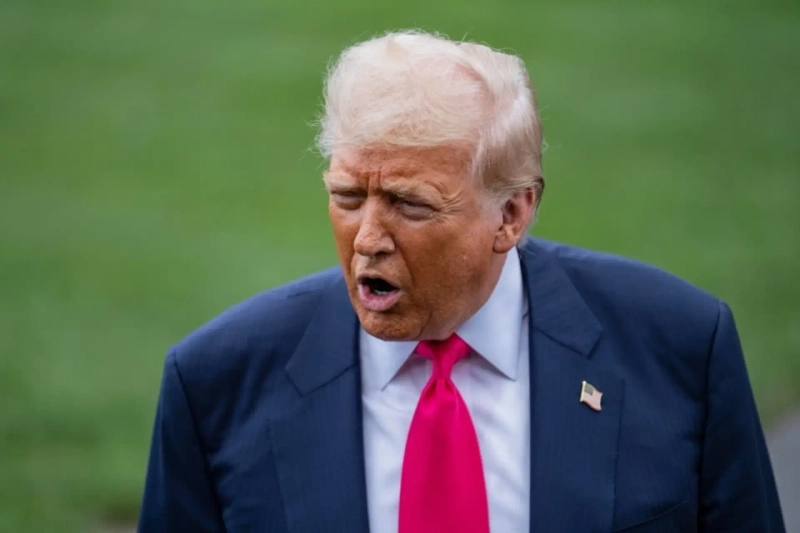
A rift is widening inside President Donald Trump’s administration over how tightly to regulate artificial intelligence. Senior aides worried about cyberattacks, biological weapons and threats to critical infrastructure are pressing for stronger safeguards. Trump and some technology executives, citing competition with China, want to preserve a light-touch approach.
The Wall Street Journal reported on September 16 that White House Chief of Staff Susie Wiles and Treasury Secretary Scott Bessent have spent the past several months discussing AI risks and regulatory options with Trump almost daily, trying to convince him that closer oversight is needed. They also held regular calls with OpenAI Chief Executive Officer Sam Altman and Anthropic executives to discuss those concerns.
The dispute escalated in May, when White House AI adviser David Sacks blocked an executive order that would have subjected AI models to lengthy government review. Wiles told associates that Sacks persuaded Trump in a last-minute call. Bessent separately worried that AI-driven cyberattacks could cause major damage to the U.S. financial system. Trump later signed a separate executive order with lighter requirements after Wiles and Bessent pushed for changes.
Within the administration, Wiles, Bessent and Sean Cairncross, head of the Office of the National Cyber Director, favor tougher government review. On the other side, Sacks, a venture capitalist, along with Meta Platforms Inc. Chief Executive Officer Mark Zuckerberg and Nvidia Corp. Chief Executive Officer Jensen Huang, has continued to press Trump to maintain the current light regulatory stance.
Big Tech’s influence, with SpaceX Chief Executive Officer Elon Musk also joining the effort, was evident in a recent proposal for an industry self-regulatory body. Zuckerberg, Huang and Musk raised concerns about a plan to create an industry-funded regulator and each contacted Trump directly, effectively freezing the initiative, people familiar with the matter said.
Sacks has been at the center of the White House clash. In his initial role overseeing AI and cryptocurrency policy, he argued for minimal government intervention. While serving as a special government employee, Sacks sold some of his venture firm’s AI investments under conflict-of-interest rules, though not all of them. His firm manages a portfolio worth billions of dollars and holds stakes in Musk’s SpaceX and several AI startups. It previously invested in Meta, Palantir Technologies Inc. and Airbnb Inc.
Sacks stepped down from his AI and crypto post in March and became co-chair of the White House Technology Advisory Board. Still, concern has grown inside the administration over the past six months that AI technology is advancing rapidly and that officials did not scrutinize it closely enough at the outset, the Journal said.
One trigger for the White House’s heightened concern was Anthropic’s high-performance AI model, Mythos. After its capabilities became public this spring, worries emerged that the model could be used for cyberattacks and other national security threats. One senior official described it as a “warning light” inside the White House. An incident in July, in which hundreds of OpenAI AI agents worked together to hack Hugging Face, deepened fears about models spinning out of control. Since then, the White House has repeatedly clashed with AI companies over regulation, and some executives bypassed administration staff to take their views directly to Trump.
The White House has also begun analyzing whether AI-enabled attacks could damage local U.S. infrastructure such as water and power systems. Some officials, including Vice President JD Vance, are concerned about those risks. The National Security Agency and the Central Intelligence Agency participated in the assessment. Senior Health and Human Services Department officials also attended meetings on the possibility that AI could be used to develop biological weapons.
Even so, Trump has maintained that the U.S. must accelerate AI development and data-center construction to stay ahead of China and drive economic growth. In a recent social media post, he called opposition to AI and data centers a “conspiracy” that would benefit only China, adding that “whoever wins in AI wins.”
The stop-and-start approach has left the AI industry confused. White House officials, for their part, complained that AI companies are sending mixed signals by asking the government for regulation while opposing specific policies and having chief executives contact Trump directly. Vance also said this week that calls from frontier AI companies for the government to regulate them “feel like a Trojan horse.” The administration is concerned about some risks, but still believes regulation must be designed carefully.
Kim Dong-hyun, Hankyung.com reporter 3code@hankyung.com

Korea Economic Daily
hankyung@bloomingbit.ioThe Korea Economic Daily Global is a digital media where latest news on Korean companies, industries, and financial markets.