Asian Currencies Diverge on Chip Boom as Won Rises 4% and Peso Falls 2%
Summary
- AI-driven growth in semiconductor exports and inflows of overseas investment have strengthened the won and Taiwan dollar, the report said.
- Higher oil prices and the burden of energy imports have weakened the Indian rupee and Philippine peso, it said.
- If demand for AI and semiconductors continues, the won and Taiwan dollar may prove more resilient to dollar strength than other Asian currencies, the report said.
Forecast Trend Report by Period


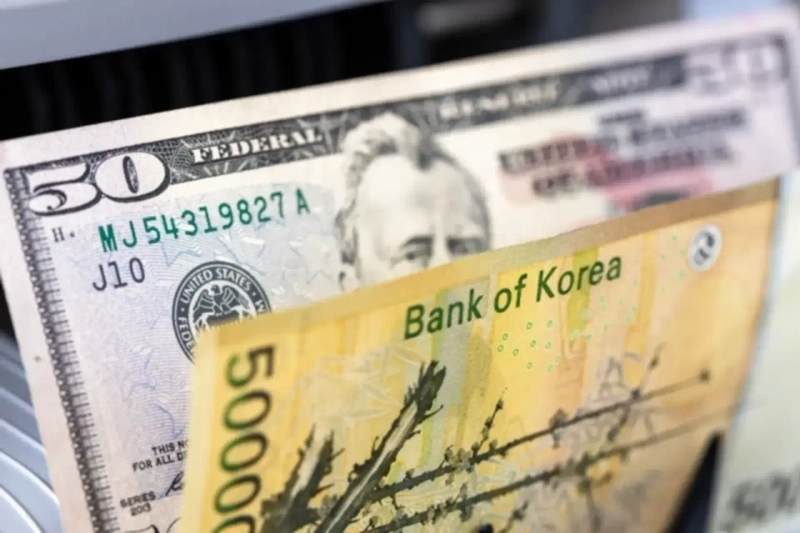
The boom in artificial intelligence and semiconductors is driving a split in Asian currencies. The South Korean won and Taiwan dollar have strengthened as chip exports and foreign investment inflows increase, while India’s rupee and the Philippine peso have weakened under the weight of rising energy import costs.
The won has gained more than 4% against the dollar since late July, while the Philippine peso has fallen more than 2% over the same period, the Nikkei reported on Sept. 18. Asian currencies initially weakened across the board after the U.S. and Israel attacked Iran, stoking concerns over higher crude prices. Since then, their paths have diverged based on competitiveness in semiconductor exports.
Investors are focusing on how much foreign-currency income from semiconductor exports can offset rising energy import bills. Data from the Observatory of Economic Complexity, or OEC, show that most Asian economies and territories whose currencies have recently strengthened rank among the leading exporters of semiconductor integrated circuits.
South Korea’s exports rose 68.7% from a year earlier to $98.25 billion in August, led by semiconductors and memory chips. Taiwan’s exports climbed 41% to a record monthly $82.4 billion. The Singapore dollar and Malaysian ringgit also strengthened on the back of expanding semiconductor-related exports.
Overseas capital inflows are also lifting the won and Taiwan dollar. South Korea’s reported foreign direct investment commitments reached $14.28 billion in the first half, up 9% from a year earlier. Taiwan posted $8.9 billion, a 21% increase, with inflows accelerating further since July. Factory construction plans announced by Samsung Electronics and SK Hynix in late June, totaling 800 trillion won, have also raised expectations for additional overseas capital inflows.
By contrast, the Indian rupee and Philippine peso are being weighed down by concerns that higher oil prices will worsen trade balances. West Texas Intermediate crude recently rose above $106 a barrel, the highest since mid-May. Countries that rely more heavily on energy imports face added currency pressure as the cost of buying crude climbs.
The Indian rupee is trading in the low 96-per-dollar range. It has recovered somewhat from the record low reached in late July, but the rebound has been limited. The Philippine peso weakened to the upper 62-per-dollar range during trading on Sept. 17, setting a fresh record low. The Philippines ranks eighth in the world in semiconductor integrated-circuit exports, but those products account for only about 3% of its total exports.
Interest-rate differentials have also failed to alter the currency trend. Benchmark rates in India and the Philippines stand at 5.25% and 5%, respectively, higher than South Korea’s 3% and Taiwan’s 2%. But defensive rate increases aimed at curbing inflation are fueling concerns over slower growth and have not translated into stronger demand for those currencies.
The prospect of additional Federal Reserve rate hikes is set to remain a broad burden on Asian currencies. Still, if demand for AI and semiconductors persists, the won and Taiwan dollar could prove more resilient to dollar strength than other Asian currencies, supported by export growth and foreign investment inflows.

YM Lee
20min@bloomingbit.ioCrypto Chatterbox_ tlg@Bloomingbit_YMLEE